Reuse napkins soon after washing
If you wash your cloth napkins often and need them again soon, check whether the heated rails and available hanging space will suit them.


A heated clothes airer could be a good choice if you want to reuse cloth napkins at short notice and have a well-ventilated place to put it. If you have plenty of time for them to dry, or want to avoid using electricity for a drying appliance, a non-electric airer may be enough. You should also consider the spacing between the rails, the airer’s dimensions and the napkins’ care instructions.
If you wash your cloth napkins often and need them again soon, check whether the heated rails and available hanging space will suit them.
If you have plenty of time for your napkins to dry and would rather not use electricity for a drying appliance, a non-electric airer is worth considering. The German Environment Agency lists clothes airers and washing lines as energy-efficient ways to dry laundry.
If space is tight, compare the airer’s dimensions when open and the distance between the rails. You should also plan for how you’ll ventilate the room.
A good fit if: you want to dry napkins quickly between frequent uses and heat is suitable for the fabric.
Keep in mind: the appliance uses electricity. Heated rails don’t replace checking the care label or ventilating the room.
A good fit if: there’s enough time for the napkins to dry before you need them again, or you want to avoid using electricity for an appliance.
Keep in mind: there’s no active heat or airflow, and drying time also depends on the conditions in the room.
A good fit if: you’re looking for airflow rather than heated rails and the design suits your available space.
Keep in mind: this option also uses electricity, and an airer with airflow isn’t necessarily heated.
| What matters | What to check before buying | Who it matters most to |
|---|---|---|
| Time until you can reuse them | Number and usable length of the rails; spacing for individual napkins | If I need freshly washed napkins again soon, I look for suitable hanging points and check the care instructions. This is a priority for around 33% of consumers who want to reuse their napkins quickly. |
| Electricity use | Whether the model heats or moves air; rated power and actual running time | If I want to avoid ongoing electricity use, I compare a non-electric airer with electric options. Around 25% of consumers prioritise keeping ongoing drying costs low. |
| Space and hanging capacity | Dimensions when open; rail spacing to suit the width of the napkins | If my drying space is narrow, the dimensions of the intended spot and the space between the napkins matter. Around 25% of consumers say limited space is their main concern. |
| Room humidity | Whether you can ventilate the room; space for air to circulate; monitor humidity if needed | If I dry cloth napkins in a living space, I want to keep an eye on humidity and be able to ventilate the room. Around 17% of consumers prioritise monitoring room humidity; the German Environment Agency recommends ventilating regularly, especially when drying damp laundry indoors. |
An electric airer may move air without heating the rails. If you’re expecting warm rails, a model that only circulates air may not be what you’re looking for.
Check the details for the specific model to see whether it has a heating function or only moves air.
A measurement in metres doesn’t tell you how many napkins can be hung individually with space between them.
Compare the width of your napkins with the usable rails and the dimensions of the airer when open.
When you dry laundry indoors, moisture is released into the room. A heating function won’t remove that moisture.
Choose a spot where you can ventilate the room. The German Environment Agency recommends ventilating more regularly when drying damp laundry indoors.
Worth considering if you’re comparing heated airers or designs with multiple tiers.
The Pegasus Slim 15m, product number 87001, is a non-electric option to compare for narrow spaces.
The King Ultimate is a non-electric winged airer, suitable if you need space for other laundry as well as napkins.
The Elektro-Wäscheständer 900 is an example of an electric airer that circulates air without a heating function.
Joybuy clothes airers for drying textiles. If a heating function or a particular type of hanging space is important for your cloth napkins, check these features in the product details.
 No image available
The heating function may suit consumers looking for a heated airer.
Foldable; the product name lists a temperature of 45–55 °C and dimensions of 144L x 53W x 96H cm.
 No image available
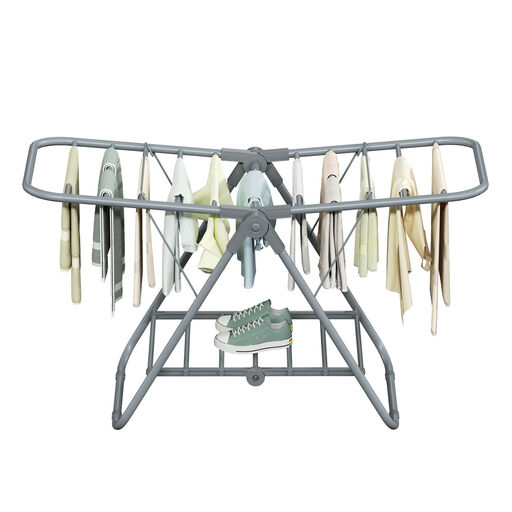
The winged design may suit consumers looking for a foldable airer for smaller items of laundry.
The product name specifies two wings and a foldable frame.
 No image available
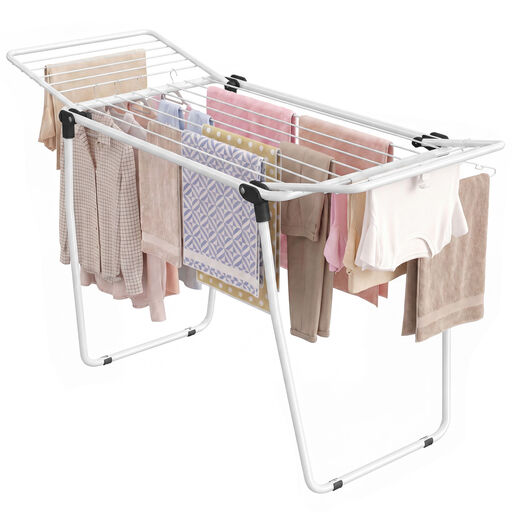
The foldable winged design may suit consumers looking for an airer they can set up when needed.
The product details list dimensions of 158 x 53 x 93 cm when open.
 No image available
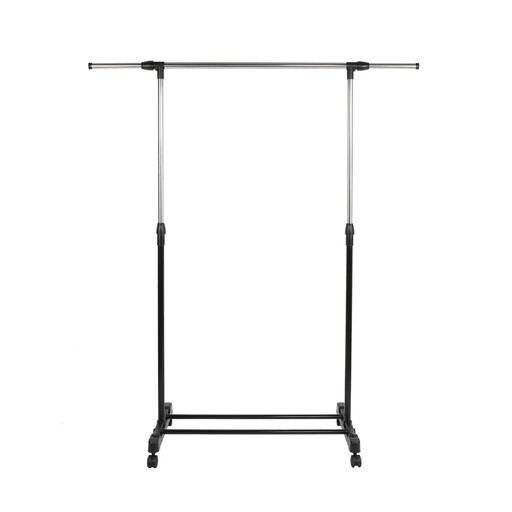
A single rail may suit consumers looking for an extendable drying space.
The product name lists a height of 90–158 cm and a width of 80–145 cm.
 No image available
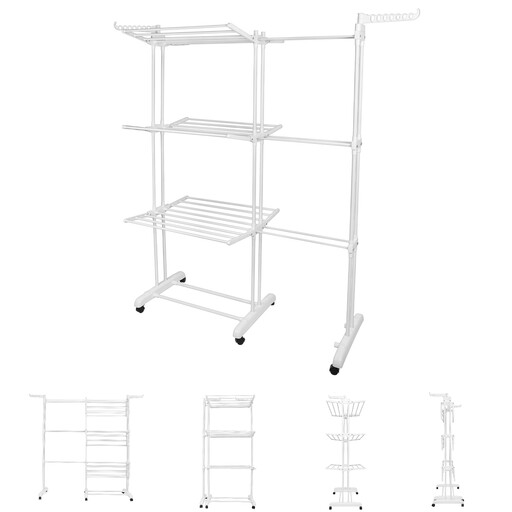
Multiple tiers and side wings may appeal to consumers who want to spread out different items of laundry.
The product name lists three tiers, side wings and dimensions of 75–142,5 x 64 x 170 cm.
Follow the care label on your napkins. GINETEX distinguishes, among other things, between line drying, drying flat and drying in the shade. A symbol prohibiting tumble drying doesn’t automatically mean that direct contact with heated rails is suitable.
Yes, if you’re drying damp laundry in a living space. The German Environment Agency recommends ventilating regularly in this situation; a hygrometer can help you monitor the humidity in the room.
Multiply the rated power of the specific model in kilowatts by the actual running time in hours and your price per kilowatt-hour. If the heater has a thermostat, actual consumption may differ from this simple calculation.
No. According to consumer information from the European Union, where a product is required to carry the CE mark, it is the manufacturer’s declaration that the product complies with relevant requirements—not a general, independent assessment of its quality. For an electric model, also check its labelling and safety instructions.