Which type is right for you?

Drying shirts on hangers

If you want to dry several cotton shirts on hangers, look for suitable hanger hooks, enough clearance and plenty of space between them. Leifheit and Brabantia both specify dedicated hanger holders or hooks on the models described here.

Adding heat if clothes dry slowly indoors

If your shirts regularly take longer to dry than your laundry and wearing routine allows, you could compare heated designs. However, the rated power and manufacturer’s specifications don’t guarantee a particular drying time for your shirts.

Making the most of limited space

If floor space is limited, compare the dimensions when set up with those when folded, or consider a wall- or ceiling-mounted system. With a mounted airer, you’ll also need to plan for the fixings, power connection and clearance beneath it.

What should you look for when buying?

Unheated freestanding airer

A good fit if: you can dry shirts on hangers, don’t want to use extra electricity and have enough drying time and floor space. Leifheit and Brabantia specify hanger holders or hooks on the models described here.

The trade-off: you can’t add heat. The number of shirts, spacing and room conditions will all affect whether the airer suits your routine.

Folding heated airer

A good fit if: you’d like to add heat occasionally and fold the airer away afterwards. Adler gives the AD 7821’s dimensions when set up as 148 × 52,5 × 90 cm, with 18 bars and a rated power of 220 W.

The trade-off: heating uses electricity. The rated power alone doesn’t tell you how long drying will take or whether your shirts will be crease-free.

Heated tower airer

A good fit if: you’re short on floor space rather than height, and your shirts can hang freely between the tiers. Adler gives the AD 7831’s dimensions when set up as 73 × 58 × 139 cm, with 30 heated bars.

The trade-off: having lots of bars doesn’t, by itself, mean there’s enough room for shirts on hangers or that drying will be faster.

Mounted system with warm air

A good fit if: you want to keep the floor clear and have a suitable place to mount the airer with access to a power supply. Foxydry describes the Pro as suitable for ceiling or wall mounting, with space for 18 to 24 hangers.

The trade-off: the mounting, fixings and clearance beneath the airer must suit your installation space. Foxydry specifies 750 W for warm-air operation.

Priority What to check before buying Who it matters most to
Hanging shirts with space between them Compare the hanger holders, clearance and dimensions when set up with the number of shirts and the space available. If I dry several shirts on hangers, I need enough space for them to hang freely. Around 29% of consumers prioritise having enough room for their shirts.
Adding heat Check the heating method, usable hanging space and rated power; follow the care label. If shirts regularly take longer to dry than my routine allows, adding heat could be an option. Around 24% of consumers give this priority.
Floor and storage space Compare the dimensions when set up and when folded separately; for mounted models, check the fixings and clearance beneath the airer. If there’s little floor space available while laundry is drying and the airer needs to be stored afterwards, the space it takes up in both situations matters. Around 18% of consumers base their choice primarily on this.
Electricity use and running costs Work out the cost using the rated power in kW, your planned running time and your electricity rate per kWh. If I want to avoid or calculate the cost of using extra electricity, the power used during actual heating matters. Around 17% of consumers put this first.
Humidity indoors Check that the drying location and ventilation options are suitable for the appliance’s specified operating conditions. If I dry laundry in a room, regular ventilation needs to fit into my routine. Around 12% of consumers consider indoor humidity their main concern.

Common buying and usage mistakes

  • Assuming rated power guarantees a specific drying time

    The wattage tells you the rated power, not how long your cotton shirts will take to dry in your home. Manufacturer claims about faster drying aren’t comparative measurements for your room.

    First, check the number of places for shirts and their care instructions. For a rough estimate of electricity costs, multiply the rated power in kW by the planned running time and your tariff per kWh.

    Heating uses additional electricity while the appliance is running.

  • Looking only at the folded dimensions

    An airer may take up little space when folded, yet occupy a larger area or block a walkway when in use. For the Adler AD 7821, the manufacturer gives the folded dimensions as 113 × 52,5 × 8 cm and the dimensions when set up as 148 × 52,5 × 90 cm.

    Measure the available space with the airer set up, and allow room for hanging shirts and getting past it.

  • Confusing heating with dehumidifying

    Wet laundry adds moisture to your home. A heated airer doesn’t replace ventilation; the German Environment Agency recommends ventilating regularly when drying wet laundry.

    Choose a suitable place to dry your laundry and make sure you can ventilate the room, whatever type of airer you choose.

Brands and designs at a glance

Adler

Heated folding and tower airers for comparing added warmth with space requirements.

  • Adler specifies 18 bars and 220 W for the AD 7821, and 30 heated bars for the AD 7831.
  • The manufacturer’s specifications for design and rated power don’t guarantee a particular drying time for cotton shirts. Check the dimensions when set up and the documentation for the specific appliance.

Foxydry

The Foxydry Pro is a mounted system with space for hangers and switchable cool- and warm-air settings.

  • The manufacturer describes the Pro as suitable for ceiling or wall mounting, with space for 18 to 24 hangers.
  • These specifications apply to the Pro. The mounting location, fixings, clearance beneath the airer and electrical connection must suit the version you choose.

Leifheit

The Classic 180 Solid is an unheated freestanding airer with hanger holders, offering an alternative to heated models.

  • For this model, Leifheit specifies 18 m of drying space, four hanger holders and dimensions of 88,5 × 181,5 × 56 cm when opened out.
  • The features described for this model don’t include a switchable heater.

Brabantia

The HangOn 15 m described here is an unheated freestanding airer with hooks for shirts on hangers.

  • Brabantia specifies four hanger hooks for this model.
  • The features described don’t include a heating function. Check the space required and the specifications of the model you choose.

Joybuy products for drying shirts

This selection includes folding, wall-mounted and heated airers for drying laundry indoors. If you want to hang cotton shirts on hangers, check before buying that the design you choose offers enough space.
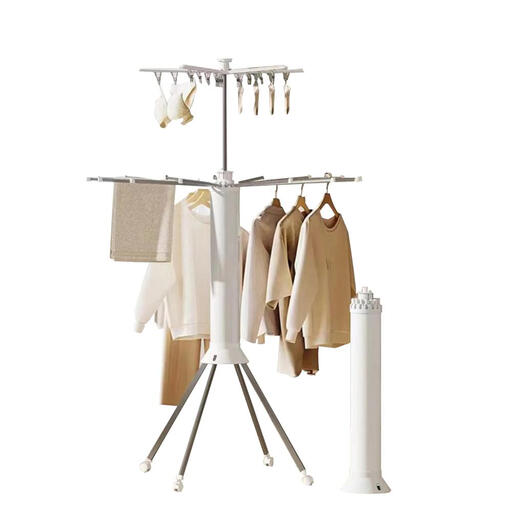
Folding clothes airer with 16 extendable drying bars

Folding clothes airer with 16 extendable drying bars

Could suit you if you’re looking for several drying spaces and a folding airer. Check that there’s enough room for hangers and shirts between the bars.

The product name specifies 16 extendable drying bars.

Joybuy
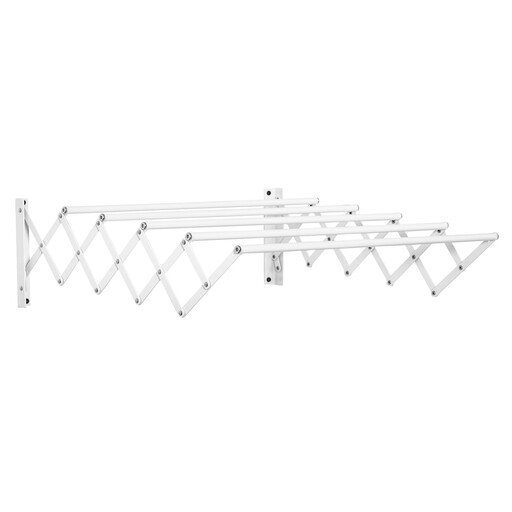
Extendable wall-mounted clothes airer, 63,5 × 60 × 20 cm

Extendable wall-mounted clothes airer, 63,5 × 60 × 20 cm

Could suit you if you have a suitable wall for mounting and want to keep the floor clear. Allow space for the fixings and to extend the airer.

The product name specifies 63,5 × 60 × 20 cm. The fixings must be suitable for your type of wall. The stated maximum load is 2 kg per bar and 10 kg in total.

Joybuy

Folding heated clothes airer, 144 × 53 × 96 cm

Folding heated clothes airer, 144 × 53 × 96 cm

Could be worth considering if you want a folding airer with switchable heat. Measure the space it will take up when set up and check that shirts can hang freely between the bars.

The product name specifies dimensions of 144 × 53 × 96 cm and a temperature range of 45–55 °C; the description gives a power rating of 230 W. Before buying, check the required electrical safety documentation and CE marking for this specific appliance. A CE marking on its own is not official safety approval.

Joybuy

Frequently asked questions

Can a heated airer help prevent damp and mould when drying clothes indoors?

No. A heated airer isn’t a substitute for ventilation. The German Environment Agency identifies wet laundry as an additional source of moisture in the home and recommends ventilating regularly when drying clothes.

How can I calculate electricity costs without assuming a drying time?

Multiply the rated power in kW by the actual planned running time and your tariff per kWh. According to the manufacturer, the Adler AD 7821’s 220 W is equivalent to 0,22 kW for calculation purposes. This doesn’t give you a measured running time or the electricity used per load of shirts.

What should I consider when setting up or mounting an airer?

For freestanding models, compare the dimensions when set up and when folded with the space available. For the Foxydry Pro, the manufacturer describes ceiling or wall mounting with an electrical connection. If you choose this version, check the fixings, load-bearing capacity and clearance beneath it. For electrical appliances, follow the operating instructions for the permitted conditions and use.

Is a CE mark an official safety test for a heated airer?

No. The European Commission makes clear that CE marking does not mean an EU authority has approved the product’s safety. Mains-powered appliances must meet the relevant electrical safety requirements; check the marking and documentation for the specific appliance.

What are my rights if I buy online in Germany and want to return an item or report a fault?

Online purchases generally come with a 14-day right to cancel; the Verbraucherzentrale explains that this period starts when you receive the goods. Your statutory rights against the seller and a voluntary guarantee are separate entitlements. Check the terms of the specific offer.