Households drying damp laundry indoors in winter
If you dry laundry indoors, regular ventilation is important. If you use a tumble dryer, you’ll also need to consider its condensation efficiency and where it will be installed.


If you can hang cotton clothes up somewhere well ventilated, a clothes airer is still an option that uses no electricity. If you’re often short on time or don’t have enough drying space, a suitably sized heat pump tumble dryer could be a useful addition. Compare the current EU energy label, including kWh per 100 Eco cycles and condensation efficiency, as well as capacity and cycle time. A tumble dryer doesn’t replace ventilation, as some moisture can escape into the room depending on its condensation efficiency.
If you dry laundry indoors, regular ventilation is important. If you use a tumble dryer, you’ll also need to consider its condensation efficiency and where it will be installed.
If you regularly dry towels or bedding, consider capacity, cycle time and energy consumption together. The German Environment Agency notes that a large tumble dryer that’s frequently only partially filled can use more energy per kilogram of laundry.
If a clothes airer takes up too much room, a tumble dryer could free up space. Before choosing one, check the appliance dimensions, the clearance it needs and the noise level of the specific model.
A good fit if: you have space to hang your laundry and can reliably ventilate away the extra moisture.
Bear in mind: in winter, you’ll need to ventilate your home to manage the moisture. This option is less practical if you’re short on space or time.
A good fit if: you want to dry cotton in a tumble dryer regularly, and the capacity and condensation efficiency suit your household and the room where it will be installed.
Bear in mind: the purchase price, energy consumption and filter maintenance are all part of the decision. A condenser tumble dryer can also release moisture into the room, depending on its condensation efficiency.
A good fit if: you want to consider an alternative for occasional use and compare its actual energy label figures with those of a heat pump model.
Bear in mind: the Consumer Advice Centre considers heat pump tumble dryers more energy efficient, so a lower purchase price alone doesn’t tell you which option will cost less overall.
When drying cotton in winter, the right choice depends on whether you’re mainly concerned about moisture, running costs, laundry loads, fabric care or where the appliance will go.
| What matters | What to check before buying | Who it matters most to |
|---|---|---|
| Moisture in the home | Installation room, ventilation options and the condensation efficiency of the specific appliance | If I dry laundry indoors, I need to consider the moisture in the room. Around 31% of consumers put reducing dampness first. |
| Energy consumption | kWh per 100 Eco cycles on the same current label basis, and how often you expect to use the appliance | If I plan to use the tumble dryer regularly, I want to weigh up the running costs. Around 25% of consumers prioritise keeping electricity costs low. |
| Capacity and cycle time | Maximum capacity in kg and Eco programme duration; the cycle time isn’t a guarantee for every load | If I regularly wash cotton, I want to avoid unnecessary extra cycles. Around 19% of consumers pay particular attention to choosing a capacity that suits their load size. |
| Cotton care | Care labels, the cotton programme and the available drying levels | If choosing the right drying level for my fabrics matters to me, I check the programmes and care labels. Around 13% of consumers put fabric care first. |
| Space and noise | Appliance dimensions, including required clearance, and the noise level of the exact model | If space is tight or the installation area is noise-sensitive, the appliance needs to fit into my home life. Around 12% of consumers put space or noise first. |
The old scale, which went up to A+++, and the A to G scale in effect since 1 July 2025 use different measurement methods. The Bavarian State Ministry of Food, Agriculture, Forestry and Tourism notes that the ratings aren’t directly comparable.
Check the current EU energy label for the specific model and compare kWh per 100 Eco cycles on the same basis.
Not all the water from the laundry is collected in the tank or drained away. The Consumer Advice Centre lists condensation efficiency as an important comparison figure, while the German Environment Agency identifies damp laundry as an additional source of moisture in the home.
Consider condensation efficiency, the installation location and ventilation options together when choosing.
If you regularly dry small loads, an oversized appliance may use more energy per kilogram of laundry.
Think about the cotton loads you usually dry and choose a capacity to match, rather than simply going for the largest drum possible.
If the drum is often only partially full, energy use per kilogram of laundry can increase.
The BM3T38210W1 and B3TSW48C9ZW offer two 8 kg heat pump tumble dryers to compare.
The Serie 6 WQG235D90 is an 8 kg heat pump tumble dryer to consider when comparing fabric care and features.
The TR9T75680 is an 8 kg heat pump tumble dryer with published figures for energy consumption and condensation efficiency.
The TWC640WP is an 8 kg heat pump tumble dryer with DirectSensor.
These heat pump tumble dryers are designed for regular loads of laundry. Choose a capacity and programmes that suit your cotton laundry, and check the details for each model.
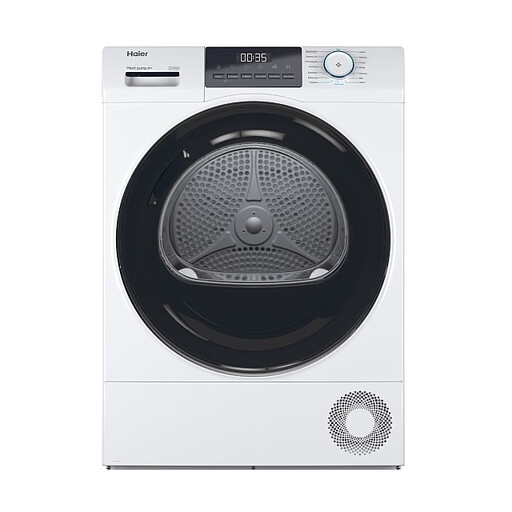 Image unavailable
The listed capacity and sensor drying are useful features to consider for regular laundry loads.
Heat pump tumble dryer; 8 kg; sensor drying; several drying programmes.
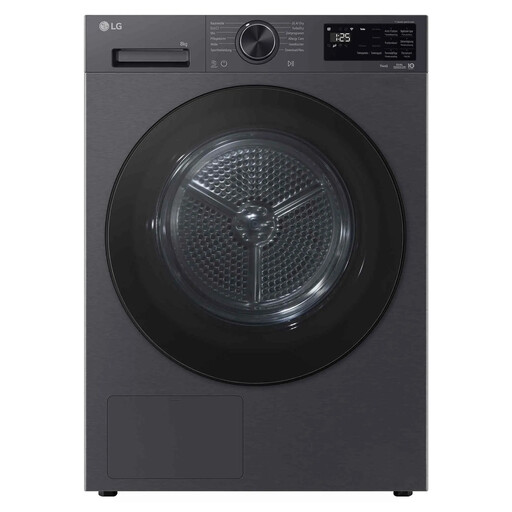 Image unavailable
The listed capacity and cotton programme are useful features to consider for regular cotton loads.
Heat pump tumble dryer; 8 kg; Dual Inverter Heat Pump; AI Dry; TurboDry; SensorDry.
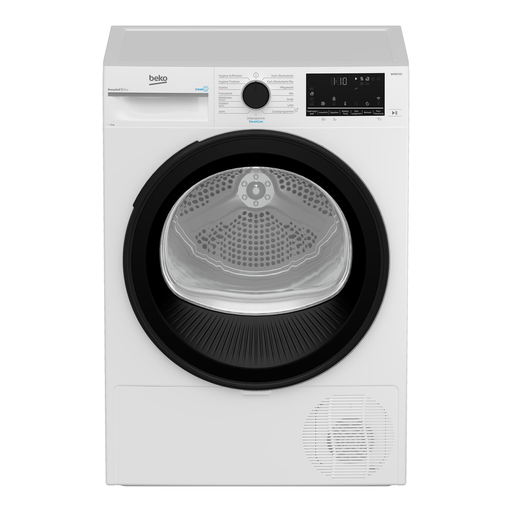 Image unavailable
The listed capacity and sensor drying are features to consider for recurring laundry loads.
Heat pump tumble dryer; 8 kg; energy efficiency class A; sensor drying.
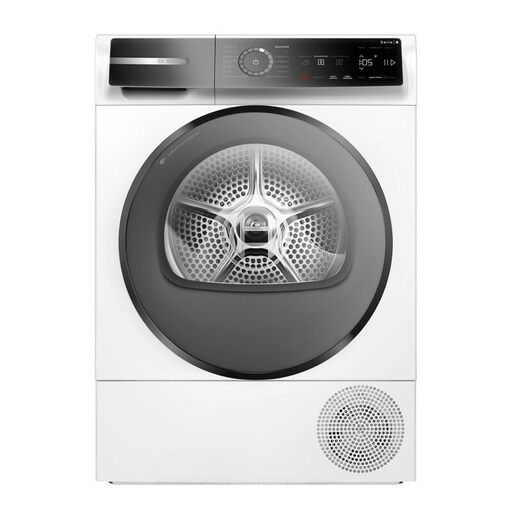 Image unavailable
With a 9 kg capacity, this model is an option if your usual loads need more room.
Heat pump tumble dryer; 9 kg; energy efficiency class B; self-cleaning condenser.
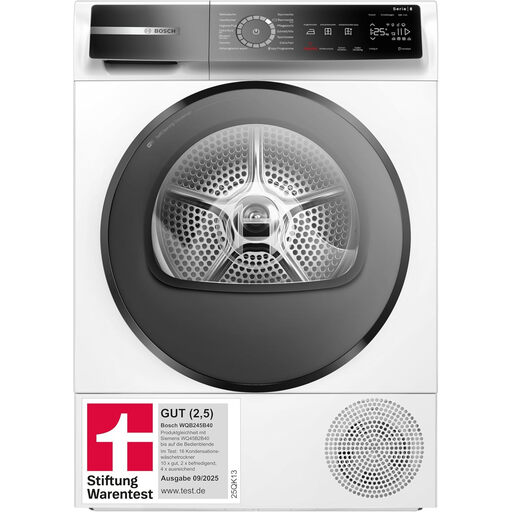 Image unavailable
The listed capacity and AutoDry are features to consider if you regularly dry cotton loads.
Heat pump tumble dryer; 9 kg; energy efficiency class C; AutoDry; self-cleaning condenser.
No. Since 1 July 2025, household tumble dryers have used the EU energy label from A to G. The Bavarian State Ministry of Food, Agriculture, Forestry and Tourism explains that the old and new scales aren’t directly comparable because they use different measurement methods. The Federal Institute for Materials Research and Testing states that a repairability index will become a mandatory part of the label from 1 January 2027.
Yes. Ventilation remains important, depending on the room and how it’s used. Condensation efficiency shows what proportion of the water removed from the laundry is collected; some moisture may escape into the room. The German Environment Agency identifies damp laundry as an additional source of moisture in living spaces.
Compare the dimensions of the specific model with the space available and follow the user manual. Clean the fluff filter and condenser as directed in the appliance instructions. The Consumer Advice Centre warns that fluff and dust can build up and advises against placing a tumble dryer on a carpet.
Consider how often you’ll use the appliance and its energy consumption in kWh per 100 Eco cycles, as shown on the current label. Also check whether delivery, installation or service options offered with your purchase are relevant. Without knowing how often you’ll use it or your electricity tariff, it isn’t possible to work out your personal annual bill from a single label figure.
Take the waste electrical appliance to a designated separate collection point or return it through an appropriate scheme. The German Environment Agency explains that the Electrical and Electronic Equipment Act sets out obligations for manufacturers, retailers and local authorities. Check with the retailer which return options are available for your particular purchase.