Shared home with limited space
If you hang your face cloths in a shared room and need to put the airer away afterwards, compare its dimensions when open and folded.


For a few face cloths, an unheated airer is usually sufficient, provided you can hang them separately with plenty of space around them and air the room regularly. A foldable heated rail airer may be worth considering if you regularly want extra warmth where the cloths hang; in that case, consider its size, power and controls. Heat is no substitute for fresh air or washing your face cloths. If you’re considering a specific electrical product, check that it has the required conformity information.
If you hang your face cloths in a shared room and need to put the airer away afterwards, compare its dimensions when open and folded.
If you want to hang several cloths separately, check how many hanging spaces are available. Extra warmth is no substitute for regular washing or airing the room.
If you’re considering extra warmth, factor in how long you’ll actually run the appliance and your electricity tariff, rather than comparing the appliance’s power rating alone.
A good fit if: you can hang a few face cloths with plenty of space around them and don’t need extra warmth.
Things to consider: Drying still depends on how the cloths are hung and the air in the room. Ventilation remains important when drying indoors.
A good fit if: you regularly want extra warmth where the cloths hang and the open airer will fit in your shared room.
Things to consider: Adler lists the AD 7821 at 220 W; InnovaGoods lists the Warmmat at 230 W, with temperature selection and a timer. Heat won’t remove moisture from the room or replace washing.
A good fit if: you regularly want to dry larger loads of laundry under a cover, as well as face cloths.
Things to consider: InnovaGoods lists the Dupledry Blue at 1,200 W. Its advertised sterilising effect is not proof of a hygiene benefit for face cloths.
A good fit if: you want to keep the floor clear permanently and can install it in the intended location.
Things to consider: Foxydry describes the Pro as a ceiling- or wall-mounted solution with air circulation and optional warm air. Check the installation requirements and position beforehand.
First, check that you have room to hang the cloths separately and ventilate the space. Then decide whether extra warmth is genuinely important for your needs.
| Priority | What to check before buying | Who it matters most to |
|---|---|---|
| Hanging face cloths with plenty of space | Compare the usable rails and the care instructions for your textiles. | If I want to hang several face cloths separately, I look for enough space between them; around 25% of consumers prioritise good air circulation around hanging laundry. |
| Space and storage | Measure the airer when open and check that you have a dry place to store it. | If space in the shared room is limited, I need an airer that fits when in use and can be put away afterwards; around 25% of consumers prioritise suitable dimensions for use and storage. |
| Running costs | Compare the rated power and planned running time; use your own electricity unit rate to estimate the cost. | If I want to use extra warmth, I need to be able to estimate the electricity used over my chosen running time; around 19% of consumers pay particular attention to low running costs. |
| Moisture in the room | Before choosing where to put the airer, work out how you’ll ventilate the room while laundry is drying. | If I dry laundry indoors, I need a place where I can still ventilate the room; around 19% of consumers prioritise moisture management. |
| Extra warmth | Decide whether heated rails, temperature selection or warm air suit the amount of laundry you actually have. | If I regularly want warmth where the cloths hang, I choose the design and features to suit; around 12% of consumers prioritise this need. |
An appliance’s sterilisation claims are not proof that it will have the same effect on face cloths or in your particular situation.
Plan to wash your cloths regularly, whatever type of airer you choose.
Even an airer that folds away neatly needs space in a shared room when it’s open.
Compare its open dimensions with the space where you plan to use it.
When you dry laundry indoors, moisture gets into the room. A heated airer won’t remove it from the room by itself.
Before buying, check how you’ll ventilate the room where you plan to put the airer.
The AD 7821 is a foldable heated rail airer which, according to the manufacturer, can also be used without heat.
Its product range includes foldable heated rail airers and the differently designed, covered Dupledry Blue warm-air dryer.
According to the manufacturer, the Foxydry Pro is a ceiling- or wall-mounted solution with air circulation and optional warm air.
These Joybuy listings offer extra warmth for drying cloths, with different designs including a foldable heated airer, a warm-air dryer and heated towel rails. They are not all open, foldable clothes airers. For new electrical appliances covered by the EU Low Voltage rules for 50 to 1,000 V AC, the manufacturer must meet the relevant conformity requirements and provide an EU Declaration of Conformity and CE marking. Check these details on the specific product listing.
 No image available
An option if you want extra warmth where the cloths hang and the airer will fit in your shared room.
The product title lists a temperature of 45–55 °C and open dimensions of 144 × 53 × 96 cm. Ventilation is still important when drying indoors, and heat is no substitute for washing your face cloths.
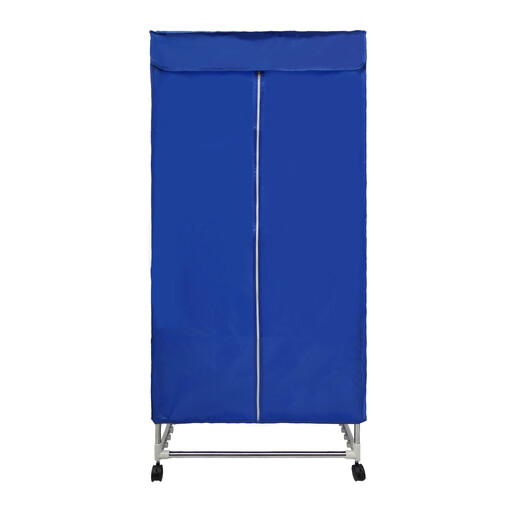 No image available
This could be an option if you want to dry larger loads of laundry under a cover, as well as face cloths.
The product title describes a foldable appliance with a timer. Its covered warm-air design differs from an open clothes airer; ventilation and regular washing are still important.
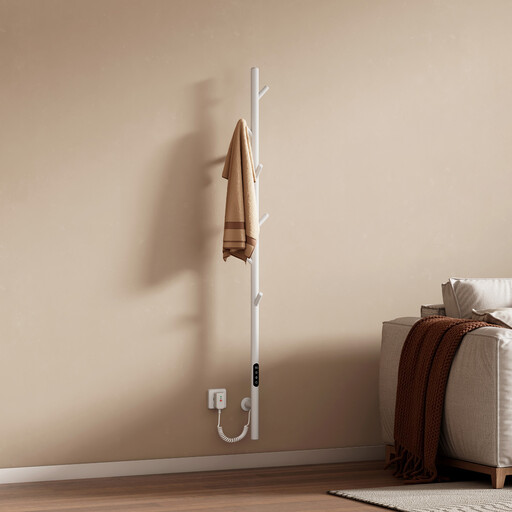 No image available
This heated towel rail design may suit you if you’re looking for a rail and extra hooks for hanging cloths.
The product title lists one rail, six hooks and a height of 150 cm. This isn’t a foldable, open clothes airer; ventilation and washing remain important.
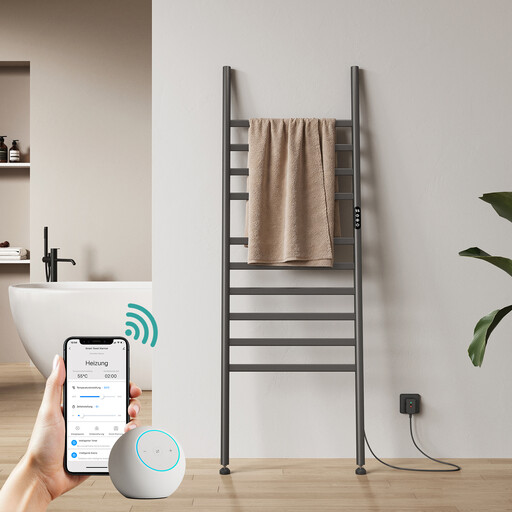 No image available
A freestanding heated rail may be an option if you want to dry towels with extra warmth and prefer to set it up without drilling.
The product title lists 385 W, a thermostat and a timer. This isn’t a foldable, open clothes airer; ventilation and washing are still necessary.
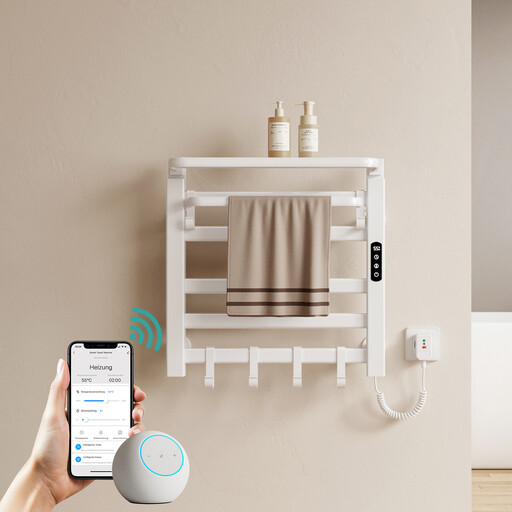 No image available
This compact heated towel rail may suit you if you’re looking for a heated surface and several places to hang cloths.
The product title lists dimensions of 50 × 50 cm, 140 W and six hooks. According to the product description, the hooks aren’t heated; this isn’t an open clothes airer. Ventilation and washing are still important.
No. The German Environment Agency recommends regular ventilation when drying laundry indoors; the heating function doesn’t remove moisture from the room.
No. The Federal Institute of Public Health recommends washing face cloths at a minimum of 60 °C with a heavy-duty detergent containing bleach; also follow the care instructions for your textiles. Claims that an appliance dries or sterilises laundry don’t replace this washing advice.
Divide the rated power in watts by 1,000, then multiply it by the number of hours the appliance runs. For a 220 W model, one hour works out at 0.22 kWh; to estimate the cost, multiply this figure by your own electricity unit rate. This is a calculation, not a measurement of actual consumption.
For new appliances covered by the EU Low Voltage rules for 50 to 1,000 V AC, the manufacturer must meet the relevant requirements, issue an EU Declaration of Conformity following the conformity assessment and apply the CE marking. Check these details on the specific product listing; CE marking alone is not an independent product test.
If you buy from a trader, contact the seller about your statutory rights if the product is faulty. EU rules provide for a minimum of two years from receipt of the goods; any additional manufacturer’s guarantee does not replace these rights.