Travellers with several pairs of leggings
After a walking holiday, you may want to hang several freshly washed items separately. Check how many bars are actually available for use and whether the airer fits in your room when opened out.


A heated clothes airer could be a good fit if you regularly dry several pairs of leggings indoors, their care labels permit heat, and the space it takes up and its energy use suit your routine. Compare the usable hanging space, dimensions when set up and, where applicable, the temperature settings and timer. Wattage and the number of heating elements don’t tell you exactly how long drying will take. If you’re unsure whether your leggings are suitable for heat, or you only dry them occasionally, an unheated clothes airer is an option; Germany’s Federal Environment Agency lists clothes airers and washing lines as energy-efficient ways to dry laundry. Good ventilation is important when drying clothes indoors, too.
After a walking holiday, you may want to hang several freshly washed items separately. Check how many bars are actually available for use and whether the airer fits in your room when opened out.
Check the care instructions for each item before applying heat. A tumble-dryer symbol on its own doesn’t mean the garment is suitable for heated bars.
You’ll need room for the airer while your laundry dries, as well as somewhere suitable to store it afterwards. Regardless of whether it has a heating function, moisture needs to be removed from the room.
First, check whether the care instructions allow you to use the heat as planned. Then compare hanging space, dimensions when set up and storage space to choose the right design. Good ventilation matters with both drying methods.
| What matters | What to check before buying | Who is this important to? |
|---|---|---|
| Drying in line with care instructions | Check the care label on each item against the airer’s instructions. If you’re unsure whether heat is suitable, hang the item on an unheated airer or follow the recommended drying position. | If I’m not sure whether heat is suitable for a particular pair of leggings, I want to follow the care instructions. Around 27% of consumers put drying items in line with their care instructions first. |
| Separate hanging space | Compare the number and length of leggings with the available bars and tiers, and check the maximum load. | If I need to dry several items at once after a trip, I want enough space between them. Around 27% of consumers prioritise separate hanging space. |
| Space to set up and store | Compare the dimensions when open and folded separately with the space available for setting up and storing the airer. Remember to check the available height, too. | If I have limited space at home, the airer needs to fit both when it’s in use and when it’s stored away. Around 20% of consumers make available space their main consideration. |
| Energy use and running time | Consider the rated power alongside the planned running time. The wattage alone won’t tell you how long drying will take or how much electricity it will use. | If I want to avoid using extra energy for heating, I’ll also consider air-drying if I have enough time. Around 13% of consumers prioritise electricity use for heating. |
| Moisture in the drying area | Choose a suitable spot with enough ventilation, and follow the appliance instructions for where to use it. | If I dry clothes indoors, I want to be able to remove the moisture effectively. Around 13% of consumers focus primarily on the drying location and ventilation. |
This care symbol means the item shouldn’t be dried in a tumble dryer, but it doesn’t specifically say that heated bars are suitable.
Check the care instructions for the specific item alongside the airer’s instructions. If you’re unsure whether heat is suitable, don’t use heated bars just because the appliance is set to a low temperature.
An airer may take up little storage space when folded, but need a lot of floor space or height when in use. For example, AdlerEurope gives the open dimensions of the AD 7821 as 148 × 52,5 × 90 cm.
Measure the space for setting it up and the storage space separately. Remember to allow for hanging space and clear walkways, too.
Manufacturers’ figures for power and heating elements don’t tell you exactly how long your leggings will take to dry.
Choose an airer based on the amount of laundry you actually need to dry, a suitable way to hang it and how long you plan to use the appliance.
Even with a heated airer, drying clothes indoors releases moisture into the room.
Choose a suitable place to dry your clothes and make sure there’s enough ventilation. Check the appliance instructions before using it in a particular location.
Adler offers heated folding and tiered airers. Compare them by looking at their designs and the manufacturer’s specifications for each model.
The Warmmat heated winged airer is designed for shoppers who want to adjust the temperature and running time.
The Classic 250 Flex Black is an unheated airer to consider if you want to dry your laundry without extra heat.
This selection includes clothes airers with a stated heating function, as well as designs for drying several items on separate bars or tiers.
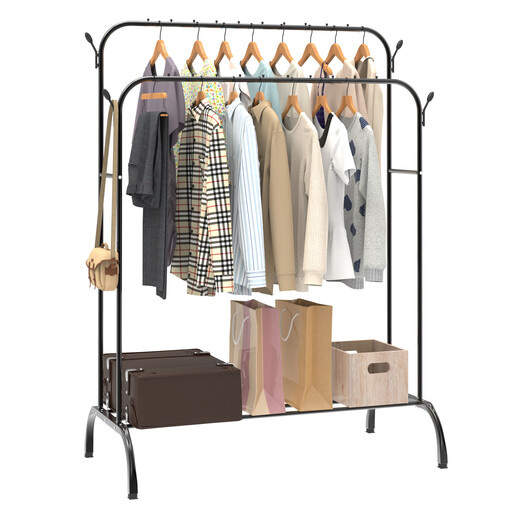 No image available
For hanging several items on separate rails; the product name also mentions a lower shelf.
 No image available
This could be an option if the care instructions for your leggings allow the planned use of heat. The product name specifies a heating function with a temperature range of 45–55 °C and dimensions of 144 × 53 × 96 cm. This temperature range doesn’t mean it’s suitable for every item of clothing.
For mains-powered appliances covered by the EU Low Voltage Directive (50–1.000 V AC), manufacturers are responsible for conformity assessment, an EU Declaration of Conformity and CE marking, as explained by the European Commission. Check the documentation for the specific appliance; CE marking alone isn’t an independent check of the individual product listing.
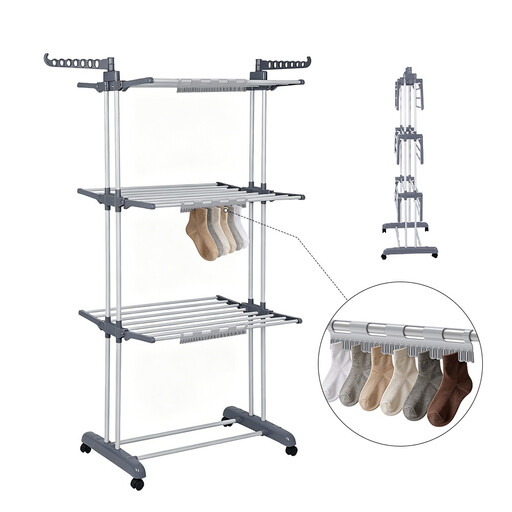 No image available
For drying several items on different tiers. The product name specifies four tiers, side wings and dimensions of 75 × 64 × 170 cm. Check the footprint and height against the space you have available.
No. The symbol means the item shouldn’t be dried in a tumble dryer, but it doesn’t mean heated bars are suitable. Check the rest of the care instructions for the specific item and the appliance instructions. If you’re unsure whether heat is suitable, air-drying without heat is the safer option.
Yes. When drying clothes indoors, moisture needs to be removed through suitable ventilation; the heating function doesn’t do this.
For a mains-powered appliance covered by the EU Low Voltage Directive, manufacturers are responsible for conformity assessment, an EU Declaration of Conformity and CE marking. The European Commission points out that the CE mark doesn’t mean the individual product has been independently tested. If a product is faulty, statutory rights against the seller are separate from any voluntary guarantee, as explained by the Verbraucherzentrale (the German consumer advice centre).