If you don’t have floor space to spare
If a floor-standing airer would always be in the way, a wall- or ceiling-mounted option is worth considering. With folding models, check the dimensions when fully opened, not just when folded away.


First, choose based on the space actually available where you dry your leggings, then check their care label. A folding heated airer still takes up floor space while in use, whereas a suitable wall- or ceiling-mounted option keeps the floor clear. Heat uses extra electricity and doesn’t remove the need to ventilate when drying clothes indoors. If keeping the floor clear matters more than adding heat, an unheated wall-mounted airer may be a better fit.
If a floor-standing airer would always be in the way, a wall- or ceiling-mounted option is worth considering. With folding models, check the dimensions when fully opened, not just when folded away.
The drying instructions on the care label are key. A symbol prohibiting tumble drying doesn’t automatically tell you whether direct contact with heated bars is suitable.
When drying clothes at home, you’ll need to plan for regular ventilation as well as choosing the right airer.
A good fit if: you can put the airer away after drying and have enough floor space for it when it’s open.
The trade-off: Folding saves storage space, but not floor space while the airer is in use. The heating function uses electricity.
A good fit if: you can mount it on a suitable wall or only have a narrow space for a freestanding model.
The trade-off: Check that the bars are long enough and there are enough of them for your leggings, and that the mounting position and power supply are suitable.
A good fit if: keeping the floor clear and drying without using electricity matter more than adding heat.
The trade-off: You’ll need a suitable surface for mounting, and you’ll still need to ventilate the room to clear the moisture.
A good fit if: floor space is very limited and you can install a suitable ceiling-mounted model with access to a power supply.
The trade-off: A permanent installation takes more effort than setting up a portable airer.
| What matters | What to check before buying | Who it matters most to |
|---|---|---|
| Floor space while drying | Measure the dimensions when set up, not just when folded away. For wall- or ceiling-mounted models, check the mounting area and clearance for movement. | If I can only set up the airer occasionally, the space it takes up in use matters more to me than its folded dimensions. Around 36% of consumers say available floor space is their main consideration when choosing. |
| Suitable drying method | Check the care label on each pair of leggings and make sure they can be dried in the required position without unsuitable contact with heat. | If I want to follow the care instructions for my leggings, the way they hang or lie on the airer needs to be suitable. Around 29% of consumers prioritise appropriate fabric care. |
| Humidity in the home | Choose a spot where you can ventilate, and consider how you’ll remove moisture from the room after drying. | If I dry clothes indoors, I need a practical way to ventilate as well as a suitable place to put them. Around 21% of consumers are most concerned about managing indoor humidity. |
| Electricity use and running costs | To estimate energy use, multiply the power in kilowatts by the actual running time in hours. The cost also depends on your electricity tariff. | If I’m weighing up extra heat against drying without electricity, I want to know the running time and energy use. Around 14% of consumers put ongoing running costs first. |
A folding heated airer can take up considerably more room when in use than when stored away.
Measure the available space where you plan to dry your clothes and compare it with the airer’s dimensions when set up. Then check whether it will fit where you plan to store it.
The floor space remains occupied while clothes are drying.
Care labels distinguish between tumble drying and different methods of natural drying. A ban on tumble drying doesn’t mean that direct heat from bars is always suitable.
Follow the care label for each pair of leggings when choosing how to dry them, and don’t assume they can withstand heat.
A heated airer won’t remove moisture from the air in your home. The German Environment Agency recommends paying particular attention to regular ventilation when drying wet laundry indoors.
Choose a spot where moisture can be ventilated outside.
Drying clothes indoors also means you’ll need to ventilate.
The rated power alone doesn’t tell you the actual electricity cost or how long your leggings will take to dry.
Multiply the power in kilowatts by the actual running time in hours to calculate energy use in kilowatt-hours. You’ll also need your electricity tariff to work out the cost.
Electricity costs depend on the actual running time and your tariff.
The AD 7821 is a heated, folding freestanding airer.
The heated DO7117DR is designed for use as either a freestanding or wall-mounted airer.
The heated freestanding models described come in different designs, including a folding two-tier airer and a compact holder with five bars.
Foxydry Pro is a permanently installed ceiling- or wall-mounted option with room-air and warm-air settings.
The Telegant 81 Protect Plus is an unheated wall-mounted airer for when keeping the floor clear is a priority.
The following Joybuy products offer ways to air-dry clothes when space is limited, including retractable washing lines, wall-mounted airers and freestanding models. Whether a heated option is suitable for your leggings still depends on their care label and the space available where you plan to dry them.
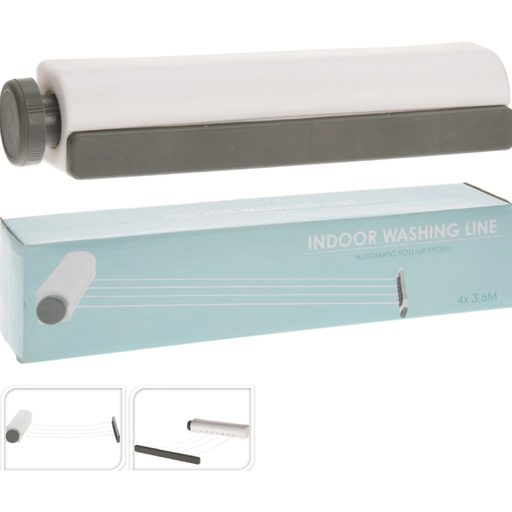 No image available
An option if you can install it between two suitable walls and want to retract the lines after drying.
Four lines with a total drying length of 14,4 m; designed for a distance of up to 360 cm between walls.
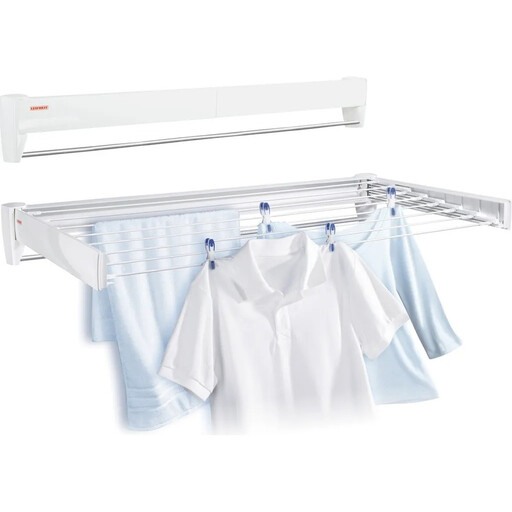 No image available
A good fit if you want to keep the floor clear and don’t need extra heat.
Unheated wall-mounted airer with a drying length of 8,10 m; measures 103 × 53 cm when open. Requires a suitable wall for installation.
 No image available
An option if you have floor space available while drying and can put the rack away afterwards.
The product description lists a heating function and a temperature range of 45–55 °C. Stated dimensions: 144 × 53 × 96 cm.
The folding design only saves space after use. Check the care label before placing leggings on heated bars.
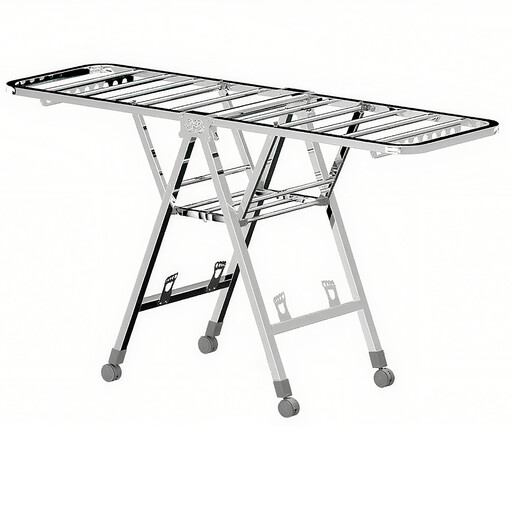 No image available
A good fit if you have floor space available while drying and can store the airer afterwards.
Described as a folding freestanding airer, suitable for indoor and outdoor use according to the product description.
As a freestanding airer, it takes up floor space while in use.
A ban on tumble drying doesn’t specifically mean that heated bars are suitable. Check the garment’s natural-drying symbol and follow its instructions. If the label says to dry the leggings flat, you’ll need an option with a suitable surface. Without the leggings’ care instructions, it’s not possible to say generally whether direct heat from bars is suitable.
Multiply the power in kilowatts by the running time in hours to calculate energy use in kilowatt-hours. At full rated power, 220 W for one hour works out at 0,22 kWh; to estimate the cost, you’ll also need your electricity tariff and the actual running time. An unheated airer doesn’t need electricity to work.
No. The German Environment Agency recommends paying particular attention to regular ventilation when drying wet laundry indoors. The heating function doesn’t remove moisture from the room.
Check that the mounting surface is suitable, that there’s enough clearance, and that you have access to a power supply. Follow the instructions for the specific model. DOMO describes the DO7117DR as suitable for wall-mounted or freestanding use; Foxydry states that Pro needs a power connection for permanent installation. These details don’t replace checking the conditions in your own home.
If a product is faulty, your statutory rights are against the seller and are separate from any voluntary guarantee. Keep your proof of purchase and product documents, and contact the seller if there’s a fault.