What should you look for when buying?
Start by checking the care label and the time available, then look at the separate hanging space and the dimensions when set up. Ventilation is still important when drying indoors: the German Federal Environment Agency advises taking particular care to ensure good air circulation when drying wet laundry in living spaces.
| What matters |
What to check before buying |
Who will find this especially important? |
| Drying by the next laundry day |
Usable rail length and enough space to hang several pillowcases separately; only look for a timer if the model specifically includes one. |
If I need to dry several pillowcases by the next agreed laundry day, having enough separate hanging space matters most. Around 28% of consumers put this time window first. |
| Following care instructions |
Read the care label and check whether the design allows for the item to be hung up or dried flat. |
If you want to follow the care label for each pillowcase, don’t assume that direct contact with warm bars is suitable. Around 22% of consumers prioritise the right drying method. |
| Moisture in the room |
Choose a spot that can be ventilated and keep the airways around the pillowcases clear. |
If I dry laundry indoors, I also need to plan for the moisture to escape. Around 22% of consumers prioritise a suitable drying spot and room conditions. |
| Freeing up shared space |
Compare the dimensions when open and folded, and allow space for pillowcases to be spread out fully. |
If you need to move the airer out of a shared room once the laundry is dry, choose a design that fits the space and can be stored away. Around 17% of consumers put the available space first. |
| Weighing up electricity use |
Check the rated power and actual hours of use; energy consumption in kWh is calculated by multiplying kW by hours. |
If I’m weighing the extra electricity use of a heated airer against an unheated option, what matters is how long I’ll actually use it. Around 11% of consumers prioritise running costs. |
Suitable products on Joybuy
The Joybuy products below include a heated folding airer, as well as unheated folding and wall-mounted options for drying pillowcases.
 No image available
Heated folding airer, 45–55 °C, 144 × 53 × 96 cm
For pillowcases you want to dry on a heated airer and put away afterwards.
The product details list a temperature of 45–55 °C and dimensions of 144 × 53 × 96 cm. The stated maximum load is 10 kg.
View on Joybuy
 No image available
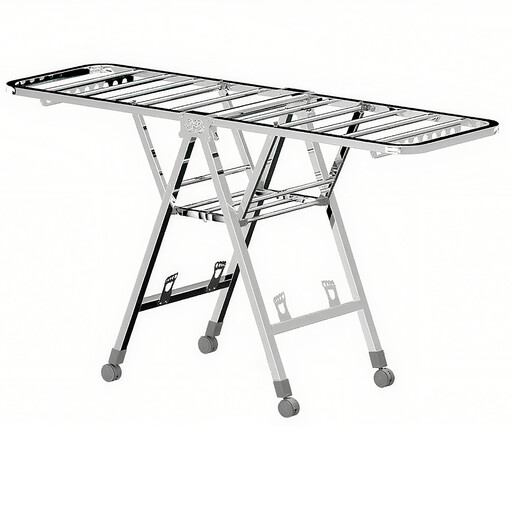
SNSP stainless steel winged clothes airer for quilts
An unheated, foldable alternative for drying pillowcases or other larger items on a freestanding airer.
The product title specifies stainless steel, folding wings and suitability for quilts.
View on Joybuy
 No image available
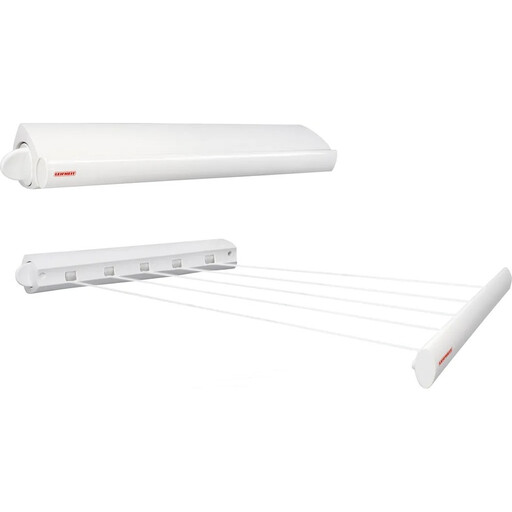
Leifheit Rollfix 210 wall-mounted clothes dryer
An unheated, wall-mounted option for households looking to keep floor space clear.
Wall mounting is required, so check first that you have a suitable and secure place to install it.
View on Joybuy
Frequently asked questions
Can I put any pillowcase on warm bars?
No. The appliance specifications don’t automatically mean that every pillowcase is suitable. Check the drying instructions for the specific fabric; the symbols distinguish, among other things, between line drying and drying flat.
Do I still need to ventilate the room when using a heated clothes airer?
Yes. Drying laundry indoors releases extra moisture into the room. The German Federal Environment Agency therefore recommends paying particular attention to good ventilation; the heating function doesn’t remove the evaporated water from the room.
How can I estimate the electricity use of a heated airer?
Multiply the power in kilowatts by the number of hours it’s used to estimate consumption in kilowatt hours. To work out the cost, multiply this figure by your own price per kilowatt hour; this won’t tell you how long drying will take.
What details should I check for an electrical appliance?
Look for correct CE marking, identifiable manufacturer details and German instructions for use with the required warnings. The Federal Network Agency lists these points in connection with market surveillance; the European Commission notes that there is no central EU body that grants permission or issues a certificate to use the CE mark.
What should I do with an old heated clothes airer?
Treat it as electrical waste and dispose of it under the applicable take-back arrangements. The German Federal Environment Agency lists municipal collection points and retailer take-back options, subject to their respective conditions.


