If small loads dry reliably on your clothes airer and you can ventilate the room adequately, you don’t need an additional tumble dryer just to save energy. If you regularly need dry clothes sooner, or drying them indoors is impractical, a heat pump tumble dryer could be a useful addition. Compare your usual load sizes, moisture sensors, condensation efficiency and the space available. As the German Environment Agency explains, a smaller drum won’t necessarily use less energy if you need to run it more often.
Who might benefit from a tumble dryer for small loads?
Households with frequent, small loads
If you often dry just a few items, consider how frequently you’d run the tumble dryer and how much of the drum each load would fill. The German Environment Agency points out that a large drum that’s often only half full can use more energy per kilogram of laundry than a suitably loaded appliance.
People with limited space for drying
If your clothes airer is in a living area or laundry stays damp there for a long time, weigh up the space needed for an appliance against the room taken up by the airer and the ventilation required. The German Environment Agency identifies damp laundry as a source of indoor moisture.
People short on time or drying different fabrics
If you need certain items back in use sooner or dry a range of fabrics, check the programmes on the specific model and the care labels on your laundry. A quick programme isn’t automatically suitable for every load.
What matters when drying small loads?
Clothes airer and ventilation
A good fit if: you can dry small loads without being in a hurry and ventilate the room adequately.
The trade-off: You won’t use electricity to dry your laundry, but you will need space and will have to keep an eye on moisture levels in the room.
A heat pump tumble dryer alongside your clothes airer
A good fit if: you regularly need dry laundry sooner, or drying it on an airer indoors is impractical, and you have a suitable place for the appliance.
The trade-off: You’ll have the purchase cost and electricity use to consider; with partial loads, actual capacity and the appliance’s features matter.
A washer-dryer instead of a separate tumble dryer
A good fit if: you don’t have room for two appliances and are considering a combined model.
The trade-off: Compared with separate appliances, the consumer advice centre notes that washer-dryers use more electricity and water, and have a lower drying capacity than washing capacity.
First, estimate how often you’d dry laundry and how much you’d dry each time. Then compare the space required, energy-use figures and the programmes you can actually use.
| Priority |
What to check when buying |
Who is this important to? |
| Electricity costs for small loads |
Compare your usual load size and frequency with the maximum capacity; check kWh per 100 Eco cycles and the moisture sensors. |
If I often dry just a few items, I want to know whether the drum suits my loads. Around 40 % of consumers prioritise electricity costs for small loads. |
| Space and indoor moisture |
Check the appliance dimensions and the space it needs; compare condensation efficiency on the EU label. |
If the clothes airer takes up living space or laundry dries indoors, space and moisture levels are especially important. Around 30 % of consumers prioritise these factors. |
| Having laundry ready when you’re short on time |
Check the programme duration and permitted load for the specific programme; don’t assume the Eco programme takes as long as a quick programme. |
If I need certain items again quickly, I want a programme that suits that particular load. Around 20 % of consumers prioritise drying time. |
| Different or delicate fabrics |
Check that the care labels match the programmes available on the exact model. |
If I dry different fabrics, I want to be able to choose a suitable programme and follow the care instructions. Around 10 % of consumers prioritise fabric suitability. |
Common misconceptions when buying a tumble dryer
-
Assuming the maximum drum capacity reflects energy use for every small load
The rated capacity and the Eco programme’s energy-use figure don’t tell you directly how much energy a specific partial load will need.
Before choosing, compare your usual load sizes and the likely number of cycles with the model specifications. A smaller drum won’t necessarily use less energy if you need to run more cycles.
-
Comparing old and new energy classes as if they were the same
Since 1 July 2025, tumble dryers have used the A to G scale on the EU energy label; older classes such as A+++ aren’t on the same scale. The European Commission says the new scale is shown in shops and online.
Check the current label for the specific model and compare energy-use figures only on the same label basis.
-
Overlooking indoor moisture when air-drying laundry
Damp laundry is a source of moisture in living spaces. The German Environment Agency recommends paying particular attention to regular ventilation when there are sources of moisture like this.
When drying laundry on an airer, consider whether the room is suitable and ventilate it appropriately.
Tumble dryer brands to help guide your choice
Bosch
Bosch describes the WTH83V03 as a heat pump tumble dryer with a maximum capacity of 7 kg and AutoDry.
- Bosch also lists an Extra Short 40′ programme for this model.
- Bosch gives the noise level as 65 dB(A); the appliance doesn’t have a self-cleaning condenser. Check the manual to see whether the quick programme is suitable for your load.
AEG
AEG describes the TR7T50589 as a heat pump tumble dryer with a rated capacity of 8 kg.
- AEG lists MixDry for mixed loads and ProSense, which adjusts the drying time.
- These manufacturer specifications don’t confirm how much energy the appliance uses for small loads.
Beko
Beko describes the DS73S2PA as a heat pump tumble dryer with a maximum capacity of 7 kg.
- You can compare its rated capacity with that of 8 kg models.
- Capacity alone doesn’t mean lower energy use for small loads or a lower price.
Miele
Miele describes the TWC640WP as a T1 heat pump tumble dryer with a rated capacity of 8 kg.
- Miele lists DirectSensor controls for this model.
- The manufacturer’s specifications don’t show that this appliance dries small loads more cheaply or quickly than other models.
A heat pump tumble dryer to complement your clothes airer
The heat pump tumble dryers below are listed as options to complement your clothes airer. Compare the stated drum capacity with your usual load sizes and check which features of each model are relevant to you.
 No image available
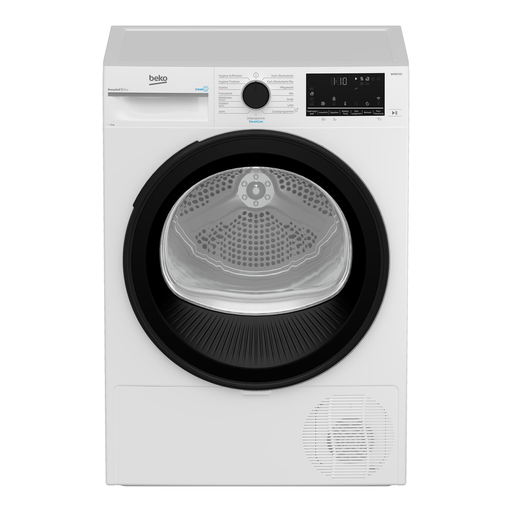
LG RT80X7B heat pump tumble dryer, 8 kg, matte black
If you want to machine-dry small loads, compare the stated drum capacity with the amount of laundry you usually dry.
8 kg; heat pump tumble dryer; AI Dry; TurboDry; SensorDry; ThinQ AI; matte black.
View at Joybuy
 No image available
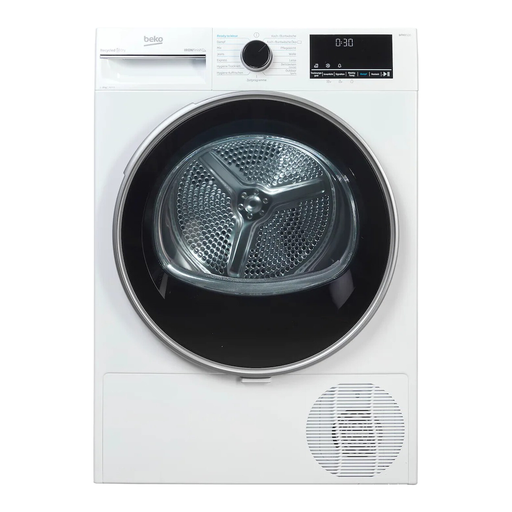
Beko B7TDT8820A heat pump tumble dryer, 8 kg, white
If you’re looking for a tumble dryer to complement your clothes airer, check whether the stated capacity and listed features suit your loads.
8 kg; heat pump tumble dryer; HomeWhiz; SteamCure; Sensor Drying; AquaWave Drum; white.
View at Joybuy
 No image available
Beko B5T4824IF heat pump tumble dryer, 8 kg, energy class C
For small loads, compare the rated capacity of 8 kg with the amount of laundry you usually dry, rather than deciding on drum size alone.
8 kg; heat pump tumble dryer; energy class C; white.
View at Joybuy
 No image available
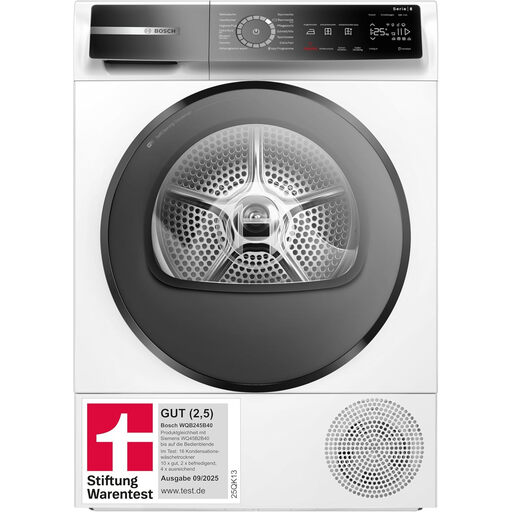
Bosch WQB245B40 Series 8 heat pump tumble dryer, 9 kg, energy class C
If you often dry only small loads, check whether the rated capacity of 9 kg suits the way you’ll actually use the appliance.
9 kg; heat pump tumble dryer; energy class C; AutoDry; Smart Dry; SelfCleaning Condenser; Home Connect; white.
View at Joybuy
 No image available
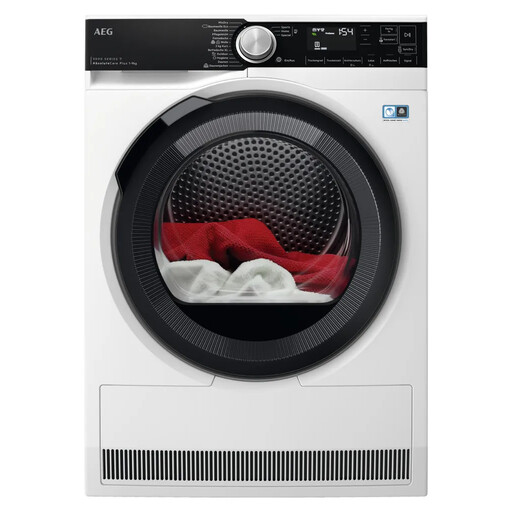
AEG TR9W80690 9000 Series AbsoluteCare Plus heat pump tumble dryer, 9 kg
If you dry small loads and different fabrics, check that the care instructions match the programmes on the specific model.
9 kg; heat pump tumble dryer; 3D-Scan; Wool & Silk Protection; MixDry; Hygiene Programme; Wi-Fi; white.
View at Joybuy
Frequently asked questions about small loads and tumble dryers
Is a 7 kg tumble dryer automatically more energy-efficient for small loads than an 8 kg model?
No, a smaller drum isn’t automatically more energy-efficient. The German Environment Agency points out that running more cycles more often can use more energy. Compare your usual load sizes with the specifications of the models you’re considering; Eco programme label figures don’t measure every partial load.
What should I consider when using a clothes airer indoors?
When drying damp laundry indoors, make sure you ventilate regularly, as recommended by the German Environment Agency. An additional tumble dryer doesn’t remove the need to ventilate if you still dry laundry on an airer.
What should I maintain after a drying cycle?
Clean the filters as instructed in your appliance manual. The German Environment Agency notes that neglected filters can lead to longer drying times and higher energy use.
What energy label should I look for when buying a tumble dryer?
Since 1 July 2025, the EU energy label for tumble dryers has used the A to G scale, which must also be displayed online. For the specific model, compare factors including energy use, capacity and condensation efficiency. Older classes such as A+++ aren’t on the same scale.
Does a manufacturer’s guarantee replace my rights with the retailer?
No. According to Your Europe, the minimum legal guarantee for goods in the EU is two years and applies to the sales contract with the seller. An additional commercial guarantee must not limit these rights.


