Sportswear you need to wear again soon
If you regularly need your sportswear ready for another workout, check its care label and choose a suitable programme. GINETEX explains the different care symbols for drying.


A heat pump tumble dryer can complement your clothes airer if you regularly wash sportswear that is suitable for tumble drying, or want to free up space indoors. First, check the care label, the appropriate programme and its load limit. Items that are not suitable for tumble drying will still need to air dry, and a tumble dryer is no substitute for choosing the right place to dry your washing or ventilating the room.
If you regularly need your sportswear ready for another workout, check its care label and choose a suitable programme. GINETEX explains the different care symbols for drying.
A tumble dryer can take suitable washing off the airer, but it also needs space of its own. The German Environment Agency recommends ventilating more when drying washing indoors.
If you only tumble dry occasional loads, compare energy consumption on a like-for-like basis and consider which programme you can actually use. The consumer advice centre explains the electricity consumption figures on the energy label.
A good fit if: You regularly have sportswear that is suitable for tumble drying, and a specific model offers a suitable programme.
The trade-off: The appliance needs space and uses electricity; Eco figures are not consumption figures for sportswear programmes.
A good fit if: Some items cannot go in the tumble dryer, you do not want to make space for another appliance, or air drying works for you.
The trade-off: An airer takes up space while your washing dries; regular ventilation is important when drying washing indoors.
| What matters | What to check before buying | Who is it important to? |
|---|---|---|
| Care label and programme | Tumble-drying symbol and temperature setting; approved fabric types and the load limit for the specific programme. | If I want to dry performance clothing in line with its care label, I’ll check the care instructions and the appliance programme first. Around 29% of consumers put suitable fabric care first. |
| Moisture in the room | Condensation efficiency on the current label and ventilation options in the place where the dryer will go. | If I have been drying washing in a living space, I want to take better account of moisture and the space it needs. Around 23% of consumers prioritise the conditions around an indoor clothes airer. |
| Electricity use and costs | Compare energy classes A to G and kWh per 100 Eco cycles on the same test basis; do not compare these directly with older label scales. The consumer advice centre explains these figures. | If I plan to use the dryer regularly, I want to compare its stated consumption with how I’ll use it. Around 18% of consumers prioritise clear running costs. |
| Small loads and time | Check whether the appliance has a small-load function, and which fabrics and quantities are allowed for the programme you want. | If I only have a few items after training and need them again soon, I’ll check that the programme is actually suitable. Around 18% of consumers prioritise small loads that need to be ready quickly. |
| Installation, noise and maintenance | Compare the appliance dimensions and required clearance, dB(A) rating, condensate drainage and care instructions. | If the dryer will be near living spaces, I want to assess its size, noise and ease of use beforehand. Around 12% of consumers pay particular attention to where it will go and the maintenance it needs. |
The appliance’s maximum capacity does not tell you how much washing a particular specialist programme can take.
Check the fabric types and load limits in the instructions for the specific programme.
The current energy label gives consumption figures based on a standardised Eco programme for cotton, not a specific sportswear load.
Compare kWh per 100 cycles only on the same test basis, and do not use the figures to estimate consumption for a different programme.
Not every item of clothing can go in the tumble dryer. Drying washing indoors also releases moisture into the room.
Only tumble dry items that are approved for it, and ventilate the room if you still dry washing indoors on an airer. The German Environment Agency recommends ventilating more in this situation.
The term refers to cleaning the condenser; it does not automatically mean that the appliance needs no other maintenance.
Check the model’s instructions to see which filters, containers and other parts need cleaning or emptying.
The Bosch WQG235D90 is a useful point of comparison if you’re considering sportswear and smaller loads.
The Siemens WQ46B2D41 is a useful point of comparison if noise and condensate handling are important when deciding where to put the appliance.
The AEG TR9W75780 is a useful point of comparison if you have suitable outdoor or layered garments to dry.
The Beko B3T4224SD adds a model with sensor drying to the comparison.
These appliances are listed as heat pump tumble dryers with details of sportswear or outdoor programmes, or smaller loads. Before drying an item, check that its care label says it is suitable.
 No image available
A Sportswear programme is useful when choosing a dryer for sportswear that is suitable for tumble drying; check the care labels on each item.
Listed specifications include 8 kg, 85 kWh per 100 cycles and 62 dB. The product title also mentions a Dual Inverter heat pump and Matt Black.
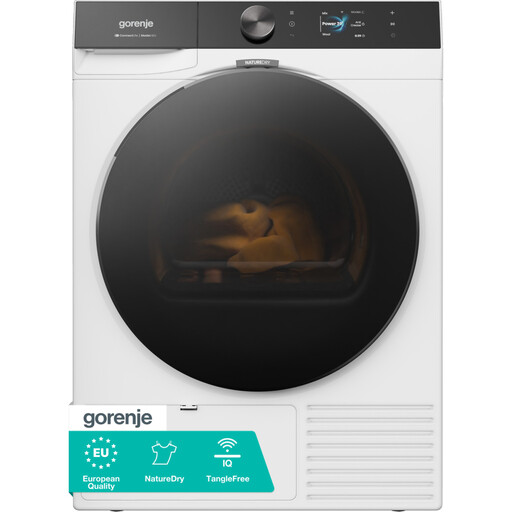 No image available
A Sports programme and a half-load function are useful when choosing a dryer for suitable sportswear and smaller loads.
Other listed features include 15 programmes, a moisture sensor and AutoDrain. Check the load limit and fabric types allowed for the programme you choose.
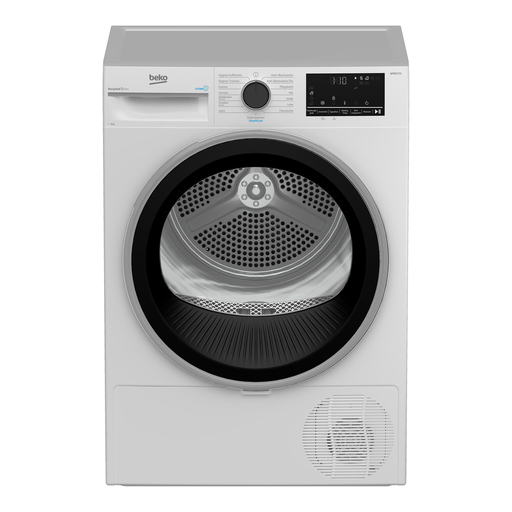 No image available
The listed Outdoor/Sports programme may be useful when choosing a dryer, but whether an item can go in it still depends on its care label.
Listed specifications include 8 kg, energy efficiency class B and 88% condensation efficiency. Other features include 15 programmes and sensor drying.
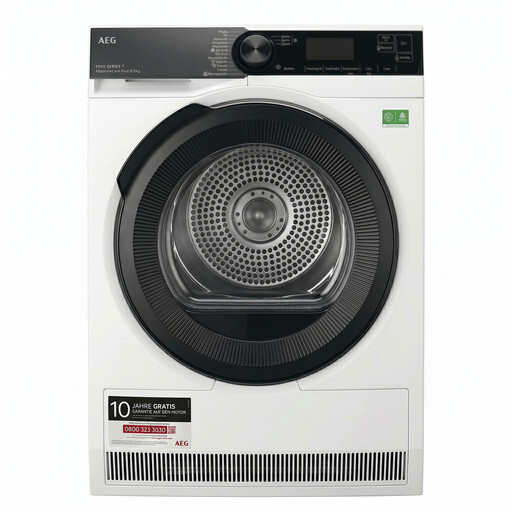 No image available
Sportswear and outdoor programmes are listed; only use them for garments whose care labels allow tumble drying.
AEG lists energy efficiency class B and 85 kWh per 100 Eco cycles for this model. ProSense is described as adjusting the drying time to the size of the load.
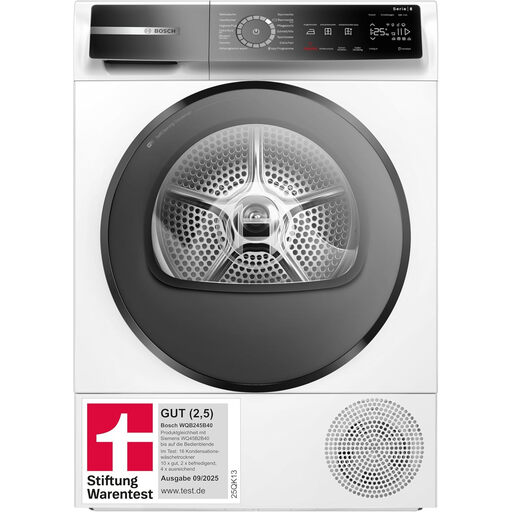 No image available
A Sportswear programme and a half-load function are useful when choosing a dryer for suitable fabrics and smaller loads.
Listed specifications include energy efficiency class C, 110 kWh per 100 cycles and 88% condensation efficiency. Check the instructions for the specific programme before loading sportswear.
No. Always start by checking the care label on each item. GINETEX distinguishes between drying at a normal or lower temperature and the instruction not to tumble dry. Only then should you choose a suitable programme, making sure to follow its load limit.
The German Environment Agency recommends avoiding drying washing indoors where possible, and ventilating more when you do. A heat pump tumble dryer does not remove the need to ventilate if you still dry washing on an airer.
First, compare the kWh per 100 Eco cycles on current EU energy labels. These figures are based on a standardised test for cotton and do not measure the consumption of a sportswear programme. To estimate your own costs, you’ll also need the actual consumption of the programme you use and your electricity price.
No. According to the Federal Institute for Materials Research and Testing, the repairability index will only become compulsory from 1 January 2027; it has been optional since 24 November 2025. The current A to G energy label has been in use since 1 July 2025.