If there’s room for a separate appliance and you can get it into position, a heat pump tumble dryer with a capacity suited to your usual towel load is a sensible place to start. It doesn’t need an external vent, but you should still check its overall dimensions, including space for the door to open, as well as kWh per 100 Eco cycles, condensation efficiency and noise levels. A washer-dryer may be an option if there’s no room for a separate tumble dryer or a suitable place to dry clothes. However, the Verbraucherzentrale advises that you should allow for higher electricity and water consumption, and a drying capacity that’s often lower than the washing capacity.
Who is this choice relevant to?
Households short on space
If space is limited, check the dimensions of the specific appliance, the route it needs to take into your home and how its door opens. The Verbraucherzentrale lists capacity and noise level as other details to check on the energy label.
Households with regular towel loads
The drum should suit the usual amount of towels that are safe to tumble dry. The Umweltbundesamt notes that an oversized dryer which is often only half full may use more energy per kilogram of laundry.
Households with living space near the appliance
If you’ll hear the appliance in everyday use, noise levels and condensation efficiency matter alongside electricity consumption. The Verbraucherzentrale lists these as factors to consider on the energy label.
What should you look for when buying?
Separate heat pump tumble dryer
A good fit if: you have space and access for the appliance, and want to tumble dry towels regularly.
Things to weigh up: Condenser tumble dryers don’t need an external vent, but energy consumption, Eco programme duration, condensation efficiency and noise levels vary by model. (European Commission; Verbraucherzentrale)
Washer-dryer
A good fit if: there’s no room for a separate tumble dryer or somewhere to hang washing, and you’re happy with a smaller drying load per cycle.
Things to weigh up: The Verbraucherzentrale notes that washer-dryers use more electricity and water than separate appliances, and often have a lower drying capacity than washing capacity.
Clothes airer or washing line
A good fit if: you have a suitable place to dry your washing and can manage without a tumble dryer.
Things to weigh up: You’ll need space to hang your towels while they dry.
Vented or conventional condenser tumble dryer
A good fit if: you have a suitable route to the outside for a vented dryer, or already use one of these appliances.
Things to weigh up: Older models without heat pump technology may use considerably more electricity. Check the energy consumption and installation requirements of the specific appliance. (Umweltbundesamt)
For towels that are safe to tumble dry in a small flat, the main considerations are usually space, a suitable load size, running costs and comfort at home. The figures below show the most important purchase priority for consumers in this scenario.
| Priority |
What to check when buying |
Who is this particularly important to? |
| Space and installation |
Check the appliance’s height, width and depth, as well as the access route and the space needed to open the door. |
If the appliance needs to fit into an alcove and the door needs to open freely, I’ll measure the space, access route and clearance for the door. For around 31% of consumers, fitting the available space comes first. |
| Suitable towel load |
Compare your usual load size with the stated capacity, and check the care label and suitable programme. |
If I regularly have several towels that are safe to tumble dry, I want a drum that suits that load. Around 25% of consumers prioritise a suitable towel load. |
| Running costs |
Compare kWh per 100 Eco cycles on the same label basis; use your own number of cycles and electricity tariff to estimate costs. |
If I dry clothes frequently, I want to compare energy consumption on a like-for-like basis before estimating running costs. Around 25% of consumers put electricity consumption first. |
| Noise and moisture released |
Check the model’s noise level in dB(A) and condensation efficiency on its label or specification sheet. |
If the tumble dryer is near my living space, I’ll consider noise and moisture released as well as energy consumption. For around 19% of consumers, home comfort comes first. |
Common misconceptions
-
Fewer kilograms mean a narrower appliance
Rated capacity alone doesn’t tell you how wide the appliance is. Beko Deutschland lists a width of 59.8 cm for its 7 kg B3T41230 tumble dryer; the 8 kg Bosch WQG233D40 and Hisense DH3S802BW3 are also around 60 cm wide.
Measure the appliance, access route and door clearance rather than filtering by capacity alone. (Beko Deutschland; Bosch Hausgeräte Deutschland; Hisense Deutschland)
-
Comparing old A+++ ratings directly with the current label
Since 1 July 2025, household tumble dryers have used the EU energy label scale from A to G. Older ratings on a different scale aren’t directly comparable.
Compare current product data on the same label basis, especially energy consumption in kWh per 100 Eco cycles. (European Commission)
-
A washer-dryer is a like-for-like replacement for a separate tumble dryer
The Verbraucherzentrale notes that washer-dryers use more electricity and water than separate appliances, and often have a lower drying capacity than washing capacity.
Consider a washer-dryer mainly if there’s no room for a separate tumble dryer or somewhere to hang washing. Make sure you check its drying capacity.
-
Choosing a dryer based only on its efficiency rating and energy consumption
In a small flat, condensation efficiency, noise and access for cleaning also matter. The Verbraucherzentrale explains that higher condensation efficiency means less of the moisture removed from clothes is released into the room.
Check the specific model’s label ratings and cleaning instructions before deciding where to put it.
Relevant brands and models
Bosch
The WQG233D40 is a specific 8 kg model to consider if you want to compare a dedicated towel programme and Auto Dry.
- Bosch Hausgeräte Deutschland lists dimensions of 842 × 598 × 613 mm, a noise level of 64 dB(A) and a towel programme for the WQG233D40.
- A self-cleaning condenser isn’t listed for this model. Check the filter care requirements and allow room for the door to open.
Beko
With a 7 kg capacity, the B3T41230 offers a useful point of comparison for smaller loads.
- Beko Deutschland lists sensor drying, dimensions of 84.6 × 59.8 × 60.5 cm and a noise level of 64 dBA for this model.
- A 7 kg capacity doesn’t automatically mean a narrower appliance. The manufacturer’s claims about gentle drying aren’t an independent comparative test.
Hisense
The 8 kg DH3S802BW3 heat pump tumble dryer is worth considering when comparing door hinge options and towel programmes.
- Hisense Deutschland lists energy efficiency class C, 102 kWh per 100 Eco cycles and 63 dB(A) for this model.
- The manufacturer’s claims about short programmes don’t prove that a full towel load will dry in that time.
Exquisit
The TWP803-031D is another 8 kg option to consider if you want to compare dimensions and energy consumption.
- Exquisit lists dimensions of 85.0 × 59.5 × 59.0 cm, energy efficiency class D, 119 kWh per 100 standard cycles and 65 dB(A) for this model.
- The manufacturer’s description of its depth as space-saving doesn’t replace measuring the appliance, including the space needed for the door.
AEG
The TR9W75780 is an 8 kg model to compare for energy consumption, noise and fabric programmes.
- AEG Deutschland lists energy efficiency class B, 85 kWh per 100 operating cycles and 63 dB(A) for this model.
- The advertised benefits of 3DScan and AbsoluteCare don’t prove an advantage for towels that are safe to tumble dry over other models.
Joybuy products for drying towels in small flats
The products below are separate heat pump tumble dryers. Compare their stated capacity and energy efficiency class with your usual towel load, and check that their dimensions and door clearance suit your available space.
 No image available
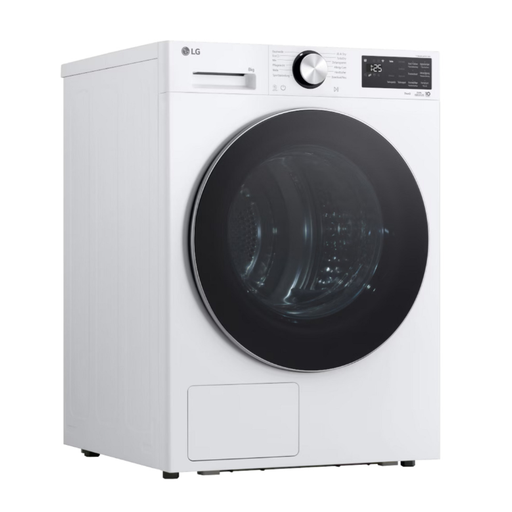
LG RT80X72W, 8 kg, energy efficiency class B
As a separate heat pump tumble dryer, this model is an option for households that want to tumble dry towels.
Rated capacity: 8 kg. Energy efficiency class: B.
View at Joybuy
 No image available
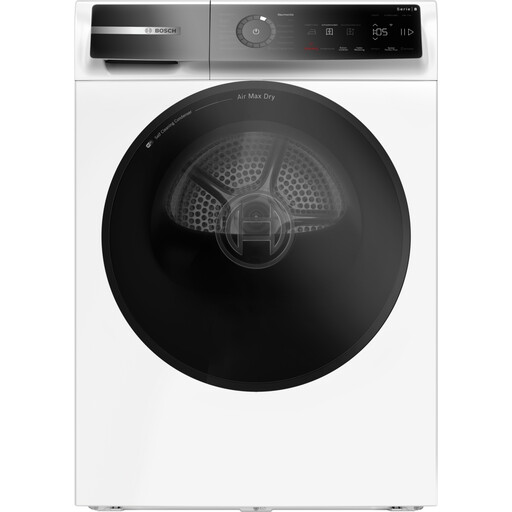
Bosch WRB247C40, 9 kg, energy efficiency class A
Its stated capacity may be worth considering for larger regular towel loads. Compare it with your usual load and the space available.
Rated capacity: 9 kg. Energy efficiency class: A.
View at Joybuy
 No image available
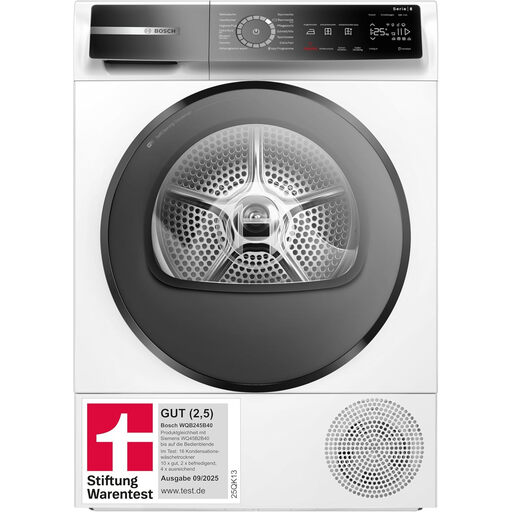
Bosch WQB245B40 Serie 8, 9 kg, energy efficiency class C
If you regularly have larger towel loads, compare the stated capacity with your usual load and the space available for the door to open.
Rated capacity: 9 kg. Energy efficiency class: C.
View at Joybuy
 No image available
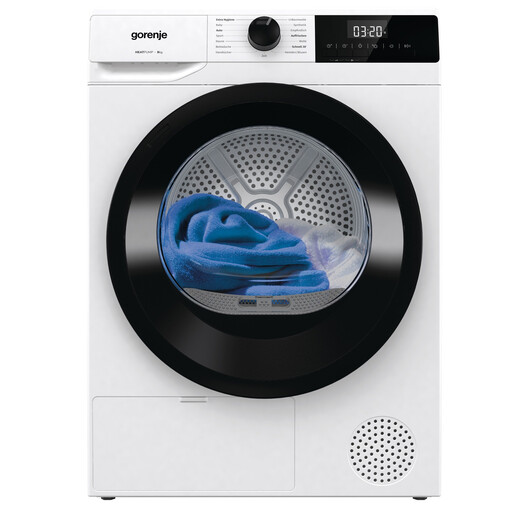
Gorenje DHNE82, 8 kg
The stated capacity provides a useful comparison for households that regularly dry towels. Also check the appliance’s actual dimensions against your available space.
Rated capacity: 8 kg.
View at Joybuy
 No image available
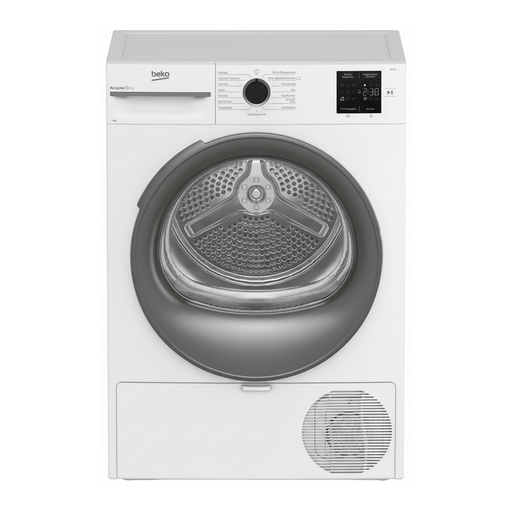
Beko BM3T38210W1, 8 kg, energy efficiency class E
This model is worth considering for regular towel loads. Compare its capacity with your usual load and its dimensions with your available space.
Rated capacity: 8 kg. Energy efficiency class: E.
View at Joybuy
Frequently asked questions
Do I need an external vent for a heat pump tumble dryer?
No. According to the European Commission, a condenser tumble dryer doesn’t need an external vent. Check the instructions for your specific appliance to see whether it collects condensate or drains it through a designated outlet.
Which programme can I use for my towels?
First, check the care label on each towel. The tumble-drying symbol and the dots inside it show whether it can be tumble dried and at what temperature. Then choose a programme from the appliance manufacturer that’s suitable for the fabric.
How can I estimate the electricity cost of running a tumble dryer?
Divide the model’s stated kWh per 100 Eco cycles by 100, then multiply it by the number of cycles you expect to run each year and your electricity tariff in euros per kWh. This calculation is based on the Eco label; load size and programme choice can affect actual consumption.
What label should I look for when buying a new tumble dryer?
Since 1 July 2025, household tumble dryers have used the EU energy label scale from A to G. The label includes details such as capacity, kWh per 100 Eco cycles, condensation efficiency, programme duration and noise. Washer-dryers use a different product label, so don’t assume the figures are directly comparable.
What should I bear in mind when cleaning it?
Clean the lint filter regularly, and clean the condenser or heat exchanger if the instructions recommend it. The Verbraucherzentrale warns that lint and dust can also become a fire hazard over time.


