
Lieferung heute & morgen

Qualitätsgarantie

Willkommens-Angebote freischalten: KOSTENLOSE Lieferung | Bis zu 80 % RABATT | Kostenlose 30-Tage-JoyPlus-Testphase
App herunterladen
The quality of a finished wall or ceiling in drywall construction is largely determined by two process steps: filling and smoothing joints, and the subsequent sanding. Achieving a precise finish requires tools with complementary functional properties. A Drywall Tool Set combines the essential components for these tasks, designed to improve both the efficiency and consistency of your work. This article analyzes the technical criteria for selecting these sets and highlights specific product combinations.
The selection of a suitable tool set should be based on an analysis of technical specifications and material quality. The following parameters are relevant for professional users and ambitious DIY enthusiasts:
The following products were selected based on their technical specifications and their scope of application for wall finishing.
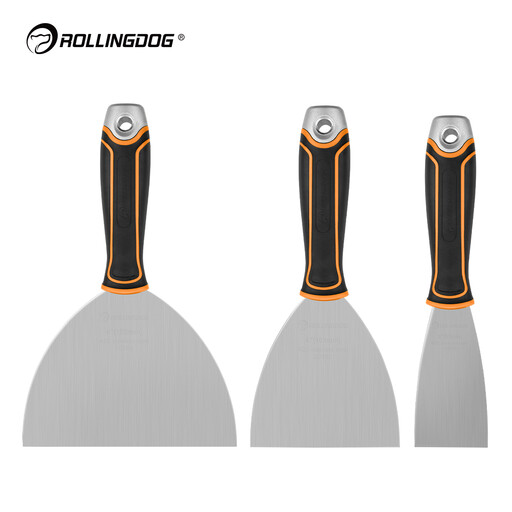
Why we feature this product: This set addresses the fundamental requirement in drywall finishing: the precise application and smoothing of filler material. The selection of blade widths (2", 4", 6") covers a wide spectrum from detail work to finishing medium-sized areas. According to the manufacturer, the blades are made of flexible, hollow-ground 420-grade stainless steel, which promotes good conformity to the surface and clean feathering of the joint compound.
Advantages:
Who it's for: This set is a foundational kit for professionals and DIYers who need a reliable wall repair tool for filling cracks, taping drywall joints, or smoothing surfaces.

Why we feature this product: Efficiency in sanding large areas is a key concern in drywall work. This Wall Sander Set combines two specialized manual wall sanders: a round sander (? 220 mm) for large wall and ceiling surfaces and a rectangular sander (225 mm x 85 mm) for edges and corners. The handle features a push-button mechanism that allows for quick changes between the sanding heads and for mounting on a tapered extension pole.
Advantages:
Who it's for: This set is aimed at users tackling entire rooms or large wall sections. It is suitable for professional painters and drywallers, as well as for ambitious DIY projects where both speed on large surfaces and precision at the edges are required.

Why we feature this product: Cleanly sanding internal corners presents a unique challenge. This Corner Sander is specifically designed for this task. Its shape allows for the simultaneous and even sanding of both adjacent wall surfaces in an internal corner. Like the wall sander set, this tool also uses the same ergonomic handle with a quick-change mechanism, which enhances system compatibility.
Advantages:
Who it's for: This tool is a valuable addition for anyone aiming for a perfect finish. It is ideal for drywallers and painters who regularly face the challenge of sanding hard-to-reach corners in preparation for painting.
The featured sets cover the core tasks of wall finishing and sanding. For more extensive renovation or construction projects that require additional painting tools or specialized painter's supplies, an expanded toolkit may be necessary. You can find a selection of other tools and accessories in our main category.
Discover More DIY Tools & Accessories
1. What grit is recommended for sanding joint compound in drywall? The choice of grit depends on the work step. For the initial rough sanding to remove major imperfections, a grit of 80 to 120 is typically used. For the final sanding, which creates a smooth, paint-ready surface, a finer grit in the 180 to 240 range is suitable.
2. How are putty knives and sanding tools properly cleaned? Putty knives should be cleaned with water immediately after use to prevent the joint compound from hardening on the blade. Afterward, they must be dried completely to prevent corrosion on non-stainless parts. Sanding tools should be cleared of dust after use. Sandpaper is a consumable and is replaced when worn out.