
Lieferung heute & morgen

Qualitätsgarantie

Willkommens-Angebote freischalten: KOSTENLOSE Lieferung | Bis zu 80 % RABATT | Kostenlose 30-Tage-JoyPlus-Testphase
App herunterladen
A dual-tip brush pen set opens up a world of creative possibilities, from elegant hand lettering and detailed illustrations to colourful journaling. However, the vast selection on the market can quickly become overwhelming. Many buyers only discover after their purchase that the pens don't live up to their advertising promises. This guide will help you navigate the common pitfalls and find a set that truly meets your needs.
The most frequent problems when choosing a set include tips that fray quickly, colours that don't match the cap, and ink that bleeds unattractively through the paper. Such flaws can not only diminish the joy of the creative process but also mean your investment was poorly spent.
To avoid a bad purchase, you should focus on a few crucial technical features. These determine the longevity, versatility, and quality of your creative work.
The heart of any pen is its tip. A fineliner and brush tip set combines two functions in one pen, making it particularly versatile.
A set that includes replacement tips is a clear sign of a thoughtful, long-lasting product design.
The type of ink has a significant impact on the result and the possible applications.
A large number of pens, as in a 120 artist pens set, is tempting. However, more important than the sheer quantity is the quality and composition of the colours. A good set offers a balanced palette without unnecessary duplicates. Useful accessories like a blank colour chart (swatch card) are a mark of quality, as they allow you to see the actual colour on paper rather than relying on the cap colour. A sturdy carrying case protects the pens and keeps them organised.
Here are some recommendations tailored to different needs and use cases.
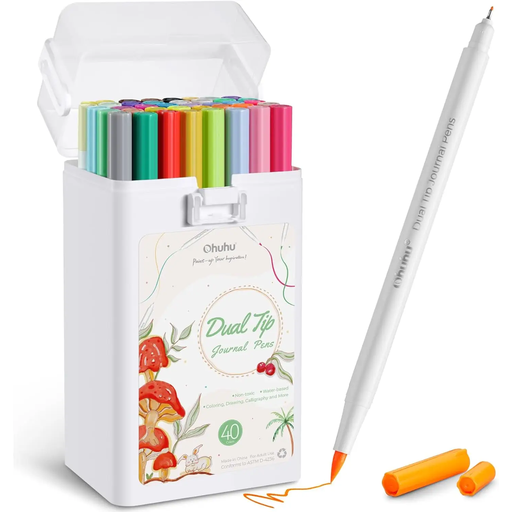
Why this set is a good fit: Ideal for beginners in hand lettering or journaling who want to try out the versatility of dual-tip pens without making a large investment. The 40 colours provide a solid starting palette for initial projects.
The water-based ink is less prone to bleeding on suitable paper compared to cheap alcohol markers. The included blank swatch card solves the problem of inaccurate cap colours.
According to the manufacturer, the ink is certified as non-toxic and acid-free according to ASTM D-4236, which provides safety for personal use.
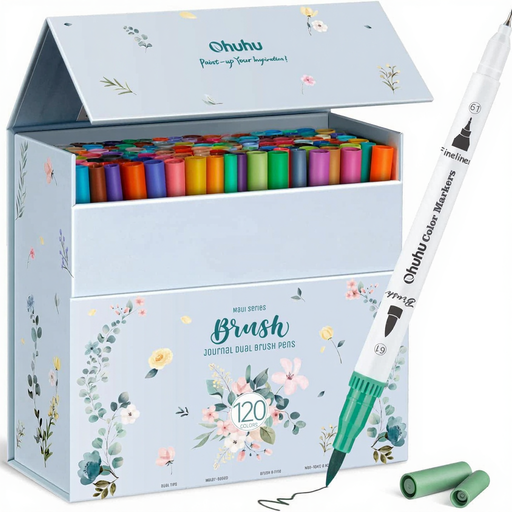
Why this set is a good fit: With 120 colours, this set is aimed at creatives who need an extensive palette for complex illustrations or frequent projects. The case and replacement tips support long-term, intensive use.
The problem of quickly fraying tips is addressed directly here: the set includes 8 replacement tips (5 brush tips, 3 fineliner tips), which significantly extends the life of the most frequently used pens.
The combination of a very large colour selection, water-based ink for watercolour techniques, and the included replacement parts offers a comprehensive package for ambitious hobby artists.
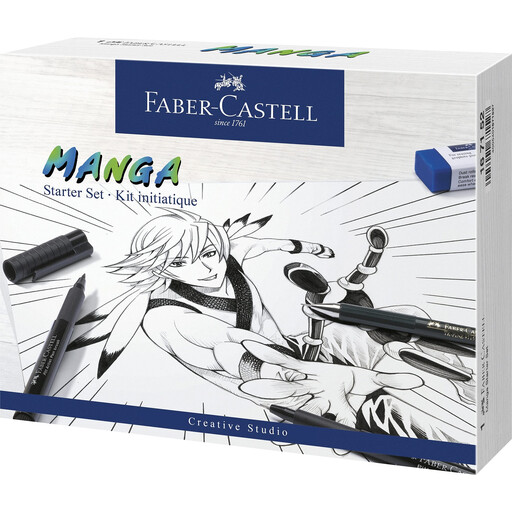
Why this set is a good fit: This set is specially curated for the needs of manga artists. It includes not only pens with different line widths (XS, M, Brush) but also a mechanical pencil for preliminary sketches and other accessories.
It bypasses the "one-size-fits-all" problem by offering specialised, high-quality pigment ink pens. The ink is waterproof after drying, which is crucial for clean outlines that will be coloured in later.
The highly pigmented artist's ink is known for its high lightfastness. The set also includes a manikin as a drawing aid for poses and proportions.
Discover our full range of pens and drawing materials, carefully selected based on objective quality criteria.
Most manufacturers recommend storing dual-tip pens horizontally. This ensures that the ink flows evenly to both tips and neither side dries out. Also, make sure to close the caps tightly after each use.
To minimise ink bleeding, smooth, coated paper with a higher grammage (weight per square meter) is recommended. For water-based pens, mixed-media paper or special marker paper from 120 g/m? upwards is suitable. For alcohol-based markers, special marker paper with an integrated barrier layer is the most functional choice.
The main difference lies in the ink's solvent. Water-based pens are low-odour, blendable with water (for watercolour effects), and ideal for paper in notebooks or journals. Alcohol-based pens offer more intense colours and allow for seamless transitions but require special paper and good ventilation.