
Lieferung heute & morgen

Qualitätsgarantie

Willkommens-Angebote freischalten: KOSTENLOSE Lieferung | Bis zu 80 % RABATT | Kostenlose 30-Tage-JoyPlus-Testphase
App herunterladen
Dual-tip pens promise double the creativity and efficiency in a single tool. Whether for precise lines in journaling, sweeping strokes in calligraphy, or vibrant fills in illustrations, their versatility is their greatest strength. However, the market is flooded with products of dramatically varying quality. Many buyers discover only after a short time that the tips fray, the ink bleeds through the paper, or the colours don't meet their expectations. This guide will help you navigate these pitfalls and make an informed decision.
Before you invest in a new set, you should be aware of the typical flaws that often only become apparent with use and lead to disappointment.
To make a smart choice, focus on objective, technical parameters rather than marketing promises. The following three aspects are crucial for the performance and longevity of your pens.
The ink's composition determines its application, colour behaviour, and compatibility with different types of paper.
The combination of the two tips defines the pen's functionality. Consider which tasks you will primarily be performing.
For products that will also be used by children, look for safety certifications like ASTM D-4236. This confirms that the product has been classified as non-toxic. Another important feature is ventilated safety caps, which can minimise the choking hazard if accidentally swallowed. The quality of the pen barrel, usually made of polypropylene (PP), also contributes to longevity by preventing the ink from drying out.
Here are some recommendations tailored to specific needs that take the aforementioned quality criteria into account.
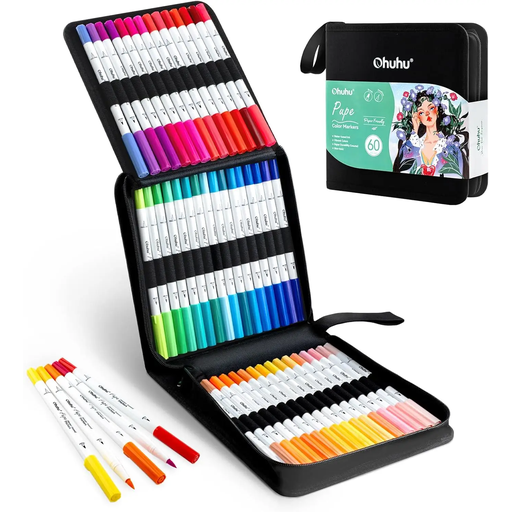
Why This Fits Their Persona: This set is an ideal all-rounder for creative beginners. The combination of a 0.4 mm fineliner tip and a flexible 1-5 mm brush tip covers all needs, from hand lettering to detailed illustrations in a bullet journal. The wide selection of 60 colours, including a colourless blender, offers immense creative freedom.
The water-based ink is formulated to be paper-friendly, reducing paper fraying and bleed-through when used on suitable, thicker paper, according to the manufacturer. The tips are designed for long-lasting use.
Versatile Tip Combination: Fineliner for details and a brush tip for large areas and calligraphy. Wide Colour Selection: 59 colours plus a blender pen for watercolour effects. ASTM D-4236 certified.
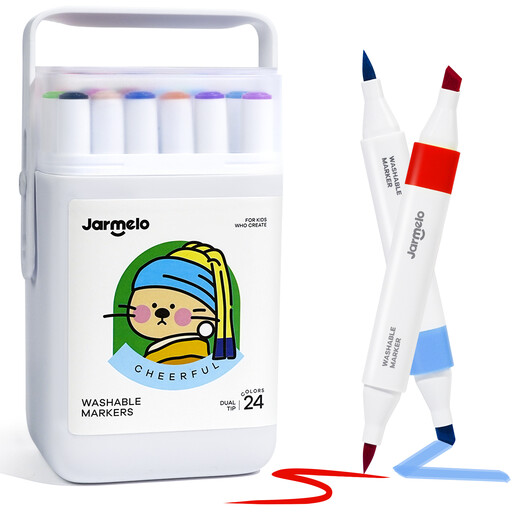
Why This Fits Their Persona: For parents, safety and easy cleanup are top priorities. This set was specifically designed for children, combining a brush tip for creative painting with a chisel tip for colouring large areas. The thick, oval pen barrel is ergonomically shaped for children's hands.
This product directly addresses the "false washability" trap. According to the manufacturer, the ink is 90% washable from skin and most fabrics. Additionally, the caps are ventilated to meet safety standards for children's toys.
Focus on Safety: Non-toxic, odourless, water-based ink and ventilated caps. Highly Washable: Significantly reduces cleanup effort. Comes in a convenient carrying case.
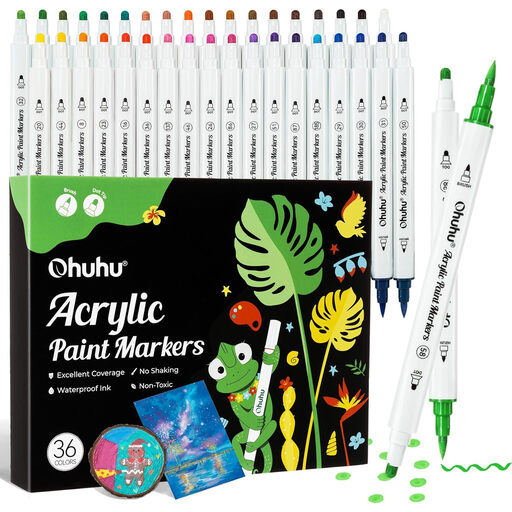
Why This Fits Their Persona: For artists who work on more than just paper, acrylic pens are essential. This set is designed for a variety of surfaces like stone, wood, glass, and ceramic. The innovative combination of a brush tip for large areas and a dot tip for details opens up new creative possibilities.
Conventional markers fail on smooth or porous surfaces. These acrylic pens solve that problem with a high-opacity, water-based ink developed for permanent adhesion on diverse materials, eliminating the need for multiple different types of pens.
Multi-Surface Capability: Works on glass, plastic, metal, stone, wood, and more. High Opacity: The ink provides bold and even colour laydown. The pens are ready to use instantly, with no shaking or priming required.
We have compiled a complete, up-to-date list of products that fully meet these strict selection criteria and safety regulations.
Most manufacturers recommend storing dual-tip pens horizontally. This ensures that the ink flows evenly to both tips and prevents either side from drying out. Additionally, keep them in a cool, dry place, away from direct sunlight.
To minimise ink bleed-through, you should use paper with a higher grammage (weight). Paper of 120 gsm or higher is ideal. Special marker paper, mixed-media paper, or hot-press watercolor paper are excellent options, as their surfaces are treated to absorb ink without letting it bleed.
The permanence of acrylic ink depends on the nature of the surface. On porous materials like wood, unglazed clay, or paper, the ink absorbs and becomes very durable and waterproof once dry. On smooth, non-porous surfaces like glass, metal, or glazed porcelain, the ink adheres well but can be damaged by heavy mechanical abrasion (e.g., scratching). For maximum durability on such surfaces, the artwork can be sealed with a suitable clear varnish after drying.