
Lieferung heute & morgen

Qualitätsgarantie

Willkommens-Angebote freischalten: KOSTENLOSE Lieferung | Bis zu 80 % RABATT | Kostenlose 30-Tage-JoyPlus-Testphase
App herunterladen
Dual-tip pens, also known as dual markers, combine two different nibs in a single barrel. This design enhances efficiency by eliminating the need to switch between different pens for various line weights or applications. Selecting the right pen depends on objective criteria such as ink type, nib construction, and the intended surface. This guide analyses the technical parameters relevant for making an informed decision.
The functionality of a dual-tip pen is determined by the physical and chemical properties of its components. An analysis of the following three main criteria is crucial for selection.
The ink defines the pen's adhesion, opacity, drying time, and permanence. There are three primary base types:
The functionality of a dual marker is defined by its combination of nibs. Common pairings include:
A pen's suitability for a specific material is directly dependent on its ink type.
| Surface | Recommended Ink Type | Rationale | | :--- | :--- | :--- | | Paper, Cardstock | Water-based, Alcohol-based | Water-based inks are less prone to bleeding. Alcohol-based inks can bleed through thin paper. | | Glass, Ceramic, Plastic | Alcohol-based, Acrylic ink | These inks adhere to non-porous surfaces and are permanent once dry. | | Stone, Wood, Canvas | Acrylic ink | The high opacity and paste-like consistency of acrylic ink fill porous structures well. | | Metal | Alcohol-based (Permanent Marker) | The fast drying time and high adhesion are ideal for industrial labelling. |
The following products have been selected based on their specific technical features and clearly defined areas of application.

Why We Recommend This Product: The STAEDTLER Lumocolor Permanent Duo is designed for users who need a reliable permanent marker for functional purposes. Its strength lies in the combination of a universally adhesive, fast-drying ink and two practical nib sizes. According to the manufacturer, its "Dry Safe" feature allows the pen to be left uncapped for days without drying out, which increases its longevity in professional settings.
Pros:
Who It's For: This product is aimed at professionals in logistics, trade, and office environments who require a robust and versatile tool for permanent marking.
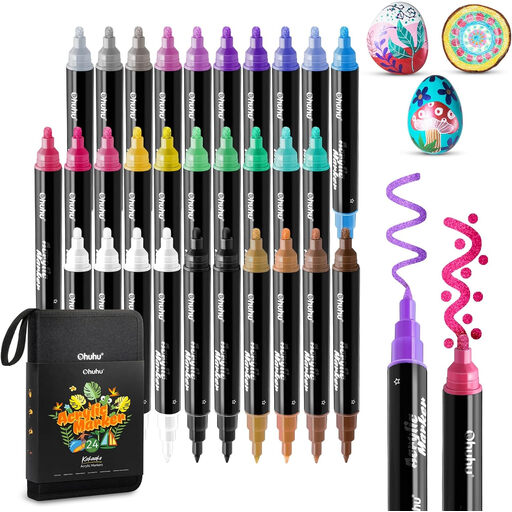
Why We Recommend This Product: This set from Ohuhu stands out for its material versatility and high opacity. The water-based acrylic ink is designed for a wide range of surfaces, from porous stone to smooth glass. The combination of a fine tip for details and a bullet tip for coverage makes the set a flexible tool for various DIY and art projects. The inclusion of replacement nibs supports a longer lifespan.
Pros:
Who It's For: Ideal for hobby artists, crafters, and DIY enthusiasts looking for a versatile set of acrylic markers to decorate a wide variety of materials.
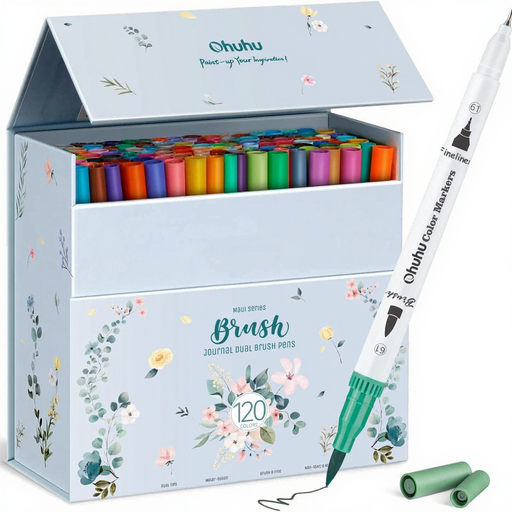
Why We Recommend This Product: The 120-piece Ohuhu Maui Series set specialises in paper-based creative work such as illustration, colouring, and calligraphy. The combination of a flexible brush tip and a rigid fineliner tip offers maximum control for various techniques. The water-based ink allows for the creation of watercolour-like effects by blending with water, expanding the creative possibilities.
Pros:
Who It's For: This set is aimed at illustrators, designers, students, and hobby artists who need an extensive colour spectrum and the functional combination of a brush and fineliner tip for their paper-based projects.
The products featured cover specific use cases. However, the market offers an even greater variety of pens with different nib combinations, ink formulations, and colour palettes. For a broader overview of dual-tip pens that includes other technical specifications, you can browse our range of dual tip markers.
1. What is the functional difference between acrylic markers and permanent markers? The main difference lies in the ink base and opacity. Permanent markers typically use a transparent, alcohol-based ink that penetrates the surface and dries quickly. Acrylic markers contain an opaque, pigmented ink (water- or acrylic-based) that forms a layer of colour on top of the surface. Therefore, permanent markers are better suited for labelling, while acrylic markers are designed for opaque, artistic applications.
2. Can brush pens be used on any type of paper? Technically, yes, but the results will vary significantly. On standard printer paper (approx. 80 gsm), the water- or alcohol-based inks in brush pens are prone to bleeding and feathering. For optimal results, especially with blending techniques, using smooth, heavyweight paper such as marker paper, mixed media paper, or Bristol board (180 gsm or higher) is recommended.
3. What is the correct way to store dual-tip pens? To ensure even ink flow to both nibs and prevent one side from drying out, dual-tip pens should ideally be stored horizontally. Additionally, make sure both caps are sealed tightly after use to maximise the longevity of the ink and the fibre tips.