
Lieferung heute & morgen

Qualitätsgarantie

Willkommens-Angebote freischalten: KOSTENLOSE Lieferung | Bis zu 80 % RABATT | Kostenlose 30-Tage-JoyPlus-Testphase
App herunterladen
As a Joybuy Product Recommendation Officer, I see discerning wine enthusiasts facing a critical decision every day: choosing the right storage system for their prized collection. A dual-zone wine cooler is often the goal, but the market is flooded with units whose marketing promises don't hold up in practice. Inaccurate capacity claims or subpar technology can not only lead to a bad purchase but, in the worst-case scenario, compromise the quality of your wines.
This guide focuses on the crucial, often-overlooked details and helps you navigate the three most common pitfalls, ensuring your investment protects and enhances the value of your wines long-term.
To avoid these pitfalls, you should base your selection on objective technical features. A high-quality wine storage cabinet is more than just a refrigerator; it's a precisely controlled ecosystem for your wines.
A wine cooler with 2 temperature zones offers the flexibility to store red and white wines under different conditions. Pay attention to the following points:
Before choosing a model, analyse your collection. Consider the different bottle shapes and plan for a buffer of at least 20% for future acquisitions. A freestanding wine cooler offers the most flexibility in placement and is often the top choice for a wine serving cabinet for 200 bottles or more. These models simply require a stable, level surface and sufficient clearance from the wall for ventilation.
The quality of a wine cooler is revealed in its protective mechanisms. These three features are non-negotiable:
Based on these objective criteria, we have identified several models that represent a suitable solution for various requirement profiles.
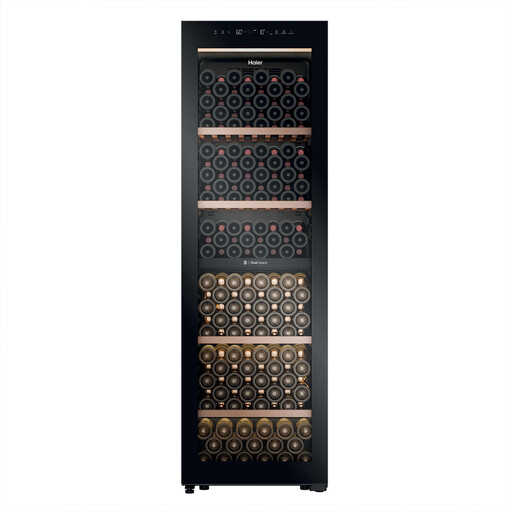
Why this model is a great fit: Ideal for large, growing collections that require a professional storage environment. The Haier wine cooler meets the demands of collectors and restaurateurs who want to both mature wines long-term and keep them ready to serve.
This model offers two precise and separately controllable temperature zones (5–20°C), a UV-protective glass door, and an anti-vibration system. It directly addresses the core issues of inadequate protection and inaccurate temperature control.
High capacity for up to 201 bottles; integrated humidity control (50–80%); low-vibration operation for undisturbed maturation.
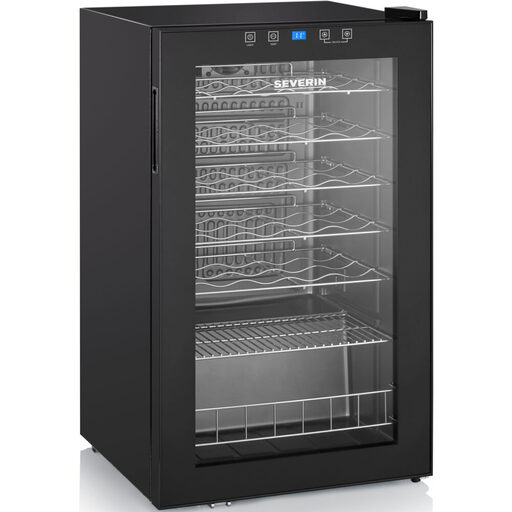
Why this model is a great fit: A great option for collections that are just starting out or for enthusiasts looking for reliable storage for a moderate number of bottles. Although it is a single-zone model, its temperature range of 4–18°C is versatile.
This model avoids the pitfall of overspending. It provides a clear capacity specification (36 bottles) and the necessary basic functions in a compact unit, so you don't pay for features you won't use.
Compact design with a touch display; quiet operation (42 dB according to the manufacturer), making it suitable for living areas; automatic defrost system.
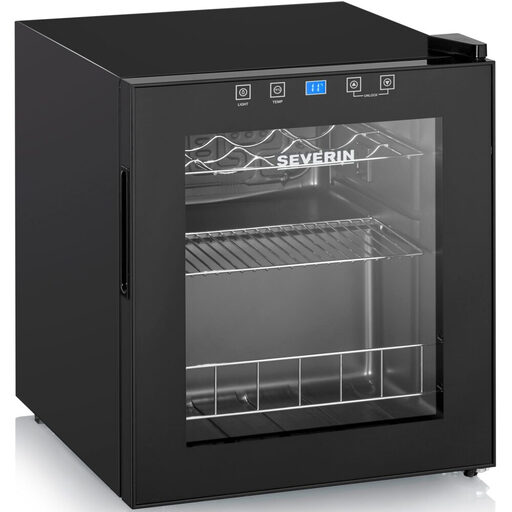
Why this model is a great fit: Perfect for apartments or kitchens with limited space. It allows you to keep a small, curated selection of wines at the ideal serving temperature without taking up much room.
Its clear positioning as a small appliance with a 15-bottle capacity prevents buyers from purchasing a model that is too large and unsuitable for their needs. It focuses on one task: providing reliable cooling in a minimal footprint.
Very space-saving design (height approx. 51.5 cm); adjustable temperature range of 4–18°C; low annual energy consumption of 97 kWh (Class F).
We have compiled a complete, up-to-date list of products that fully meet these strict selection criteria and German safety regulations.
1. What is the energy consumption of a dual-zone wine cooler? Consumption heavily depends on the energy efficiency class, size, insulation, and ambient temperature. Pay attention to the EU energy label and the annual energy consumption (kWh/annum) indicated there. A large wine cooler like the Haier model with energy efficiency class F consumes approx. 126–147 kWh per year, according to the manufacturer. Smaller units may consume more or less depending on their technology and usage.
2. Does a wine cooler always have to be full? No, but a well-stocked cooler maintains a more stable temperature and operates more energy-efficiently. The mass of the bottles acts as a thermal buffer, reducing the compressor's workload, especially after the door is opened. If your cooler is sparsely filled for an extended period, you can fill empty spaces with water bottles to increase the thermal mass.
3. What is the difference between a wine climate cabinet and a wine serving cabinet? The terms are often used interchangeably in retail, but there is a functional distinction. A wine serving cabinet (Weintemperierschrank) is primarily used to bring wine to its optimal drinking temperature. In contrast, a wine storage cabinet or wine climate cabinet (Weinklimaschrank) simulates the conditions of a wine cellar for long-term maturation. It focuses on a constant temperature, controlled humidity, UV protection, and vibration-free operation. A high-quality dual-zone wine cooler can perform both functions.