
Lieferung heute & morgen

Qualitätsgarantie

Willkommens-Angebote freischalten: KOSTENLOSE Lieferung | Bis zu 80 % RABATT | Kostenlose 30-Tage-JoyPlus-Testphase
App herunterladen
For wine enthusiasts, proper storage is just as crucial as the selection of the wine itself. A dual-zone wine cooler promises to keep both red and white wines at their ideal temperatures. However, the market is saturated with appliances whose performance claims don't always hold up in practice. Before you make a decision, it's essential to understand the common pitfalls that can lead to inadequate storage and, ultimately, disappointment.
Many buyers focus on bottle capacity and design, often overlooking the technical details that determine the quality of wine storage. These include inaccurate temperature zones that can spoil the wine, high noise levels that are disruptive in a living area, or glass doors that fail to provide adequate protection from harmful UV light. This guide will help you navigate these issues and find a model that protects the value of your collection.
To make an informed decision, you should focus on three core technical parameters. These features determine whether a wine cooler will protect your wines and integrate seamlessly into your daily life.
A true wine cooler for red and white wine requires two independently controllable temperature zones. Products are often advertised as "dual-zone" when they only have a single cooling circuit with a slight temperature gradient. Look for units that allow you to set a specific temperature for each zone—typically between 5°C and 12°C for white wines and between 12°C and 20°C for red wines. This is the only way to ensure that every bottle is stored under optimal conditions and is ready to serve.
For many users, a quiet freestanding wine cooler is a critical feature, especially if the appliance will be placed in the living or dining room. The noise level is measured in decibels (dB).
Compressor cooling systems are more powerful and achieve more stable temperatures, but they can be louder than thermoelectric systems. However, modern compressor units are often designed with low-vibration and sound-insulating construction.
Wine is sensitive to light and temperature fluctuations. A high-quality wine cooler with UV protection is therefore essential. Look for multi-layered, tinted insulated glass that blocks harmful UV rays while keeping the internal temperature stable. Additional features like an activated charcoal filter to neutralise odours and consistent humidity control also contribute to preserving the value of your wines. A temperature-controlled wine cabinet with app control also offers the convenience of adjusting temperature settings and lighting anytime, from anywhere.
Instead of presenting an overwhelming list, we have selected models that meet specific needs and avoid the pitfalls mentioned earlier.
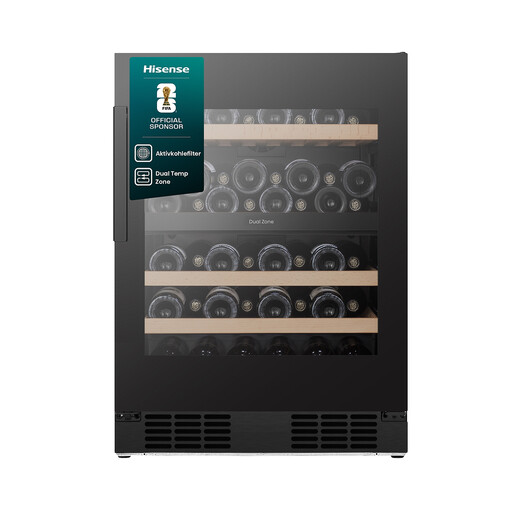
Why it's a match: Ideal for wine lovers who appreciate precise control and smart features. The app control allows for temperature management from anywhere, while the Vivino integration helps to digitally catalogue your personal collection.
This model, the Hisense RW3N122GSLF, features two fully independent temperature zones (5–20°C), an anti-UV glass door, and quiet operation at just 37 dB(A). This directly solves the problems of inaccurate cooling, light damage, and noise disturbance.
The combination of app control, precise dual-zone technology, and a capacity for 46 bottles offers a comprehensive package for modern wine storage.
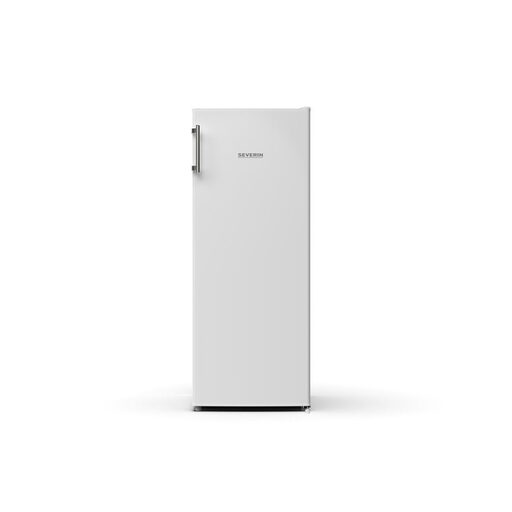
Why it's a match: Perfect for those who need to cool a large quantity of beverages for events or daily use. With a 225-litre usable capacity, it offers enormous space and flexibility.
Although this is a single-zone model, it is optimised for its purpose: cooling large quantities at a single temperature. At just 39 dB, it is very quiet for its size. The insulated metal door ensures high energy efficiency and avoids high operating costs.
An enormous capacity of 225 litres and five height-adjustable shelves provide maximum flexibility for bottles and cans of various sizes.
We have curated an up-to-date selection of products that meet objective criteria for storage and efficiency.
1. How loud is a wine cooler, and what level is acceptable? A wine cooler's noise level is measured in decibels (dB). A value below 40 dB is considered very quiet and is suitable for use in living and dining rooms. Models between 40 and 45 dB are barely noticeable in a kitchen but might be audible in a very quiet room. Always check the energy label or the technical data sheet for the exact specification.
2. Why are two temperature zones important for wine? Red and white wines have different ideal storage and serving temperatures. White wines, rosés, and sparkling wines are best stored and served at 5–12°C, while red wines develop their full aroma at 12–18°C. A dual-zone wine cooler allows you to store both types of wine simultaneously under perfect conditions, which is not possible with a standard refrigerator or a single-zone unit.
3. What does the climate class on a wine cooler mean? The climate class indicates the optimal ambient temperature range in which the appliance operates efficiently and reliably. The most common classes are: