
Lieferung heute & morgen

Qualitätsgarantie

Willkommens-Angebote freischalten: KOSTENLOSE Lieferung | Bis zu 80 % RABATT | Kostenlose 30-Tage-JoyPlus-Testphase
App herunterladen
A dumbbell rack and weight plate stand keeps your equipment organised, reduces trip hazards and makes it easier to access dumbbells, barbells and weight plates. However, not every fitness rack is suitable for every training environment. The key considerations are not just appearance and advertised load capacity, but also dimensions, peg diameter, stability and how the rack will actually be used.
A high maximum load rating may sound convincing at first. However, it says little about how stable a rack will be when plates are distributed unevenly. If heavy weight plates are stored on one side only, the centre of gravity can shift. With a vertical weight plate rack, heavy plates should therefore be placed on the lower pegs wherever possible.
The stated load capacity is also an upper limit, not a target for everyday use. A weight plate stand should only be loaded within the manufacturer's specifications.
Not every dumbbell rack is suitable for every set-up. Check the following before buying:
A rack for Olympic plates is not automatically suitable for standard weights. A barbell rack with vertical holders may also be unsuitable for a long barbell if ceiling height or available movement space is limited.
A compact fitness equipment rack saves floor space, but it should not compromise stability. Look for non-slip feet, protective caps, a level surface and sensible load distribution. Castors can be useful when moving the rack, but they should be locked or not loaded while equipment is being placed on or removed from it.
Compare the maximum load with the total weight of your equipment. A small home gym with dumbbells often requires less load capacity than a fitness studio with several barbells and numerous plates. The decisive combination is the material, frame construction and peg arrangement.
Powder-coated metal is often used because its surface is less susceptible to everyday scratches and moisture. However, it does not prevent rust caused by prolonged exposure to damp conditions. Store dumbbells and plates in a dry place, and remove sweat or moisture regularly.
Measure the intended area, including additional room for movement. A rack with castors may need more space to move than a stationary model. When storing dumbbells, doors, windows, exercise mats and other equipment should also remain accessible.
A vertical weight plate stand makes use of the available height, while a horizontal plate rack is more suitable for low-ceilinged rooms or placing beneath shelving. The right design therefore depends on the room height and available floor area.
Several separate pegs make it easier to organise plates by weight. Barbell holders can provide additional storage for Olympic or EZ curl bars. With adjustable dumbbells featuring weight plates, spinlock collars should be checked regularly and tightened before use.
For everyday use, the rule is simple: the more clearly plates and bars are stored separately, the less effort is needed when setting up and tidying away.
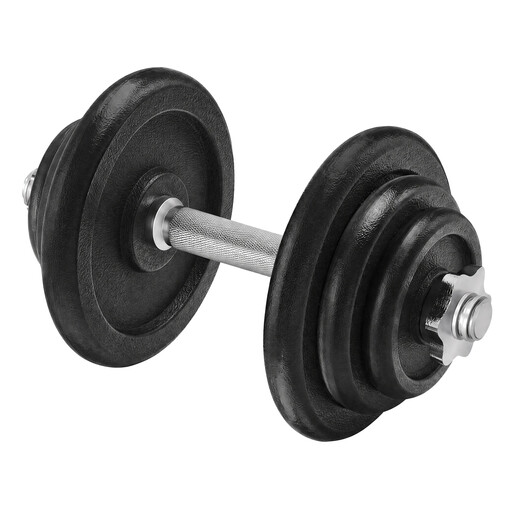
Why this product suits this profile: This 20 kg set is suitable for people who train at home or in the office with adjustable dumbbells and do not initially need extensive dumbbell storage.
The weight increments are clearly listed. Two 5 kg, two 2.5 kg and two 1.25 kg plates allow you to adjust the load in a clear and manageable way.
Cast iron plates, 14 cm handles and four spinlock collars are included.
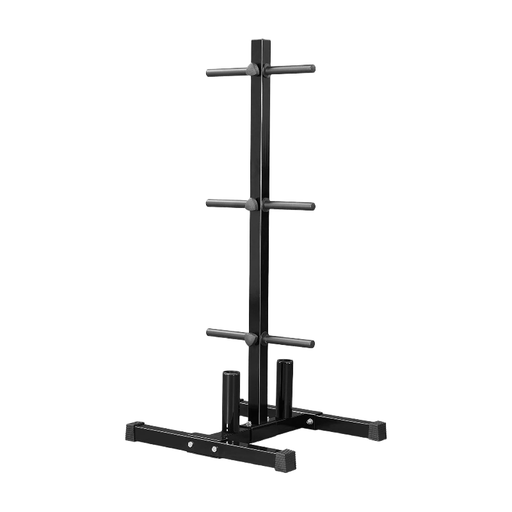
Why this product suits this profile: This vertical dumbbell and weight plate stand is designed for a more comprehensive home gym with standard and 2-inch weights.
Six 28 mm-diameter pegs and two bar holders are clearly specified. Heavy plates can be placed at the bottom.
The dimensions are 61 × 68.5 × 113 cm, and the stated maximum load is 400 kg.

Why this product suits this profile: Three tiers provide separate storage for dumbbells, weight plates and bars. This suits versatile training spaces and small gyms.
Storage is not limited to one type of equipment. Distributing the load evenly across the three tiers helps to support stability.
The powder-coated alloy steel frame is rated for up to 300 kg and features rubber feet.
We have put together a complete, regularly updated list of products that fully meet these strict selection criteria and the safety regulations applicable in the EU.
Place every dumbbell rack for home use on a level, weight-bearing surface. Before loading it, check that the screws, feet and holders have been fitted correctly. Distribute the weight as evenly as possible and, with a vertical rack, store heavy plates on the lower pegs.
With a mobile plate rack fitted with castors, the unit should remain stationary while equipment is being loaded or removed. Use the castors only for repositioning. Regularly inspect the rack for loose connections, damaged coatings and worn rubber feet as part of safe dumbbell storage.
Add up the weight of all plates, bars and dumbbells that will actually be stored at the same time. Then choose a model whose manufacturer's stated capacity exceeds this total weight. Also take the intended weight distribution into account, and never exceed the stated maximum load.
That depends on the design. Vertical models make use of the available height and often require less floor space. Multi-tier racks take up more floor area, but can store dumbbells, plates and bars separately. Do not just measure the product dimensions; also leave enough room to remove the weights.
Adjustable sets provide several weight levels with fewer individual components. Before buying, check which plates are included, how the total weight is distributed and whether the collars need to be checked before every use. For a small set, a sturdy shelf is often sufficient for storage; if you also have a barbell and weight plates, a dumbbell and weight plate stand is more practical.