
Lieferung heute & morgen

Qualitätsgarantie

Willkommens-Angebote freischalten: KOSTENLOSE Lieferung | Bis zu 80 % RABATT | Kostenlose 30-Tage-JoyPlus-Testphase
App herunterladen
As a dog owner, you know the drill: a new toy is met with wild enthusiasm, only to be found scattered in pieces across the living room minutes or hours later. The search for a truly durable dog chew toy can be frustrating and expensive. Many products fail to live up to their promises and, in the worst-case scenario, can even pose health risks to your four-legged friend.
This guide will help you navigate the common pitfalls of buying dog toys. We'll show you the crucial features to look for to find a long-lasting, safe toy that satisfies your dog's natural urge to chew.
Before we dive into the solutions, it's important to recognise the common marketing promises and product weaknesses that lead to poor purchasing decisions.
To make an informed decision, you should focus on objective and verifiable criteria. The following three parameters are crucial for the longevity and safety of a chew toy.
The material is the foundation of any bite-proof dog toy. The three most common materials have distinct properties:
A durable toy is defined not only by its material but also by its construction. Hollow toys can be easily punctured and dismantled by strong chewers. A solid construction without empty cavities offers significantly more resistance. Dual-layer designs, such as a hard nylon core surrounded by a more flexible rubber layer, combine durability with a more tooth-friendly surface.
The rule is simple: the toy must be large enough that it cannot be fully enclosed in the dog's mouth and swallowed. For large breed dogs, appropriately sized toys are essential. The shape should also match the dog's play style. Balls are great for fetching, elongated shapes or ropes are ideal for tug-of-war, and textured surfaces provide enrichment and support dental care. For puppies, there are special puppy toys designed for the needs of a teething dog.
Based on the criteria above, we have selected a few products from our range that are suitable for different types of dogs and their needs.
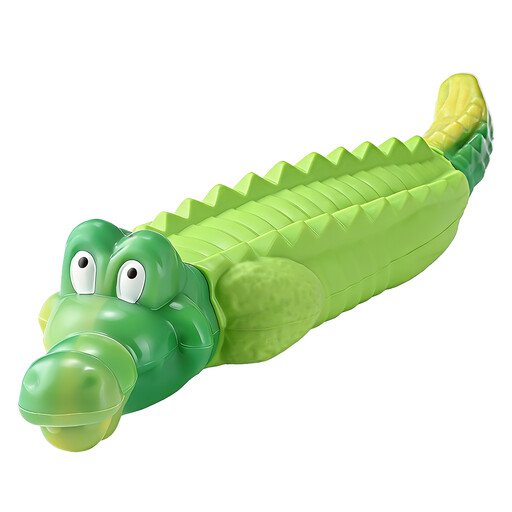
Why This Fits Their Persona: This toy is specifically engineered for the powerful jaws of medium to large dog breeds. It provides a durable solution for dogs that quickly destroy conventional toys.
It bypasses the "indestructible" myth with a verifiable dual-layer construction: a hard nylon core provides stability, while the flexible natural rubber exterior is gentle on the gums.
The combination of a hard core and a softer outer layer offers high resistance. Its size is explicitly designed for medium to large dogs, which minimises the choking risk.
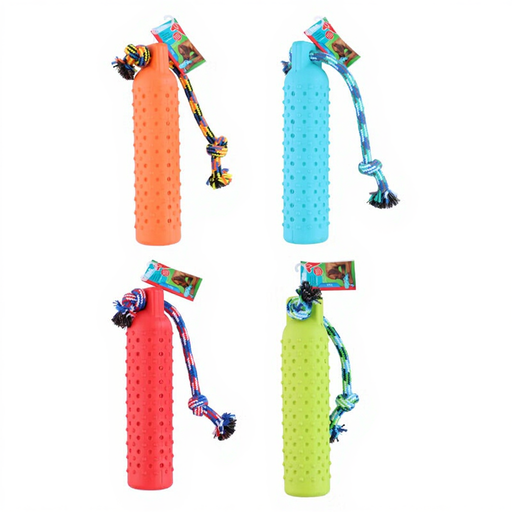
Why This Fits Their Persona: Ideal for dog owners looking for more than just a chew toy. This product is a training tool designed for fetching, tugging, and scent games, strengthening the bond between human and dog.
This isn't a passive toy that quickly leads to boredom. Its clear function as a training dummy for interactive play prevents destructive behaviour. The robust rubber is designed for active outdoor use.
The combination of durable rubber and a 33 cm long polyester rope allows for long-distance throws and safe tug-of-war games. The 460g weight provides a realistic feel for retrieving.
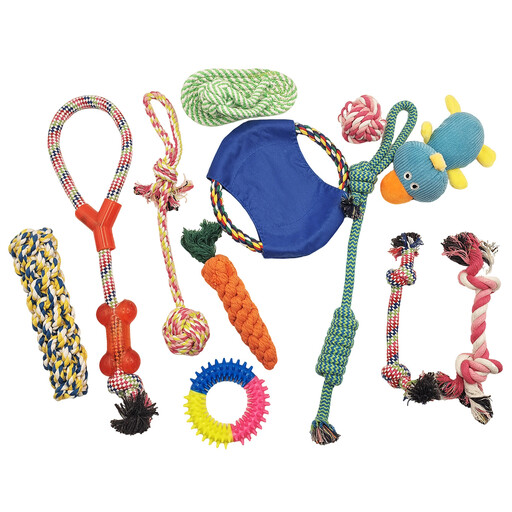
Why This Fits Their Persona: This 12-piece set offers a wide variety for dogs who love novelty, without requiring a large upfront investment. It's perfect for discovering which types of toys your dog prefers.
It avoids the material risk trap by using recycled cotton—a transparent and softer material. Instead of a single "one-size-fits-all" toy, it provides different toys for various needs (chewing, tugging, fetching).
The set offers excellent value for money and a great variety. The cotton rope textures also help clean teeth during chewing and are designed for small to medium-sized dogs.
We've compiled a complete, up-to-date list of products that fully meet these strict selection criteria and safety regulations.
There's no fixed schedule. The most important rule is daily inspection. Check the toy before and after each use for cracks, sharp edges, loose threads, or any parts that could break off. At the first sign of significant wear or damage, the toy should be discarded immediately to prevent injury or ingestion of parts.
Yes, it's possible if the material is too hard for the dog's individual bite force. Extremely hard materials like nylon, in particular, can lead to tooth wear or even fractures in aggressive chewers. Always supervise your dog, especially with new, hard toys. A good rule of thumb is the "thumbnail test": if you can't make a slight indent in the material with your thumbnail, it may be too hard for some dogs.
For teething puppies, special puppy toys are the right choice. Softer, yet still durable materials like high-quality TPR (Thermoplastic Rubber) or a softer blend of natural rubber are often recommended. These materials are more forgiving and gentle on developing teeth and sensitive gums. Avoid hard materials like nylon until their permanent teeth are fully grown in.