
Lieferung heute & morgen

Qualitätsgarantie

Willkommens-Angebote freischalten: KOSTENLOSE Lieferung | Bis zu 80 % RABATT | Kostenlose 30-Tage-JoyPlus-Testphase
App herunterladen
As a dog owner, you know the scenario: a new toy, advertised as especially durable, lies in pieces on the floor within minutes. The search for a truly robust chew toy for your dog can be frustrating and costly. Many products don't live up to their promises and, in the worst-case scenario, even pose a safety risk. This guide will help you navigate the common pitfalls and make an informed decision that benefits both your dog and your budget.
Before we dive into the key features, let's look at three common problems that often lead to disappointment:
To avoid a bad purchase, focus on objective and verifiable criteria. The following three parameters are crucial for the longevity and safety of a chew toy.
The material is the most important factor for a bite-resistant dog toy. Each material has specific properties:
A good chew toy serves more than just chewing. Consider what purpose it should fulfill:
The toy's size must match the size and mouth of your dog. A toy that is too small can be easily swallowed and poses a choking hazard. A toy that is too large or unwieldy may be rejected by the dog. Ensure the dog can grip the toy well but cannot take it entirely into its mouth.
Here are some recommendations tailored to different profiles of dogs and their owners.
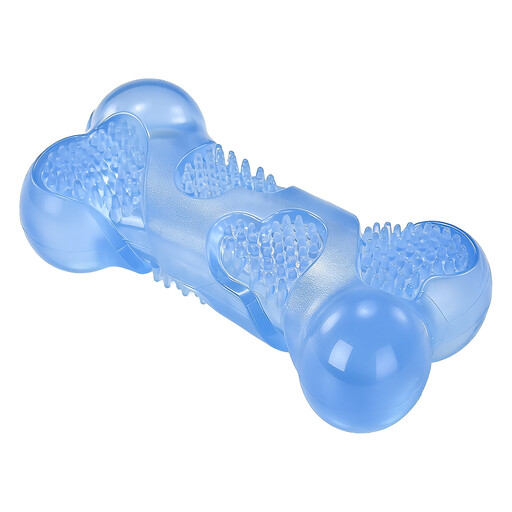
Why it's a great fit: Teething puppies need a toy that is gentle on their sensitive gums. This toy, made from soft latex, is elastic and gentle, helping to soothe teething discomfort. The built-in squeaker piques curiosity and encourages their play drive.
It isn't marketed as "indestructible" but is clearly positioned for puppies. This avoids the pitfall of choosing an inappropriate material for the wrong age group.
The combination of a soft material to relieve teething pain and a squeaker for playful distraction is ideal for this life stage.
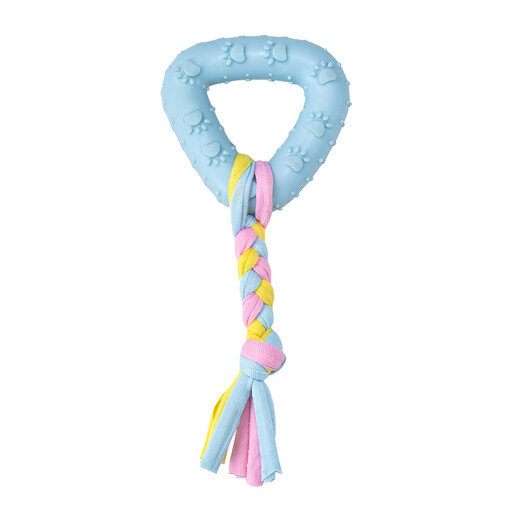
Why it's a great fit: This toy is designed for shared activities. The combination of flexible TPR and a sturdy fabric rope is excellent for games of tug, which strengthen your bond and provide physical exercise. The shape is easy for the dog to grip.
It avoids the pitfall of incorrect material choice by combining two materials for a specific purpose: interactive pulling. It is not a pure chew toy for unsupervised play.
The dual-material construction offers both flexibility and resistance for tug-of-war games. The rope fibers also help clean the tooth surfaces during play.
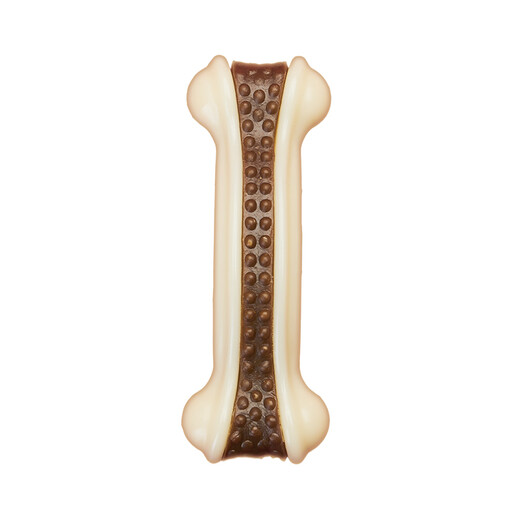
Why it's a great fit: For dogs that quickly destroy other toys, this combination of bite-resistant cowhide and nylon provides long-lasting engagement. It satisfies the natural chewing instinct and supports dental cleaning with its hard surface.
It avoids the empty "indestructible" promise by transparently stating the materials (cowhide, nylon), which are known for their high resistance. It is clearly declared as a toy for strong chewers.
The material combination is specifically designed for high durability under heavy use. According to the manufacturer, the cowhide component contains collagen.
We've compiled a complete, up-to-date list of products that fully meet these strict selection criteria and safety standards.
1. How often should you replace a dog's chew toy? There's no fixed rule, as the lifespan depends on your dog's chewing strength and the material's quality. Inspect the toy regularly for cracks, loose parts, or significant wear. If it has become small enough to be swallowed or is damaged, it should be discarded and replaced immediately.
2. Is every durable chew toy also suitable for dental care? Not necessarily. While chewing itself can contribute to teeth cleaning, toys with special textures, nubs, or grooves are specifically designed as dental care dog toys. These structures are more effective at mechanically removing plaque and massaging the gums.
3. How can I tell if a dog toy is safe for my dog? Look for a clear declaration of materials and choose products made from non-toxic substances like natural rubber or food-grade nylon. The size must be appropriate for the dog to prevent swallowing. The toy should not have small, easily detachable parts. Always supervise your dog, especially with a new toy, to observe its chewing behavior.