
Lieferung heute & morgen

Qualitätsgarantie

Willkommens-Angebote freischalten: KOSTENLOSE Lieferung | Bis zu 80 % RABATT | Kostenlose 30-Tage-JoyPlus-Testphase
App herunterladen
A good Dutch oven is the cornerstone of many kitchens, indispensable for aromatic goulash, tender roasts, and hearty stews. But the market is overwhelming, filled with marketing promises that often obscure more than they clarify. Many buyers invest in pots that become unusable after a short time or fail to deliver the desired cooking results. This guide will help you identify the crucial features and avoid common purchasing pitfalls.
Before you make a decision, it's important to understand the typical issues that can lead to disappointment.
To find a durable, high-performance Dutch oven, focus on these three objective criteria.
The material is the single most important factor for a Dutch oven's performance.
The base is the foundation for success. A solid, thick base prevents burning and ensures even browning. If you have an induction hob, compatibility is a must. Look for the induction-compatible Dutch oven label. Cast iron is naturally ferromagnetic and therefore ideal for induction hobs. For pots made of other materials, a ferromagnetic plate integrated into the base ensures induction capability.
Braising involves slowly evaporating liquid to cook the dish in its own juices. A heavy, tight-fitting lid is therefore essential to maintain this cycle. Some models, like the Staub Cocotte, feature special structures on the underside of the lid. These ensure that condensed steam drips back evenly onto the food, continuously basting it.
Instead of making a blanket recommendation, we have selected models that suit different user profiles and requirements.
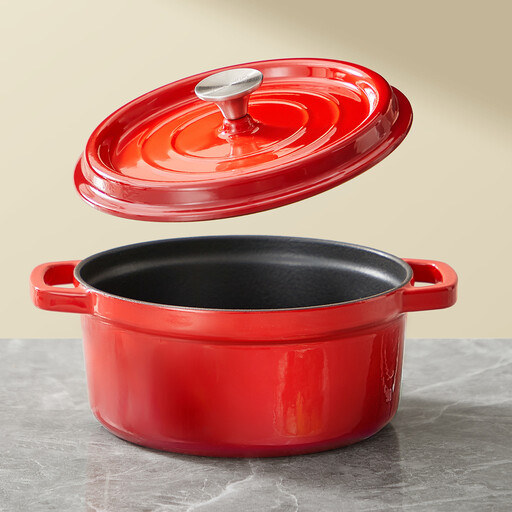
Why it's a great fit: Offers the essential benefits of an enamelled cast iron pot—excellent heat retention and even cooking—at an accessible price point. Ideal for anyone wanting to discover the art of braising without making a large initial investment.
The solid cast iron construction naturally prevents the pitfall of uneven heat distribution. With proper care, the enamel coating provides a robust surface and is a solid answer to the problem of fragile coatings on cheap products.
Classic cast iron properties for outstanding thermal performance. The versatile 24 cm size is suitable for most household recipes.
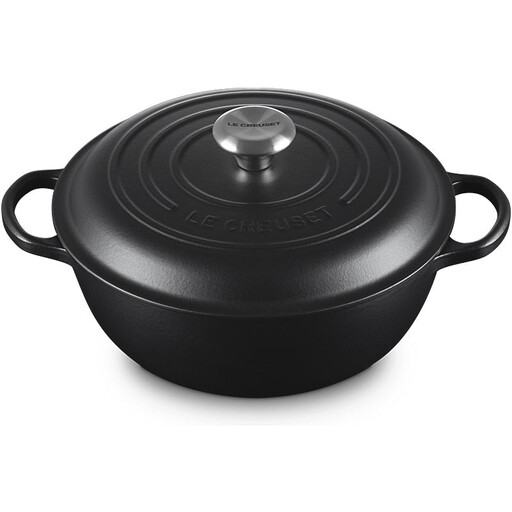
Why it's a great fit: Represents a long-term investment in culinary excellence. Le Creuset is renowned for exceptional durability, a resilient enamel coating, and consistently high performance, making it the benchmark for ambitious home cooks.
The high-quality enamel is extremely resistant to chipping and discolouration (avoiding the "fragile enamel" pitfall). The solid cast iron construction guarantees superior, even heat distribution (avoiding the "poor heat distribution" pitfall).
Outstanding heat retention and distribution. The light-coloured interior enamel makes it easy to monitor the browning process. The lid knob is heat-resistant up to approx. 260°C, making it fully oven-safe.
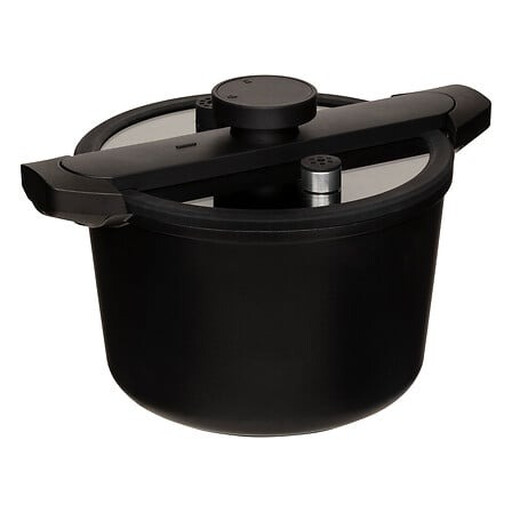
Why it's a great fit: With a 6-litre capacity, this pot is ideal for preparing large quantities for family or guests. The low-pressure function can help reduce cooking times while keeping food tender.
Although made of aluminium, its design is optimised for cooking with slight overpressure, which enhances moisture and heat retention. The sturdy construction avoids the instability that is often a problem with inexpensive, large-format pots.
Large 6-litre capacity for family-sized portions. The glass lid allows for easy visual monitoring of the cooking process without having to lift the lid.
If you're looking for more alternatives selected based on objective criteria like material quality and heat distribution, you can find a more comprehensive selection here.
Yes, most cast iron Dutch ovens are naturally ferromagnetic and work excellently on induction hobs. Their flat base ensures optimal contact and efficient energy transfer. To be certain, you should always check the manufacturer's specifications for induction-compatible Dutch oven suitability.
Always let the pot cool down after use before bringing it into contact with water to avoid thermal shock and potential cracks in the enamel. The best way to clean it is with warm water, a mild washing-up liquid, and a soft sponge. For stubborn residue, you can soak the pot. Avoid steel wool or abrasive scouring pads, as these can damage the enamel surface.
In German, the terms Schmortopf, Br?ter (roaster), and Dutch Oven are often used interchangeably. "Schmortopf" and "Br?ter" are the traditional German names for a heavy pot with a lid used for roasting and braising. "Dutch Oven" is the English term that has become internationally established and usually refers to a cast iron casserole pot. So, if you want to buy a Dutch Oven, you should look for the same criteria as for a classic cast iron "Schmortopf".