
Lieferung heute & morgen

Qualitätsgarantie

Willkommens-Angebote freischalten: KOSTENLOSE Lieferung | Bis zu 80 % RABATT | Kostenlose 30-Tage-JoyPlus-Testphase
App herunterladen
A high-quality Dutch oven is the cornerstone of countless dishes, from a hearty goulash that develops its flavours over hours to a succulent Sunday roast. However, the variety of materials, sizes, and brands can be overwhelming. Which pot is right for your kitchen and your cooking style?
This article serves as an objective guide. As a Joybuy Product Recommendation Officer, I've made it my mission to filter the available information and provide you with a clear basis for your decision. Here, you'll find practical criteria and a selection of models that stand out for their specific features.
Before you make a decision, several key features should be considered. These will help you find the roasting pot that best meets your needs.
The choice of material significantly impacts the pot's cooking performance and maintenance.
The right size depends on your household size and the typical dishes you prepare. A pot with a 24 cm diameter and a volume of about 3–4 litres is usually sufficient for 2–4 people. For larger families or cooking for guests, models with 5 litres or more are a sensible choice.
You should also check if the pot is oven-safe and to what temperature. A crucial criterion is its compatibility with your stovetop, especially for induction. Most modern cast iron and stainless steel pots are suitable for all hob types, but it's always wise to check the manufacturer's specifications.
Here, we present three models that distinguish themselves through their material, craftsmanship, and specific functions.
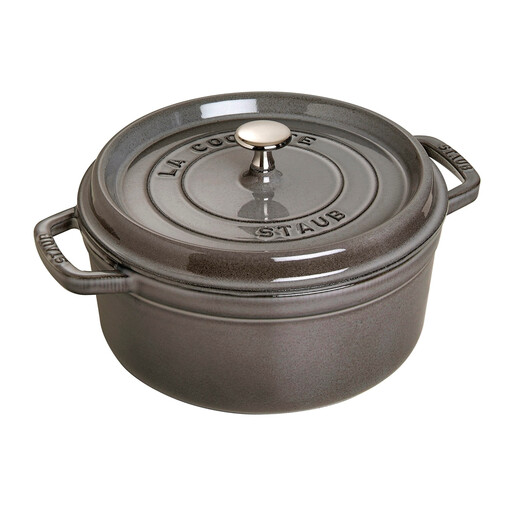
Why It Stands Out The Staub cocotte, made of enamelled cast iron, is known for its thoughtful design. Its unique feature is the lid: the underside is dotted with "picos," small spikes that cause condensation to drip evenly back onto the food. This self-basting cycle keeps your meal exceptionally moist. Furthermore, the matte black interior enamel promotes intense browning and is highly durable.
Advantages
Who It's For For chefs who prioritise maximum juiciness in their braises and roasts and appreciate the benefits of traditional French craftsmanship.
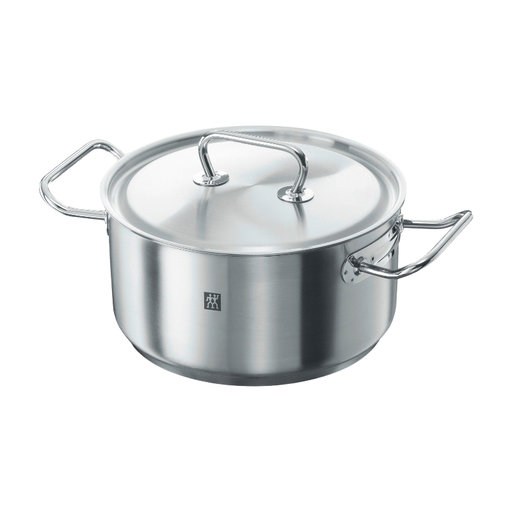
Why It Stands Out This roasting pot from Zwilling is a practical alternative made from high-quality 18/10 stainless steel. Its SIGMA Classic sandwich base with an aluminium core ensures fast and even heat distribution right up to the rim. The design is functional: an integrated measuring scale makes it easy to measure liquids, and the matte surface is resilient.
Advantages
Who It's For For pragmatic home cooks seeking a versatile, low-maintenance, and durable pot for everyday use—from searing to making soups and stews.

Why It Stands Out The Le Creuset Gourmet Casserole is a design classic and a versatile all-rounder. With its shallower profile and wide 30 cm diameter, it's perfect not only for braising but also for dishes like paella, risotto, or as a serving pan. The light-coloured interior enamel makes it easy to monitor the browning of your food.
Advantages
Who It's For For culinary enthusiasts looking for multifunctional cookware with aesthetic appeal that can go directly from the stove to the table.
If you haven't found the perfect model for your kitchen in this selection or are looking for a different size, we invite you to explore our entire range. Discover more high-quality pots for every need.
? Explore our full selection of Round Pots here
1. Can you bake bread in a Dutch oven? Yes, a heavy cast iron pot with a lid is particularly well-suited for baking bread in a pot. The pot acts like a small oven within your oven. The trapped steam during the first phase of baking ensures excellent oven spring and a particularly crispy, glossy crust.
2. What is the difference between a roaster and a Dutch oven? The terms are often used interchangeably. A Dutch oven is typically round with high sides, optimised for slow cooking in liquid. A roaster can also be oval, which is ideal for whole poultry or long cuts of meat. Both are designed as a pot for braising and feature a heavy, tight-fitting lid.
3. How do you clean an enamelled cast iron pot? Allow the pot to cool completely after use to avoid thermal shock. Clean it with warm water, a mild dish soap, and a soft sponge. For stubborn, stuck-on food, you can soak the pot with warm water. Although many models are declared dishwasher-safe, hand washing is recommended to maximise the longevity of the enamel.