
Lieferung heute & morgen

Qualitätsgarantie

Willkommens-Angebote freischalten: KOSTENLOSE Lieferung | Bis zu 80 % RABATT | Kostenlose 30-Tage-JoyPlus-Testphase
App herunterladen
A Dutch oven should do more than simply reheat stew: Many buyers are looking for a lidded roasting pot that works on an induction hob, can be used in the oven and can then be placed directly on the table. At the same time, materials, capacities and cleaning requirements vary considerably.
Anyone who focuses only on colour, brand name or particularly bold claims can easily overlook important details. The following criteria will help you choose the right pot for braised dishes, soups, goulash and family-sized portions.
A pot may be suitable for induction without automatically being approved for oven use. For an induction cooking pot, the product description should therefore explicitly state that the base is magnetic or induction-compatible. Oven use also depends on the maximum permitted temperature and the materials used for the lid knob and handles.
Ceramic models are a special category: They are often suitable for ovens and microwaves, but must not be placed on direct heat or open flames. An ovenproof pot is therefore not automatically a roasting pot for all hob types.
The stated litre capacity usually describes the total volume. When braising, however, the pot should not be filled to the rim, so that liquids do not boil over and the ingredients have sufficient room. For one or two portions, 0.4 to 1 litre may be suitable. Families or guests will generally benefit from 3 to 5 litres.
Diameter also matters: A wide base makes searing easier, while a tall soup pot can hold more liquid. For goulash and braised dishes, a balanced combination of cooking surface and height is usually more practical than an especially tall vessel.
Enameled cast iron is robust but heavy and should preferably be cleaned with soft sponges. Several models recommend hand washing, even if the manufacturer permits occasional dishwasher cleaning. Stainless steel is often easier to care for; nevertheless, limescale or heat marks may still appear.
With ceramic, protection against thermal shock is essential: Placing a hot pot directly on a cold surface or in cold water can cause cracks. The manufacturer’s instructions on cleaning, temperature limits and hob compatibility should be checked before purchase.
A cast-iron pot retains heat for a long time and releases it gradually. This makes it well suited to low to medium temperatures and extended cooking times. Enameled interiors simplify cleaning and are taste-neutral. However, the greater weight and the risk of chipping if knocked should be taken into account.
A stainless-steel pot is rust-resistant, uncoated and suitable for soups, pasta, vegetables and braised dishes. A multi-layer or encapsulated base supports more even heat distribution. For example, the 24 cm Zwilling model features a SIGMA Classic sandwich base, a 6-litre capacity and an integrated measuring scale.
A ceramic pot is particularly suitable for individual portions, casseroles and serving food straight from the oven at the table. It is generally lighter than cast iron, but more sensitive to impacts and sudden temperature changes. The STAUB ceramic Cocottes featured here are not designed for direct use on a hob.
A well-fitting lid reduces evaporation and supports the braising process. In some Cocottes, special structures on the inside of the lid redistribute condensed liquid over the food. This can be useful during long cooking times, but it does not replace proper temperature control.
A glass lid allows you to monitor the cooking process without removing it. This feature is particularly useful with stainless-steel soup pots. The lid handle must also be heat-resistant and comfortable to grip securely.
Weight should also be part of the decision. A 5-litre cast-iron pot can already weigh several kilograms when empty and may be difficult to move once filled.
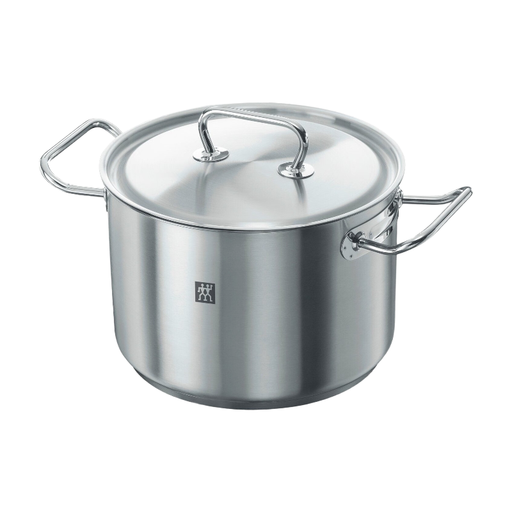
Why it’s a good fit: The 6-litre stainless-steel pot is suitable for family meals, soups and larger quantities, and works on induction, gas, electric and ceramic hobs.
The stated 6-litre capacity, sandwich base, measuring scale and dishwasher compatibility make its everyday practicality clear.
18/10 stainless steel, integrated measuring scale, lid and compatibility with all common hob types.
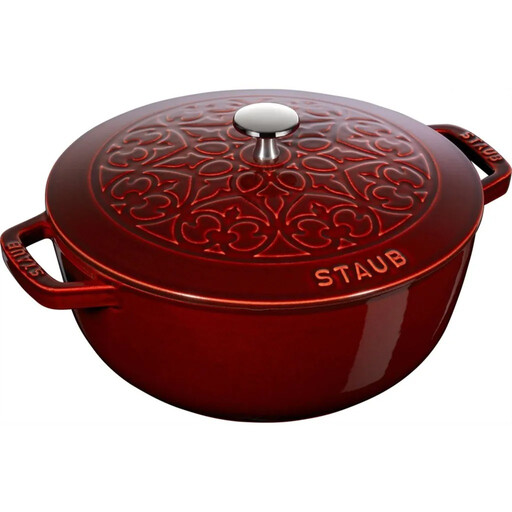
Why it’s a good fit: Its 5-litre capacity, enameled cast iron and lid with Chistera drop structure make it well suited to braised dishes for several people.
The product specifications explicitly list induction, oven use and all common hob types. Its substantial 5.3 kg weight should be taken into account.
5-litre capacity, enameled cast iron and stainless-steel lid knob.
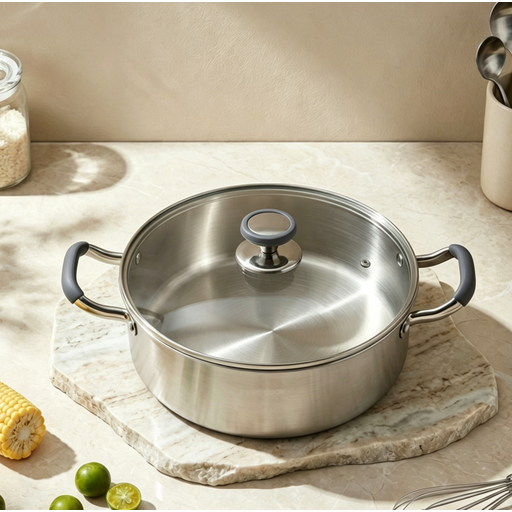
Why it’s a good fit: This deep pot is designed for soups, hot pot and family meals for approximately three to eight people.
The glass lid lets you monitor the cooking process. The silicone handles must not come into direct contact with flames.
304 stainless steel, encapsulated base, glass lid and compatibility with induction, gas and ceramic hobs.
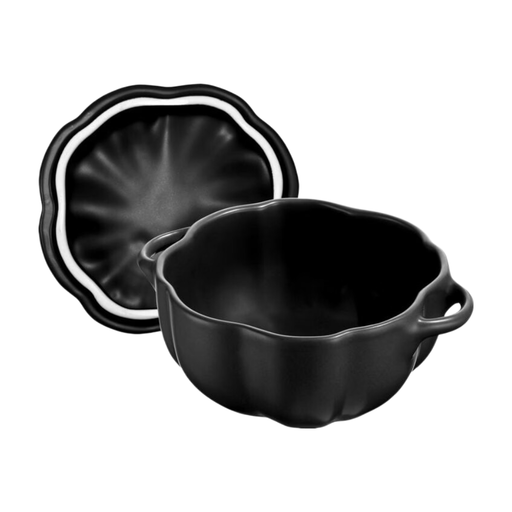
Why it’s a good fit: The small Cocotte is ideal for individual soups, side dishes and casseroles, and can be taken straight from the oven to the table.
Use is limited to the oven, microwave, refrigerator and freezer; direct hob heat and open flames are not supported.
0.7-litre capacity, matching ceramic lid, and suitability for ovens, microwaves and dishwashers.
Our overview features additional models organised by material, capacity, hob type and intended use.
Cast-iron and many stainless-steel models are suitable for induction when this is explicitly stated by the manufacturer. A flat, magnetic base is required. With ceramic cookware, the product description should be checked carefully, as many ceramic Cocottes are intended exclusively for oven and microwave use.
For four people, around 3 to 5 litres is usually practical. A larger capacity may be useful for soups and stews, while a wider pot makes it easier to sear larger cuts of meat. The actual cooking volume should remain below the rim.
Enameled cast iron should be cleaned after cooling with warm water and a mild detergent. Abrasive cleaners, hard brushes and sudden temperature changes should be avoided. Dry the pot thoroughly afterwards and store it according to the manufacturer’s care instructions.