
Lieferung heute & morgen

Qualitätsgarantie

Willkommens-Angebote freischalten: KOSTENLOSE Lieferung | Bis zu 80 % RABATT | Kostenlose 30-Tage-JoyPlus-Testphase
App herunterladen
A new duvet and bedding should do more than complement your bedroom. Size, warmth, material, care requirements and how you’ll actually use them all matter. If you focus only on colour or a low price, you may not realise until after buying that your duvet is too warm, the cover slips around or cleaning is more hassle than it needs to be.
A heavy down duvet or feather duvet may be too warm in a well-heated bedroom. Conversely, a very lightweight summer duvet may not provide enough warmth in a cool room. Labels such as ‘all-season’ don’t tell you much on their own. Also check the filling weight, construction and whether you can adapt the duvet to different seasons.
A duvet measuring 155 × 220 cm needs a cover to match. For double beds, common sizes include 200 × 200 cm, 200 × 220 cm and larger options such as 260 × 240 cm. A cover that’s too small can squash the filling, while one that’s too large may crease and let the duvet shift around.
A washable duvet is only practical if it fits in your washing machine and can dry completely afterwards. Polyester microfibre is often easy to care for, while natural fillings may need special drying or cleaning. A cooling fabric also doesn’t replace regular washing or work like an active air-conditioning system.
First, measure your mattress, bed and existing covers. Common sizes for single beds include 135 × 200 cm and 155 × 220 cm. For double beds, consider 200 × 200 cm or 200 × 220 cm. For particularly wide beds, a bedding set in 260 × 240 cm may be an option.
Also check what’s included in each set. A three-piece set, for example, may consist of one duvet and two pillowcases. The pillowcase size won’t necessarily suit every pillow in your home.
A summer duvet should be lightweight and suitable for warmer nights. Filling weight can provide a useful point of comparison. For example, one of the DOWNFOCUS models mentioned has a filling weight of 200 g/m². This is a specific product detail, but it doesn’t replace your own assessment of the room temperature.
An all-season duvet may have a single, medium-weight filling or come as a 2-in-1 set. The DOWNFOCUS 2-in-1 model includes a summer duvet with a filling weight of 200 g/m² and another duvet with a filling weight of 450 g/m². Two layers that can be combined let you adapt to the seasons, but they do need more storage space.
Microfibre duvets are often made from polyester and are generally easy to wash. Cotton, as used in cotton bedding made from percale, can feel smooth and breathable. Down and feather fillings differ in feel, weight and care requirements. One DOWNFOCUS model is listed as having a filling of 90% feathers and 10% down.
Check product descriptions for certifications such as OEKO-TEX, RDS or Downpass. According to the relevant product details, certain DOWNFOCUS models are OEKO-TEX and RDS certified. A certification applies to the stated scope and isn’t a blanket guarantee for every individual skin or sleeping concern.
A tightly woven cover may be worth considering if you have allergies. For example, the DOWNFOCUS model is described as having a tightly woven cotton cover and being suitable for allergy sufferers. However, the term duvet for allergy sufferers shouldn’t be taken to imply a medical effect.
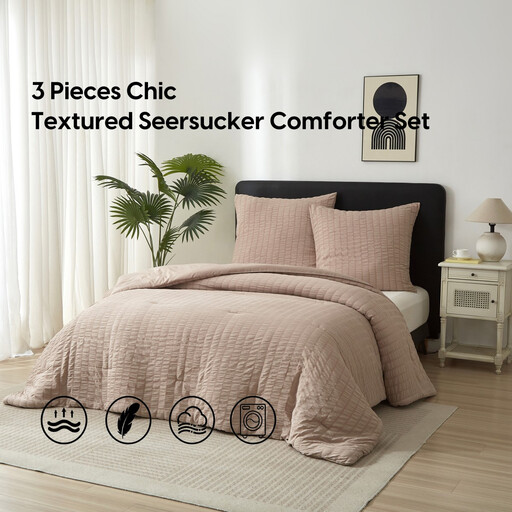
Why this product suits this profile: This three-piece set combines a 200 × 200 cm duvet with two pillowcases, making it a good choice if you want to buy your duvet and covers together.
The size and set contents are clearly specified. Care instructions recommend machine washing below 30 °C and tumble-drying on a low heat.
100% polyester microfibre, quilted construction and textured seersucker finish; listed as machine washable.
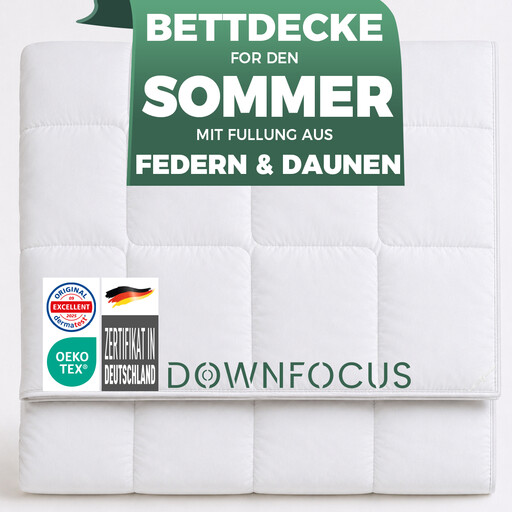
Why this product suits this profile: Designed for warmer nights, this duvet combines a natural filling with clear details about its composition, weight and certifications.
The stated filling weight of 200 g/m² makes its suitability as a summer duvet clearer than a marketing claim alone.
Product details list 90% feathers and 10% down, OEKO-TEX and RDS certification, and a tightly woven cotton cover.
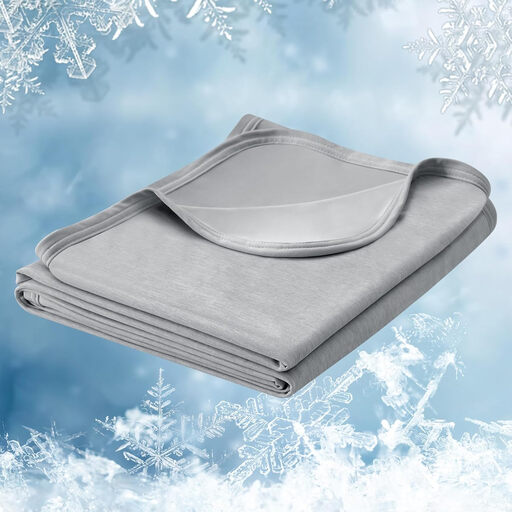
Why this product suits this profile: This lightweight blanket is aimed at hot sleepers and travellers, as well as anyone looking for a versatile option for the bed, sofa or camping trips.
The manufacturer describes the cooling effect as heat dissipation, not active cooling. This gives you a more realistic idea of how it works.
Reversible design, Arc-Chill fibre with a stated Q-Max value above 0.45, and care at up to 30 °C.
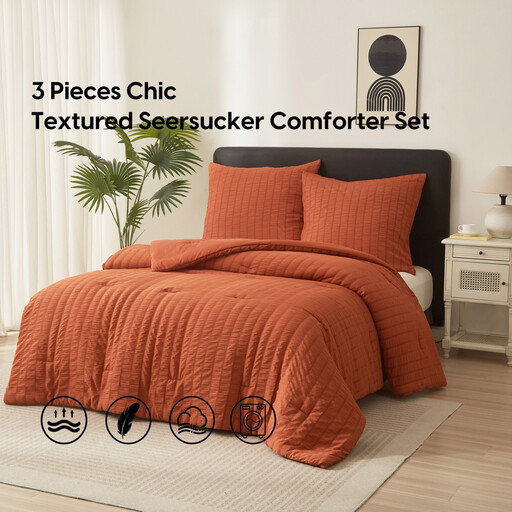
Why this product suits this profile: The machine-washable microfibre and durable quilting are designed to stand up to frequent washing and everyday life with pets.
Product details describe an easy-care finish, low creasing and a construction designed to help stop the filling from shifting.
Three-piece set with two 80 × 80 cm pillowcases; listed as machine washable below 30 °C.
If your mattress feels too firm or too soft, a mattress topper can change how the sleeping surface feels. The Novilla Gel Memory Foam Topper measures 140 × 200 cm and is 5 cm high. According to the product description, it arrives compressed. Check the stated time needed for it to fully expand before use; the cover should be hand-washed.
A cooling pillowcase may be a useful extra for warmer nights. The WOLTU model is listed as measuring 30 × 50 cm, with a concealed zip and Arc-Chill fibres with a Q-Max value above 0.45. According to the product details, the cooling effect isn’t actively powered and may change with use or washing.
We’ve put together a complete, regularly updated list of products that meet these strict selection criteria and the safety regulations applicable in the EU.
A lightweight summer duvet with a clearly stated filling weight may suit a warm bedroom. Breathable covers and a room temperature that suits your sleeping habits can also help. A cooling duvet simply draws heat away through its material; it doesn’t actively cool you.
Bedding should be changed regularly according to how often it’s used, and washed in line with the care label. How often you wash your duvet depends on its material, how dirty it gets and the manufacturer’s instructions. If you have pets or need to wash bedding more often, you may prefer a washable duvet that fits your washing machine and tumble dryer.
Look for even quilting and strong seams, store your duvet appropriately and make sure it dries completely after washing. Shake out natural fillings regularly, and care for synthetic duvets according to the instructions. A well-fitting cover also gives your duvet extra protection from everyday dirt.