
Lieferung heute & morgen

Qualitätsgarantie

Willkommens-Angebote freischalten: KOSTENLOSE Lieferung | Bis zu 80 % RABATT | Kostenlose 30-Tage-JoyPlus-Testphase
App herunterladen
Choosing a new duvet cover set seems simple at first. But pitfalls are often hidden behind tempting marketing buzzwords and seemingly great deals, leading to disappointment: fabrics that lose their shape after a few washes, closures that break, or colours that fade quickly. As your Joybuy Product Recommendation Officer, I'm here to help you avoid these common mistakes and make an informed decision.
This guide focuses on the objective criteria that define a quality duvet cover set, so you can make a durable and comfortable choice for your home.
Before we dive into the important features, let's highlight the three most common issues that can lead to a bad purchase.
To avoid these pitfalls, you should focus on three core parameters. These will help you objectively assess the quality of a duvet cover set.
The material is the foundation of comfort and durability. While cotton is known for its breathability, modern microfibre fabrics offer significant advantages in terms of care and price, provided the quality is right.
The fit is crucial. Measure your duvet and pillow before buying to ensure the new set fits perfectly. The most common standard sizes in Germany are:
Make sure the set you're considering meets these exact dimensions and includes all the necessary parts (duvet cover and matching pillowcases).
Practical features determine how satisfied you will be with your purchase in the long run.
Here are some recommendations tailored to different needs, all of which meet the quality criteria mentioned above.
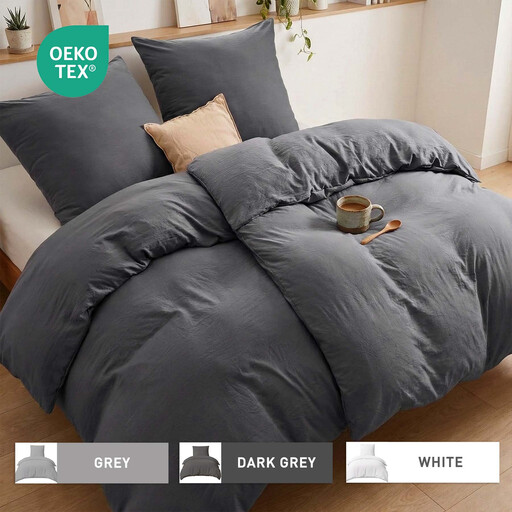
Why it's a great fit: Perfect for students, first-time renters, or shared flats. This set offers exceptional value for money as it includes two complete sets in the standard 135x200 cm bedding size. You immediately have a spare set ready to go.
It addresses the "hidden design flaws" pitfall by integrating a zip closure and four internal corner ties—functional details that are not a given in this price range.
4-Piece Set: Includes 2 duvet covers and 2 pillowcases. Functional Features: Zip closure and corner ties for superior comfort.
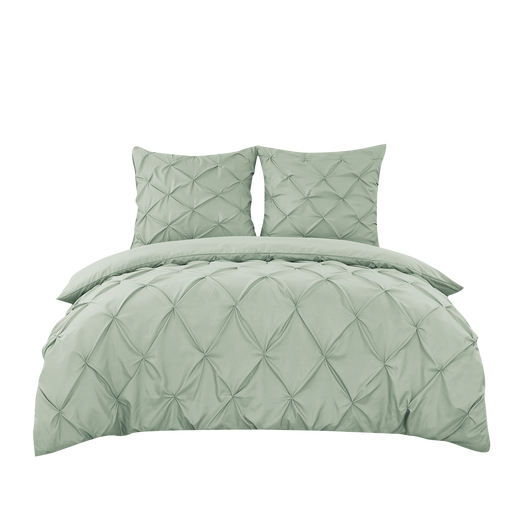
Why it's a great fit: For couples or young families looking to upgrade their bedroom. The fine pleated design gives this grey bedding an elegant texture that looks more expensive than it is. The 200x200 cm bedding size is ideal for double beds.
It debunks the "material myth" by proving that microfibre bedding can be both stylish and high-quality. The brushed finish and pleated design set it apart from basic polyester sets.
Modern Design: The pleated texture creates a sophisticated look. Soft Material: Brushed microfibre for premium comfort and all-season use.
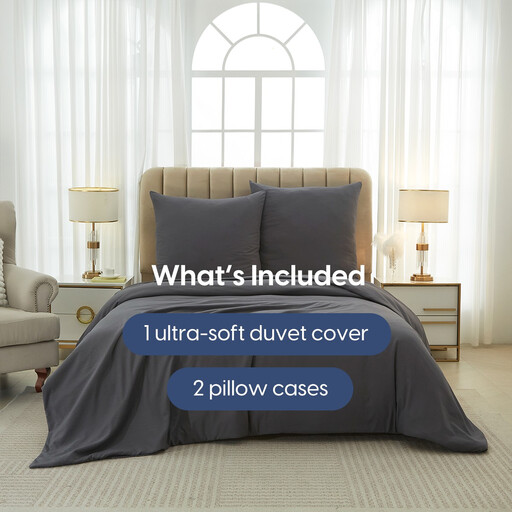
Why it's a great fit: For anyone who values thoughtful details and long-lasting quality. This set combines a soft material with superior functionality and a quality certification.
It solves the problem of shifting duvets by including eight internal corner ties—twice as many as usual. The OEKO-TEX certification and special dyeing technology for colour fastness address quality and durability concerns.
Maximum Stability: 8 corner ties keep the duvet perfectly in place. Certified Quality: OEKO-TEX certified and colour-fast. Superior Comfort: Soft, double-brushed microfibre.
We've compiled a complete, up-to-date list of products that meet these strict selection criteria.
1. How often should you change and wash a duvet cover set? For hygiene reasons, it is recommended to change and wash your bedding every one to two weeks. Always follow the care instructions on the manufacturer's label to ensure the longevity of the material.
2. What is the difference between microfibre and cotton bedding? Cotton is a natural fibre known for its high breathability and absorbency. Microfibre is a synthetic fibre (usually polyester) that is particularly easy to care for, wrinkle-resistant, and often more budget-friendly. High-quality, brushed microfibre can be a great alternative to cotton in terms of softness and comfort, and it also dries much faster.
3. Does a duvet cover with a zip last longer than one with buttons? A high-quality zip is generally more durable and practical than a button closure. Buttons can tear off and need to be sewn back on, whereas a well-made zip will function reliably for many years. When washing, be sure to close the zip to protect it and other items in the load.