
Lieferung heute & morgen

Qualitätsgarantie

Willkommens-Angebote freischalten: KOSTENLOSE Lieferung | Bis zu 80 % RABATT | Kostenlose 30-Tage-JoyPlus-Testphase
App herunterladen
A new duvet cover set needs to fit well, feel pleasant to the touch and be easy to care for without much fuss. Yet product images and marketing terms don't always lead to the right purchasing decision. Problems often arise from an inaccurate size choice, hard-to-compare material descriptions, or a lack of information about what's included.
The size of the duvet cover must match your duvet, not just the bed frame. For single beds, bedding 135x200 is widely used in Germany. For larger duvets, bedding 155x220, bedding 200x200 or bedding 200x220 are suitable options. For particularly wide duvets, bedding 260x240 is also available.
A cover that is just a few centimetres too big or too small can crease or fail to hold the filling securely. Before buying, you should therefore compare the measurements of your existing duvet directly with the details given in the product listing.
"Satin", "sateen", "cotton" and "microfibre" do not describe the same thing. Cotton bedding is made from a natural fibre; properties such as weight, weave and care depend on the specific version. Microfibre bedding is often made from polyester and is usually lightweight and easy to wash. Satin, on the other hand, primarily refers to a smooth, shiny surface effect or weave.
If you are looking for soft bedding, you shouldn't rely solely on the name. Instead, also check the material composition, closure type and care instructions.
A zip can make fitting the cover easier. Corner ties or internal loops keep the duvet in place inside the cover and can help reduce the filling from shifting. If these details are missing, you cannot automatically assume they are included.
The set composition also deserves attention: a duvet cover with pillowcases may include one or two pillowcases depending on the size. The pillow size is often 80 x 80 cm, but you should check this before purchasing.
Base your choice on the actual measurements of your duvet:
If you use two separate duvets, you will usually need two individual covers. A set for 260 x 240 cm, on the other hand, is designed for a single, extra-wide duvet.
Cotton bedding is often chosen for its natural fibre structure. Depending on the version, it can feel more textured or smoother. A washed cotton fabric can create a matte, textile look.
Microfibre bedding is lightweight, usually dries quickly and can be washed at low temperatures. For warm rooms or frequent washing, a lightweight version can be practical. For a smooth, shiny look, satin bedding is an option. Seersucker bedding has a textured surface, which means it feels less smooth against the skin and is often used without ironing.
For all-season bedding, weight, breathability and your personal sleeping habits are key. A general statement about ideal warmth is not possible without details about the duvet and room temperature.
Look out for:
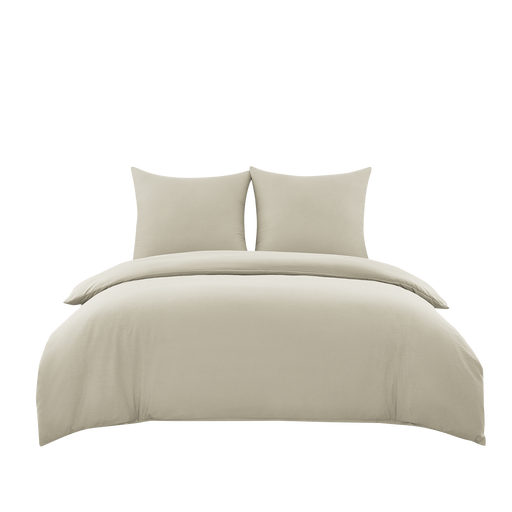
Why this product fits the profile: The 155 x 220 cm size is suitable for a longer single bed. The set includes two pillowcases and comes in a neutral linen-look finish.
The product details clearly state the material, zip closure, eight corner ties and the available sizes.
Polyester microfibre, machine wash on a gentle cycle and tumble dry on low heat according to the product description.
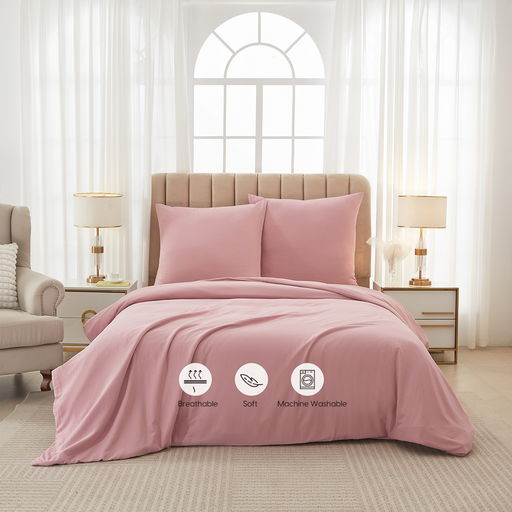
Why this product fits the profile: The 260 x 240 cm version is aimed at households with a wide shared duvet and regular washing needs.
The product description mentions eight corner ties, a zip closure, machine wash below 30 °C and that the duvet filling is not included.
Double-sided brushed polyester microfibre, two 80 x 80 cm pillowcases and low tumble dryer temperature according to the details.
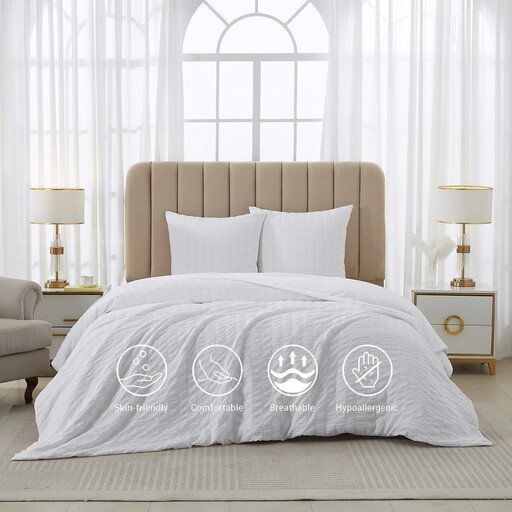
Why this product fits the profile: The textured seersucker surface and white colour make it suitable for a restrained, modern bedroom look.
The details mention a cold wash on a gentle cycle, as well as avoiding bleach, ironing and dry cleaning.
100 % polyester microfibre, three-piece set and a 260 x 240 cm duvet cover with two pillowcases.
We have put together a full, regularly updated list of products that fully meet these strict selection criteria and the safety regulations in force in the EU.
135 x 200 cm is a commonly used single bed size. For taller people or longer duvets, 155 x 220 cm may be a better fit. What matters are the measurements of your existing duvet, not the size of the mattress.
This depends on usage, personal preference and the care instructions. For everyday care, you should follow the wash temperature, wash cycle and drying recommendations for the specific product. Zips should be closed before washing unless the manufacturer states otherwise.
Microfibre can be lightweight and easy to care for. However, whether it works as breathable bedding and all-season bedding depends on the fabric, room temperature, duvet filling and your individual sleeping habits. So check the material weight and care details rather than relying solely on marketing terms.