
Lieferung heute & morgen

Qualitätsgarantie

Willkommens-Angebote freischalten: KOSTENLOSE Lieferung | Bis zu 80 % RABATT | Kostenlose 30-Tage-JoyPlus-Testphase
App herunterladen
A duvet set 135x200 cm with pillow 80x80 cm suits many single beds in the UK. Even so, choosing one isn't just about colour and price. Common mistakes happen because the contents, tog rating or care instructions aren't checked properly until after purchase.
A two-piece set usually consists of one duvet and one pillowcase. A pillow itself is often not included. When ordering, you should read the details carefully for “1 x Duvet” and “1 x Pillowcase” – or “duvet” and “pillowcase”. If you're looking for a complete bedding set 135x200, you may also need a fitted sheet and a pillowcase.
The term all-season duvet doesn't describe a regulated level of warmth. A lightweight microfiber duvet may be suitable for many months, while those who feel the cold may prefer a more heavily filled duvet in winter. More meaningful indicators are the filling material, fill weight, construction and whether you can combine separate layers.
“Washable” doesn't automatically mean every household washing machine is suitable. What matters are the wash temperature, drum size, tumble dryer instructions and how the filling should be handled. In homes with pets, durable outer fabrics and a construction with fixed chambers or quilted stitching are practical, as they help prevent the filling from shifting.
For a single bed, 135 x 200 cm is a common standard size in the UK. The pillow size 80 x 80 cm should be checked separately, as some sets contain smaller pillowcases. Check before you buy:
Vacuum-packed duvets may look flatter at first. That's a packaging characteristic, not a reliable indicator of the final loft.
A microfiber duvet made from polyester is usually lightweight, easy to care for and often machine washable. When choosing, you should still distinguish between the outer fabric and the filling: both can be made from polyester, but they don't have to be the same.
A seersucker duvet has a textured surface. The wavy or three-dimensional texture can reduce direct contact with the fabric and is often crease-resistant. However, it isn't automatically cooler or warmer than a smooth duvet – the fill amount and material are more decisive factors.
A down duvet 135x200 can offer a different warmth-to-weight ratio than a synthetic duvet, provided the filling is suitable. Pay attention to the exact composition, such as the ratio of feathers to down, and to verifiable information about origin and standards. With the DOWNFOCUS model, the supplier states a filling of 90% feathers and 10% down, along with RDS and Downpass certification. These details should be checked in the current product information before purchase.
For frequent use, guest rooms and households with pets, a washable duvet with clear care instructions is often practical. The Meeallhome models presented here are, according to product details, washed at under 30 °C on a gentle cycle, not bleached, and tumble dried on a low temperature.
The term hypoallergenic should not be understood as a medical guarantee. With the DOWNFOCUS model, the supplier refers to a tightly woven cotton cover, as well as OEKO-TEX and Dermatest certifications. These are product-specific claims from the supplier and not a guarantee that every person will react without allergies. For sensitive skin or known allergies, the material declaration, washability and individual tolerance are what matter.
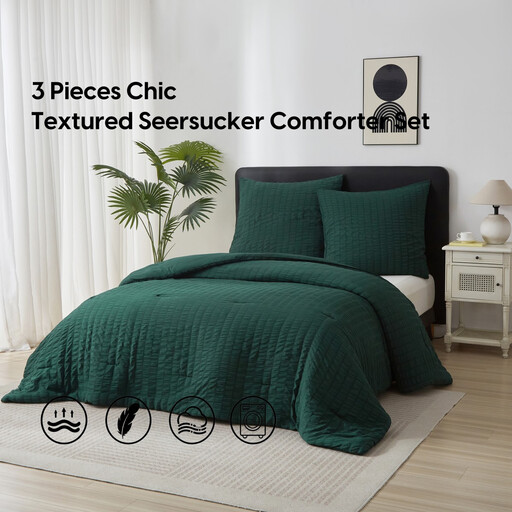
Why this product fits the profile: According to product details, this two-piece set includes a duvet in 135 x 200 cm and a pillowcase in 80 x 80 cm. The textured surface and dark colouring make it suitable for a single bed or guest room.
The dimensions and what's included are clearly stated. Care instructions are also provided: maximum 30 °C, no bleach and low tumble dryer temperature.
100% polyester microfiber according to the supplier, machine washable and with a quilted construction to help limit filling shift.
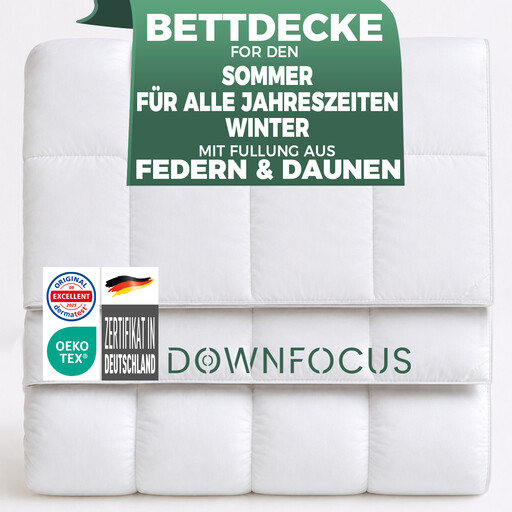
Why this product fits the profile: The combination of a summer duvet with 200 g/m² and an all-season duvet with 450 g/m² allows for seasonal adjustment. However, according to the product description, this model is not a complete set with a pillow 80 x 80 cm.
The two fill weights are clearly stated. This makes the warmth selection easier to understand than with a general all-season duvet label.
According to the supplier, 90% feathers and 10% down, plus RDS and Downpass certification; a pillowcase is not listed.
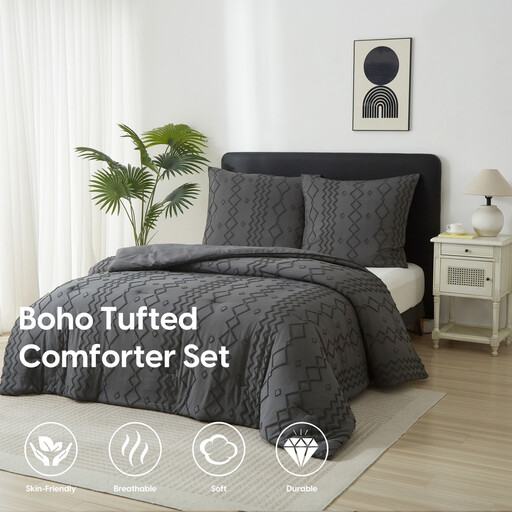
Why this product fits the profile: This set is designed for frequent use in a single-person household, guest room or home with pets. According to the details, it includes a duvet and pillowcase in the required sizes.
According to the product description, the quilting is designed to help limit filling shift. The pillowcase has an envelope closure and can be used without an additional fastening.
Machine washable at under 30 °C, corner loops for securing inside the cover, and a dark grey, understated colour.
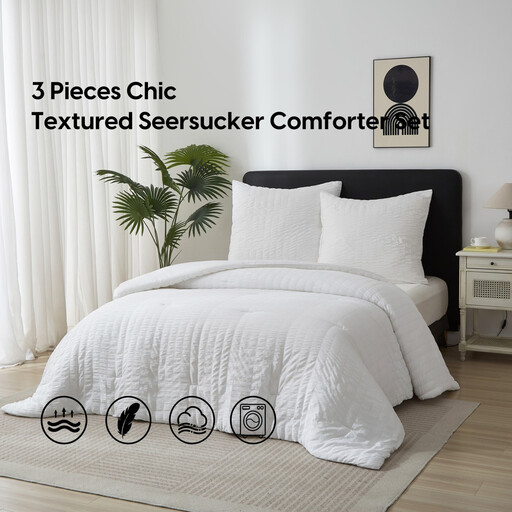
Why this product fits the profile: The white seersucker texture can be combined with different bedding colours and suits a simply decorated bedroom or guest room.
The textured surface is clearly described as a seersucker texture. Since the material doesn't need ironing, an extra care step is eliminated.
100% polyester microfiber according to the supplier, washable at under 30 °C, and with a clearly stated contents of duvet and pillowcase.
We've put together a full, regularly updated list of products that fully meet these strict selection criteria and the safety regulations in force in the EU.
Not necessarily. Many two-piece sets include a duvet and a pillowcase 80x80 cm, but not a filled pillow. You should therefore check the product list before buying.
The lifespan depends on the material, how often it's washed, drying and storage. A duvet should be washed according to the manufacturer's instructions, dried completely and stored in a dry place. Visible deformation, permanently clumped filling or damaged seams are practical signs that it's time for a replacement.
For changing temperatures, you could consider a lightweight duvet, a classic all-season duvet or a 2-in-1 model with combinable layers. What matters are the fill weight, your personal warmth preference and the room temperature. A general label alone isn't enough to base your choice on.