
Lieferung heute & morgen

Qualitätsgarantie

Willkommens-Angebote freischalten: KOSTENLOSE Lieferung | Bis zu 80 % RABATT | Kostenlose 30-Tage-JoyPlus-Testphase
App herunterladen
A new duvet set should feel pleasantly soft, fit your bed properly and keep everyday care to a minimum. In practice, however, unclear sizing, decorative details with no functional benefit and ambiguous material descriptions can quickly lead to disappointing purchases. This is especially true for households with pets, families that do frequent laundry and couples who want to share a duvet.
This buying guide explains which details matter before you buy and which sets are suited to different living situations and everyday needs.
A 3-piece bedding set does not automatically consist of a duvet cover, pillowcase and fitted sheet. With many offers, the set instead includes one duvet and two pillowcases. Covers are not always included. Always check:
A duvet described as suitable for all seasons may work well in many rooms, but this says little about your personal temperature preference. Room temperature, sleeping habits and the bedding used all affect comfort. A lightweight microfibre duvet can be practical in summer, while additional layers may be needed in winter.
A quilted duvet uses stitching to keep its filling in place. This helps distribute the filling evenly, but it is not, by itself, an indication of the duvet’s warmth rating. Similarly, seersucker bedding primarily describes the textured surface. Information about the filling, weight and care requirements is more useful when choosing a duvet than terms such as “luxurious” or “extra warm”.
According to the product specifications, the models featured here are made from 100% polyester microfibre. This material is lightweight, machine washable and relatively easy to dry at a low temperature. If you are looking for a soft duvet with a smooth feel, you should also check the description of the filling.
A textured surface, such as seersucker, can add visual interest to the bed and is often crease-resistant. It does not, however, replace a careful review of the care instructions. For households with pets, washable materials and a construction that keeps the filling securely in place are practical choices, as they make regular cleaning easier.
The right size depends on the width of the bed, your height and the amount of overhang you prefer. Common points of reference include:
Before buying, measure your existing duvet cover as well. A 240 x 220 cm duvet will not fit into a 200 x 200 cm cover. If you are buying a new duvet without a separate cover, also clarify whether it is intended to be used as a finished duvet or as an insert.
According to the manufacturers’ specifications, the sets listed can be washed at no more than 30°C on a gentle cycle. Do not use bleach. Depending on the model, low-temperature tumble drying or air drying is recommended.
Before first use, vacuum-packed products can be shaken out and washed according to the care instructions. Ensuring that the duvet is completely dry prevents moisture from remaining in the filling. Always follow the care label, consider the capacity of your washing machine and dryer, and review the instructions provided with the individual product.
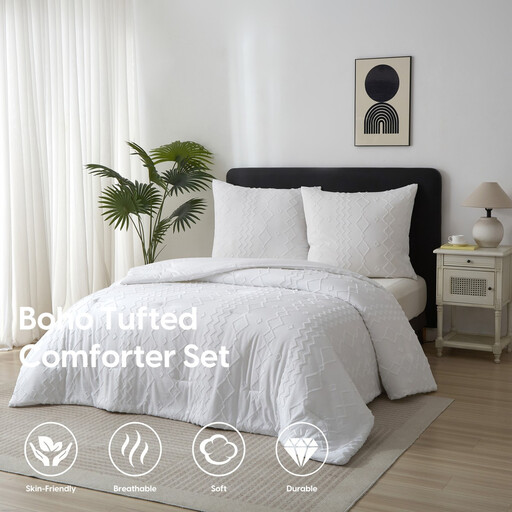
Why it’s a good fit: The square dimensions suit individuals or couples looking for a compact shared duvet for a bedroom or guest room.
The listed contents explicitly include one duvet and two pillowcases. The quilting is designed to help prevent the microfibre filling from shifting.
100% polyester microfibre, 80 x 80 cm pillowcases, machine washable at up to 30°C and corner ties for secure fastening.
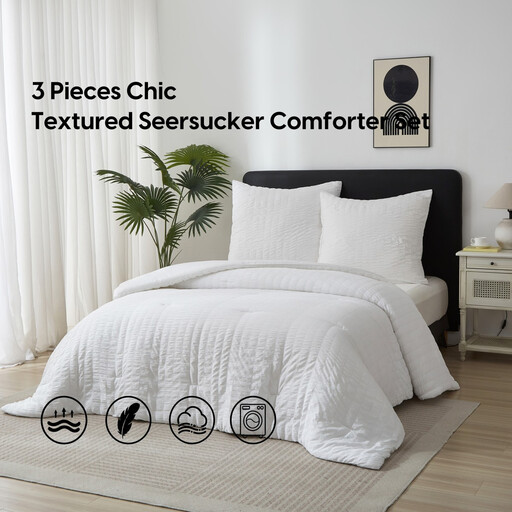
Why it’s a good fit: The 240 x 220 cm dimensions provide couples with more width than a square duvet and pair easily with white bedding across a range of interior styles.
The textured seersucker surface is treated as a design feature, not proof of a particular warmth rating. The product dimensions are clearly specified.
Three-piece set, two 80 x 80 cm pillowcases, washable microfibre and low-temperature tumble drying.
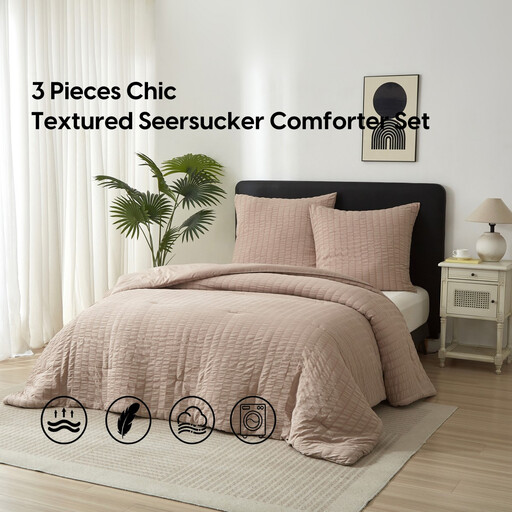
Why it’s a good fit: The generous dimensions suit wide beds and households where frequent washing and an easy-care surface are important.
The quilted construction is designed to keep the filling in place. The care instructions specify machine washing at up to 30°C and do not require ironing.
260 x 240 cm, two pillowcases, 100% polyester microfibre and a textured seersucker surface.
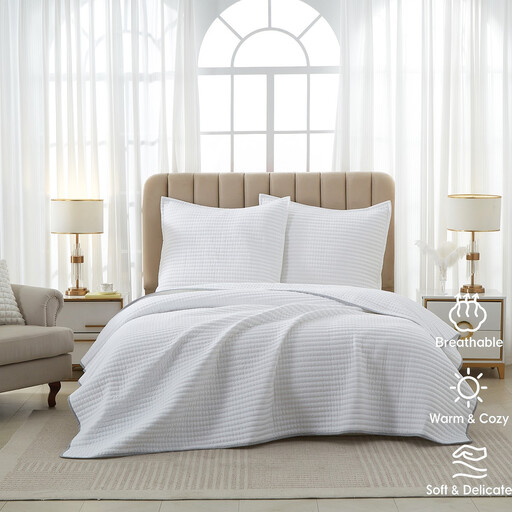
Why it’s a good fit: As a lightweight bedspread or extra layer, this model is well suited to guest rooms, holiday apartments and portable use.
The description highlights its versatility as a bedspread, lightweight duvet or sofa blanket. It should not be mistaken for a heavyweight winter duvet.
3-piece set, square quilting, 155 x 220 cm, two pillowcases and machine washing at up to 30°C.
We have compiled a complete, real-time list of products that fully satisfy these strict selection criteria and UK safety regulations.
Common options for a double bed include 200 x 200 cm, 240 x 220 cm and 260 x 240 cm. The decisive factors are the bed’s width, the amount of overhang you prefer and whether two people will be sharing one duvet. For wide beds, 260 x 240 cm provides more room at the sides.
Wash the set according to the care label; for the products mentioned here, this means up to 30°C on a gentle cycle. Do not use bleach and dry at a low temperature. The duvet should be completely dry before it is returned to the bed or stored away.
Microfibre is lightweight and easy to care for. Whether a duvet is warm enough for year-round use depends on the amount of filling, room temperature and your personal preference. A warmer additional layer may be necessary in very cold bedrooms, while a lightweight quilted duvet may be sufficient during the warmer months.