When choosing a DVD player for cookery courses, start by checking that it supports the formats of your existing discs and files, and has an output that matches your TV’s inputs. A USB port alone doesn’t mean every video file will play. If you want to repeat steps, check whether the specific model documents A-B repeat, slow motion or simply a resume function. For imported DVDs, you should also check the region code. The features mentioned are manufacturers’ claims for individual models.
Who are these features important for?
Cookery course collectors with their own video files
If you want to watch DVDs and videos from USB storage on one device, check which disc, file and codec formats it supports. Philips lists media playback via USB, while XORO sets out supported formats and limitations for specific models.
Home cooks who need to repeat steps
If you want to watch a step again or pick up where you left off after a break, the functions documented for each model are what matter. For the DVP-SR760H, Sony lists features including Instant Replay and resume points; XORO describes A-B repeat for the HSD 8470.
Owners of older TVs or imported DVDs
Match the video output to an available TV input, and check that the region code is compatible with your collection if you have imported discs. Denver lists HDMI and SCART for the DVH-7787MK3 and describes this model as region-free. Sony also recommends checking the region code if you have playback problems.
What should you look for when buying?
First check your existing discs and files, then the playback controls you’ll need when following a recipe, and finally the connection that suits your TV. This helps you choose a player that works with the media and equipment you actually own.
| Buying priority |
What to check |
Who is it most relevant to? |
| Cookery course DVDs |
Check the disc type and, where relevant, the region code against the details for the exact model. |
If I want to play my existing course discs without any hassle, compatibility is essential. Around 29% of consumers prioritise DVD compatibility. |
| Local video files |
Check the file format and codec; if necessary, also check the stated resolution and storage limits. |
If my cookery videos are on a USB stick, I want to know whether those specific files are supported. Around 29% of consumers put local files first. |
| Repeat and resume |
Check whether the model documents A-B repeat, slow motion, chapter selection or resume after a break. |
If I want to watch a particular technique several times, I need a suitable repeat function, not just the option to pick up where I left off later. Around 24% of consumers prioritise playback controls for following a recipe. |
| TV connection |
Match HDMI or another required output to an available input on your TV. |
If I want to keep using my existing TV, the player’s output needs to match its connections. Around 18% of consumers put the TV connection first. |
For example, the manufacturer specifies that the XORO HSD 8470 supports USB storage up to 32 GB and video files with a maximum resolution of 720 × 576 pixels; AVC and MKV are among the formats it does not support. So check the details for the exact model and try them against a typical file from your collection.
Common misconceptions
-
“It has USB” means it will play all my local videos
A USB port alone doesn’t tell you which formats and codecs a particular player can play. For the XORO HSD 8470, the manufacturer lists specific supported formats and excludes AVC and MKV, among others.
Compare the file format and codec of a typical video with the manual for the full model number.
-
1080p upscaling doesn’t turn a DVD into an HD source
An upscaled HDMI output doesn’t change the resolution of the original DVD recording.
First assess the player for disc and file compatibility, playback controls and TV connections. Treat upscaling as an additional output feature.
-
Resume and repeating a section are the same thing
Resuming after an interruption isn’t the same as looping a step you’ve chosen. Sony lists resume points for the DVP-SR760H; XORO documents A-B repeat for the HSD 8470.
Decide whether you want to pick up where you left off after a break or repeat a particular section, then check for the relevant feature.
Brands to consider
Sony
The DVP-SR760H is worth considering if documented DVD playback features and an HDMI connection are important to you.
- Sony lists DVD-Video, MPEG4/Xvid, Instant Replay and resume points for up to six DVDs for this model.
- The listed formats don’t guarantee that every file you own will play. Also check that your discs’ region code is compatible.
Philips
The TAEP200/12 is an option if you need DVD format support and media playback from a USB flash drive.
- Philips lists DVD±R/RW and films, music and photos via USB Media Link.
- Check that the video formats and codecs you need match the details for the specific model.
XORO
The HSD 8470 is worth considering if detailed information on local file formats and repeat functions matters to you.
- XORO documents HDMI, USB and A-B repeat, as well as supported file formats.
- For the HSD 8470, XORO specifies USB storage up to 32 GB and a maximum resolution of 720 × 576 pixels for video files; AVC and MKV are among the formats it does not support.
Denver
The DVH-7787MK3 may be relevant if HDMI, SCART or imported DVDs are among your selection criteria.
- Denver lists HDMI, SCART and AVI for this model, and describes it as region-free.
- The manufacturer’s region-free claim applies to this model; the AVI specification doesn’t mean that every video file is supported.
DVD drives for computer playback
The external DVD drives below are described for playing cookery course DVDs through a connected laptop or desktop computer. They are not standalone DVD players for direct connection to a TV.
 No image available
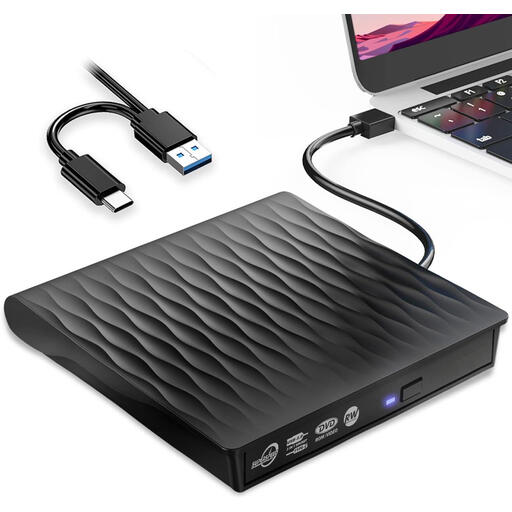
External DVD drive with USB 3.0 and USB-C
If you want to watch cookery course DVDs on a laptop or desktop computer, this external drive is described as suitable.
Listed formats include DVD-ROM, DVD±R and DVD±RW, as well as film playback. It is used with a connected computer.
View at Joybuy
 No image available
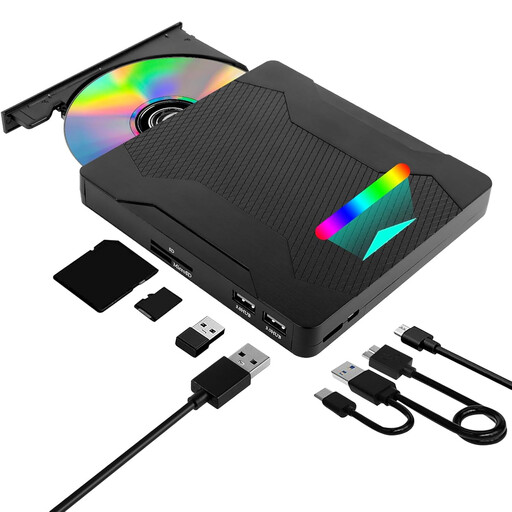
7-in-1 external DVD drive with USB 3.0/2.0, Type-C and SD/TF card reader
If you want to play cookery course DVDs on a Windows or Mac computer, this portable drive is described as suitable.
The specifications list DVD-R, DVD-RW and DVD-RAM, as well as film playback. You’ll need a connected computer to use it.
View at Joybuy
 No image available
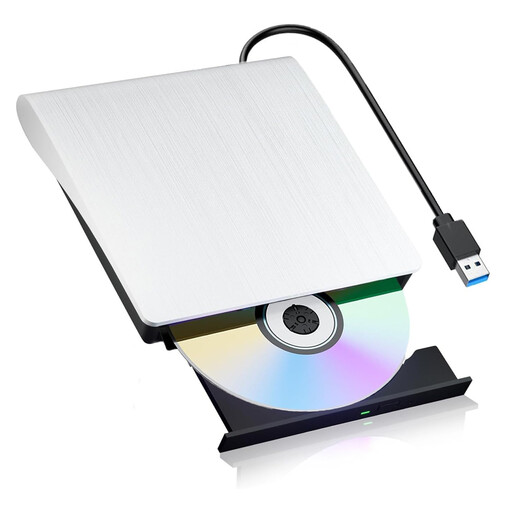
External DVD drive with USB 3.0
If you want to watch cookery course DVDs on a laptop or desktop computer, this external drive is described as suitable for DVD films.
Listed formats include DVD±R, DVD±RW, DVD-ROM and DVD-RAM. The description lists Windows and Mac OS as compatible systems.
View at Joybuy
 No image available
7-in-1 external DVD drive with USB 3.0, Type-C and SD/TF card reader
If you want to watch course DVDs on a Windows, Linux or Mac computer, this portable drive is described as suitable.
The specifications list DVD-R and DVD-RW, as well as video and film playback. It is used with a computer.
View at Joybuy
Frequently asked questions
Is a USB port enough to play my own cookery videos?
No. A USB port alone doesn’t guarantee that your files will play. Check the format and codec against the details for the specific player: for the HSD 8470, XORO lists supported AVI codecs and a maximum video file resolution of 720 × 576 pixels, among other details; AVC and MKV are not supported.
What can I check if a course DVD won’t start?
First check the supported disc type and, for imported DVDs, the region code. Also check the disc for scratches and fingerprints. Sony’s troubleshooting advice recommends cleaning it with a soft, dry cloth.
What should I know about returns and faults when buying online?
For a qualifying distance purchase from a trader, you generally have a 14-day right to cancel from the date of delivery. Possible return costs and exceptions should also be taken into account. Your Europe also explains the exception for unsealed audio and video recordings such as DVDs; this exception does not automatically apply to a DVD player. Your statutory rights if goods are faulty are separate from any voluntary guarantee.
How should I dispose of an old DVD player in Germany?
Don’t put an old DVD player in your household rubbish. The German Environment Agency lists local collection points as an option; check the relevant retailer’s acceptance terms if you want to return it to a shop.


