Instructor with a large screen
If you want to show a group dance techniques or instructions from a DVD, check that the player’s video output matches the screen or projector you have.


Choose a DVD player whose video and audio outputs match the connections available in your group room, and which plays the disc formats you need. If you often want to replay particular sections, check which search, slow-motion or repeat functions are specifically documented. For a fixed AV installation, additional control features may also be useful.
If you want to show a group dance techniques or instructions from a DVD, check that the player’s video output matches the screen or projector you have.
For music examples and spoken instructions played through existing audio equipment, the player’s output needs to match the equipment’s input. Lenco lists an audio output for the DVD-120BK, among other features; Denver specifies a coaxial output for the DVH-7787MK3.
If you want to find a section again or play it back more slowly, check the specific playback functions available on the model. Sony lists search, slow playback and instant replay for the DVP-SR760H.
First, check the signal path from the player to the screen and speakers. Then compare disc compatibility and the features available for replaying practice sections.
Suitable if: You mainly play DVD videos on a screen or projector with an HDMI input, and have confirmed how the sound will reach your audio equipment.
Trade-off: HDMI alone won’t connect the player to group speakers, and upscaling won’t add detail to the original recording.
Suitable if: You want to use existing HDMI or SCART connections, or your audio equipment has a compatible coaxial input. Lenco specifies HDMI and SCART on the DVD-120BK; Denver lists these connections as well as a coaxial output on the DVH-7787MK3.
Trade-off: Still check the specific input, the cable you need and the complete signal path.
Suitable if: A regularly used installation needs network or RS-232C control, or a front-panel lock. Tascam documents these features for the BD-MP1MKII.
Trade-off: Extra installation and control options may be unnecessary if you only occasionally play a single DVD.
| Priority | What to check when buying | Who is this important to? |
|---|---|---|
| Picture for the group | Check the player’s output, an available input on the screen or projector, and the cable you need. | If I want to show a DVD to everyone on a large screen or projector, the video connection needs to match the equipment we have. Around 31% of consumers put the video connection first. |
| Sound through the group audio system | Check the audio system’s inputs and the player’s outputs, as well as the audio route via the screen or AV equipment, if applicable. | If music and spoken instructions need to be heard around the room, I need a suitable connection from the player to the speakers. Around 25% of consumers prioritise connecting to group sound equipment. |
| Replaying practice sections | Check the manual for the exact model to see whether it has the search, slow-motion or repeat function you need. | If I want to show a specific section again or play it more slowly during a lesson, the right playback controls matter. Around 25% of consumers prioritise replaying practice sections. |
| Playing the discs you already own | Compare the disc type and, for imported DVDs, the region code with the full player model number. | If I use recordable or imported teaching DVDs, I want to check the format and region code in advance. Around 19% of consumers prioritise compatibility with their discs. |
Upscaling can adjust the output of a standard-definition DVD, but it won’t change the original recording. Whether people at the back can make out the details also depends on the screen or projector and the seating arrangement.
If possible, test one of your teaching DVDs on the screen you plan to use, viewing it from the back rows.
HDMI, SCART and coaxial outputs are compatible with different inputs. A video connection alone does not guarantee a suitable signal path to your existing sound system.
Plan the route from the disc through the player and, if needed, the screen or AV equipment, then on to the speakers.
The DVP-SR760H DVD player is an option for DVD videos, with HDMI and documented playback controls.
The DVH-7787MK3 is worth considering if HDMI, SCART or a coaxial audio output is relevant to your existing equipment.
The DVD-120BK is an option if HDMI and SCART are useful video connections for your setup.
The TAEP200/12 may be a good choice if you need support for recordable disc formats listed by the manufacturer as well as DVDs.
The BD-MP1MKII is a professional Blu-ray and DVD player for a permanently installed AV system.
The products below are external DVD drives for playback via a compatible computer, not standalone players that connect directly to a screen and audio system.
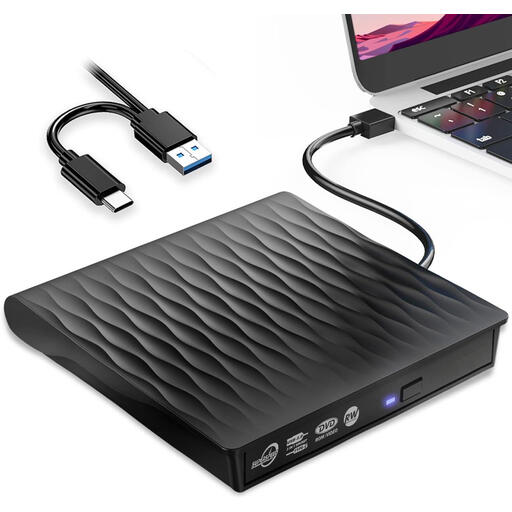 No image available
An option if you can use a compatible computer as the playback device; this drive is designed for use with a computer.
The product description lists playback of DVD-ROM and DVD±R/RW via a compatible computer.
 No image available
A suitable option if a compatible computer can handle DVD playback; this drive is described as an external computer drive.
The product description lists DVD-R and DVD-RW playback. The product title also mentions an SD/TF card reader and compatibility with Windows, Linux and Mac OS.
Not without checking your existing equipment. Check the HDMI video input and the actual route to the speakers. Denver also lists a coaxial output for the DVH-7787MK3, which will only work with a compatible amplifier input.
Check that the specific model has the function you need, and test the teaching DVD before the session. Sony lists instant replay, search and slow playback for the DVP-SR760H. Tascam lists a repeat function for the BD-MP1MKII, which can be combined with playback starting automatically when power is switched on for disc media.
Buying the disc alone does not settle the question of screening rights. Section 15 of the UrhG distinguishes between public and non-public playback; for public screenings of a film, section 52 of the UrhG requires permission from the rights holder. GEMA publishes tariffs for music at one-off and regular film screenings. The rights or exceptions that apply to a particular course depend, among other things, on the type of event and any licences already granted, so you should check what applies to your situation.
Your statutory rights and a voluntary guarantee are separate entitlements. If a product is faulty, your statutory rights initially entitle you to have the seller put things right; the Verbraucherzentrale lists repair or replacement as options.