
Lieferung heute & morgen

Qualitätsgarantie

Willkommens-Angebote freischalten: KOSTENLOSE Lieferung | Bis zu 80 % RABATT | Kostenlose 30-Tage-JoyPlus-Testphase
App herunterladen
The selection of e-bikes on the market is vast, and the technical specifications can quickly become overwhelming. Whether for the daily commute to work, extended weekend tours, or as a practical companion in your RV, the requirements for an electric bicycle are as individual as its rider. This guide is designed to give you clear direction. As your Joybuy Product Recommendation Officer, I have compiled information to help you objectively evaluate technical features and find a model that is precisely tailored to your needs.
To make an informed decision, it's helpful to understand a few key criteria. These three points are crucial for most users.
The design of an e-bike is optimized for specific use cases. The most common categories are:
The placement of the motor has a significant impact on handling. The mid-drive e-bike motor has established itself as the standard for high-end models. It is positioned low and centrally in the bottom bracket area, resulting in a very balanced center of gravity and a natural, stable riding feel. Power is transferred directly to the chain, which is considered particularly efficient. Rear and front hub motors are also common, but they can noticeably alter the handling (especially weight distribution and traction).
The desire for an e-bike with a long range is understandable. However, the actual distance you can cover on a single charge depends on many factors: battery capacity (measured in watt-hours, Wh), the selected assistance level, the rider's weight, topography, and even the ambient temperature. Models with batteries over 400 Wh typically allow for ranges of up to 100 kilometers or more under ideal conditions. Pay attention to the manufacturer's specifications and compare them with your intended usage profile.
Based on the criteria above, we have put together a selection of models that cover different requirements.
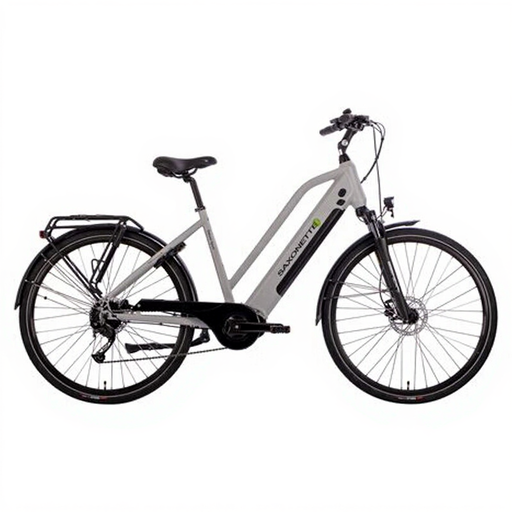
Why It Stands Out: The Saxonette Deluxe Sport is a classic trekking e-bike designed for performance and range. At its core is the powerful 250 W SFM mid-drive motor, which, according to the manufacturer, produces 80 Nm of torque to tackle inclines with ease. The fully frame-integrated 418 Wh battery enables a range of up to 120 km. High-quality components like the Shimano Alivio 9-speed derailleur and Shimano MT200 hydraulic disc brakes complete the package.
Pros:
Who Is It For? Touring cyclists and demanding commuters looking for a reliable and powerful e-bike for long distances on asphalt and light gravel paths.
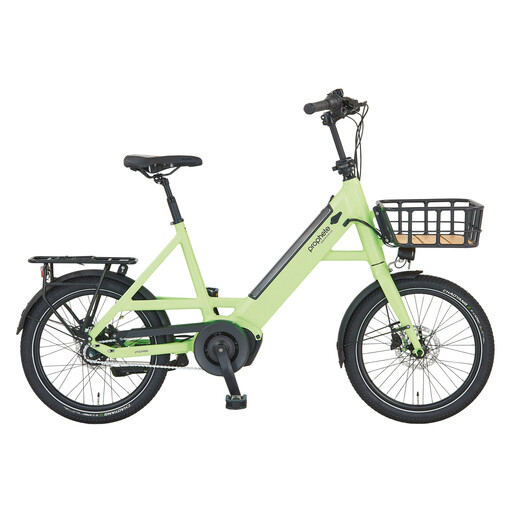
Why It Stands Out: The Prophete Urbanicer 3.0 is a compact urban e-bike specially designed for use in the city and for travel. With its 20-inch tires and well-thought-out frame, it is particularly agile and space-saving. The quiet AEG ComfortDrive II mid-drive motor delivers 70 Nm of torque, providing ample power for city traffic. Despite its compact build, Prophete claims a range of up to 110 km. Practical details like front and rear racks and a road-compliant lighting system with a brake light function enhance its everyday usability.
Pros:
Who Is It For? For city dwellers, commuters, and campers looking for an agile, space-saving, and well-equipped e-bike for daily use and holidays.
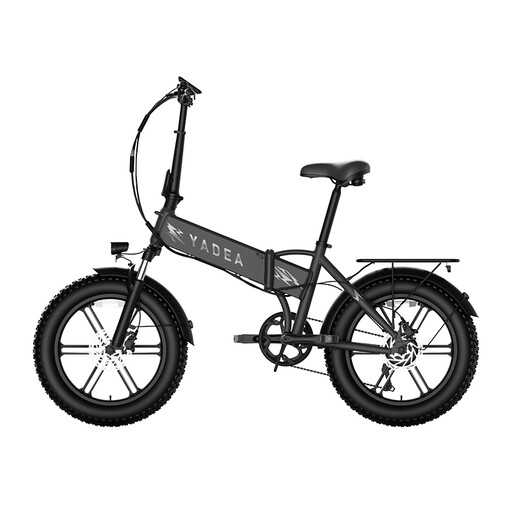
Why It Stands Out: The Yadea Rover combines the advantages of a folding e-bike with the off-road capability of a fat tire e-bike. The 20 x 4.0-inch all-terrain tires and the lockout suspension fork ensure comfort and control on a wide variety of surfaces. The folding mechanism allows for easy transport. The high-torque rear hub motor delivers powerful propulsion, while the hydraulic disc brakes provide safe deceleration. Modern features like NFC unlocking and a USB-C charging port for your smartphone round out the innovative concept.
Pros:
Who Is It For? For adventurous riders looking for an extremely versatile and portable e-bike for use in the city, off-road, and on trips.
The performance and longevity of an e-bike depend significantly on its battery. Modern lithium-ion batteries are technological components whose lifespan can be considerably extended with proper care. If you want to learn more about the technology or find information on replacement components, you can find a selection of [Li-Ion Battery] options in our category.
In common parlance, the terms are often used interchangeably. Legally, however, there is an important distinction: A pedelec (Pedal Electric Cycle) only assists the rider when pedaling, up to a speed of 25 km/h, and is legally considered a bicycle. An S-Pedelec provides assistance up to 45 km/h and requires an insurance plate, helmet, and a license. An e-bike in the stricter sense can be propelled by a throttle without pedaling and is legally classified as a moped. Most of the models presented here are pedelecs.
To maximize your battery's lifespan, you should follow a few basic rules. Store the battery at room temperature and avoid extreme heat or cold. Charge it regularly and avoid letting it completely discharge. If you are not using the e-bike for an extended period, a state of charge between 30% and 60% is ideal. Only use the charger supplied by the manufacturer.
The mid-drive motor offers the most balanced and natural riding feel and is an excellent choice for most applications, from touring to commuting. A rear hub motor provides strong, direct acceleration and a sporty feel, but can lose traction on slippery surfaces. A front hub motor is simple in design but can affect steering and is best suited for flat routes in city traffic.