
Lieferung heute & morgen

Qualitätsgarantie

Willkommens-Angebote freischalten: KOSTENLOSE Lieferung | Bis zu 80 % RABATT | Kostenlose 30-Tage-JoyPlus-Testphase
App herunterladen
E-fatbikes, also known as fat tire e-bikes, are gaining popularity among commuters and recreational riders in Germany. Their robust construction and wide tires offer a high degree of riding comfort and versatility on a wide variety of surfaces. However, the selection of models is vast, and the technical specifications can be overwhelming.
This article serves as a guide. We will introduce objective criteria to help you with your selection and present a range of models suited for different user profiles due to their specific features.
To make an informed decision, it's helpful to understand a few core technical aspects. The following points are crucial for the performance, safety, and everyday usability of an e-fatbike.
Range is one of the most important criteria. It is largely determined by the battery capacity, which is specified in watt-hours (Wh). This is calculated from the voltage (Volts, V) and the nominal charge (ampere-hours, Ah). For example, a battery with 48V and 13Ah has a capacity of 624 Wh.
Manufacturer claims about range are often determined under ideal conditions. In practice, factors such as rider weight, the selected assistance level, the route's topography, outdoor temperature, and tire pressure affect the actual distance. An e-bike with a long range typically has a battery with more than 700 Wh, which is advantageous for extended tours or multi-day commuting without recharging.
In Germany, clear legal regulations apply to pedelecs (Pedal Electric Cycles). For an electric fatbike to be ridden on public roads without an insurance plate or a driver's license, it must meet the following criteria:
Many models advertise a higher peak power (e.g., 750 W). This is relevant for short bursts of acceleration or tackling inclines, while the nominal continuous power is what determines the legal classification.
Due to the higher weight and potential speeds, powerful brakes are essential on an e-fatbike. A distinction is mainly made between mechanical and hydraulic disc brakes.
The characteristic fat tires (often 4.0 inches or wider) act as a natural suspension, absorbing shocks and increasing riding comfort. At the same time, the large contact patch provides excellent traction on loose surfaces like gravel, sand, or snow.
Based on the criteria mentioned, we have compiled a selection of models that are suitable for different users due to their specific features.

Why it stands out: The Engwe Engine X combines the robustness of a fatbike with the practicality of a folding bike. Its folding mechanism makes it an appealing option for commuters who need to transport the bike in a car or on public transport.
Advantages:
Who is it for? This folding fat tire e-bike is ideal for urban commuters with limited storage space who are looking for a versatile bike for their commute and for occasional trips on paved forest or field paths.
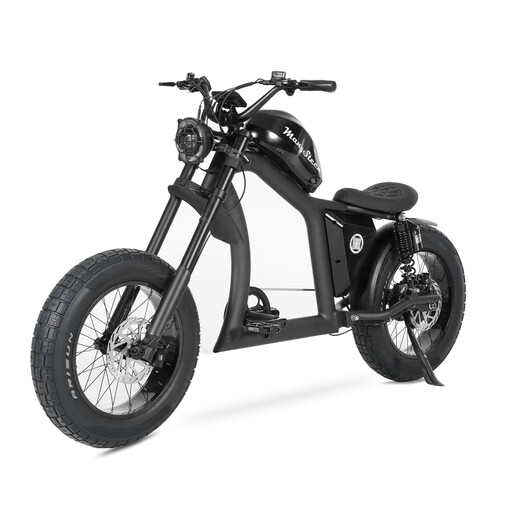
Why it stands out: The Mangosteen FT02 is designed for comfort and range. With its dual suspension and a particularly high-capacity battery, it is aimed at riders who cover long distances on varied terrain.
Advantages:
Who is it for? For long-distance commuters and tour riders who prioritize maximum comfort and a very long range. It is a great choice for anyone who regularly travels on uneven roads or in light off-road terrain.

Why it stands out: The Mangosteen FT03 presents itself as a well-balanced all-terrain model. It combines robust features like hydraulic brakes and wide tires with a powerful battery, making it equipped for a wide range of applications.
Advantages:
Who is it for? This fat tire e-bike is an excellent choice for users looking for a reliable and capable bike for mixed use—from the daily commute in the city to adventures on gravel and forest trails on the weekend.
Our selection represents a cross-section of popular models with different strengths. If you haven't yet found the right model for your individual needs or want to compare more specifications, our broader category offers a larger selection.
Explore our entire collection of electric fatbike models and find the perfect bike for your needs.
An e-bike with fat tires offers several advantages:
Yes, e-fatbikes are legal and compliant with German road traffic regulations (StVZO) as long as they are classified as pedelecs. This means the motor has a nominal continuous power of 250 W, only provides assistance when pedaling, and cuts off at 25 km/h. To be used on public roads, these bikes must also be equipped with the required lighting (headlight, taillight), reflectors, and a bell. The models presented here meet the criteria for pedelecs.
A folding mechanism on a 20-inch electric fatbike significantly increases its portability. It can be more easily stored in a car trunk, on public transport, or in an apartment. This is a key advantage for commuters or people with limited storage space. The mechanism can slightly increase the bike's total weight and adds an extra component to the frame.