
Lieferung heute & morgen

Qualitätsgarantie

Willkommens-Angebote freischalten: KOSTENLOSE Lieferung | Bis zu 80 % RABATT | Kostenlose 30-Tage-JoyPlus-Testphase
App herunterladen
Published by: Joybuy Product Recommendation Officer Date: July 18, 2026
Paved cycle paths, rugged forest trails, snowy winter roads, or sandy summer shores—the demands on a modern bicycle are diverse. Anyone looking for a single bike for almost any terrain and every season will quickly discover the E-Fatbike. These bikes combine the pedal assistance of an electric motor with extremely wide tires, opening up new possibilities for commuters and recreational riders alike.
This article serves as an objective guide. It is designed to help you understand the technical features and make an informed decision based on facts, not marketing hype. We will analyse the crucial components and present a selection of models for different needs.
Choosing the right model depends on your individual needs. Three technical aspects are particularly relevant: the drive system's performance, safety features, and construction.
The heart of any fat-tire e-bike is its drive system. The motor's power, often specified in watts (W) and newton-metres (Nm), determines acceleration and the ability to tackle hills. A high torque (e.g., 80 Nm) ensures powerful acceleration, even on inclines.
Battery capacity, measured in amp-hours (Ah) or watt-hours (Wh), is directly responsible for the range. A high-capacity battery (e.g., over 20 Ah) enables a long-range e-bike, which is especially important for long commutes or extended off-road tours. Pay attention to the manufacturer's stated ranges, which are often listed separately for pedal-assist mode and all-electric mode.
An all-terrain e-bike must be safe to control under all conditions. Compared to mechanical disc brakes, hydraulic disc brakes offer superior and more precise stopping power, especially in wet conditions.
For off-road riding, suspension is crucial. A front suspension fork is standard, but models with dual suspension (front and rear) absorb shocks even more effectively, providing a more stable and comfortable ride.
The tires are the bike's defining feature. An e-bike with fat tires (often 4 inches or wider) offers a large contact patch. The result is excellent traction on loose surfaces like sand, snow, or gravel. Smaller wheel sizes, like on a 20-inch e-bike, make the bike more agile and compact, while larger wheels (e.g., 26-inch) provide better rollover capability over obstacles.
For commuters who want to take their bike on public transport or store it in the office, a foldable e-fatbike is a practical solution. A folding mechanism significantly reduces the packed size and increases everyday flexibility. Look for a sturdy and easy-to-use folding mechanism. The frame material, usually aluminium, affects the bike's overall weight and stability.
Based on the criteria above, we have compiled a selection of models that cover different use cases.
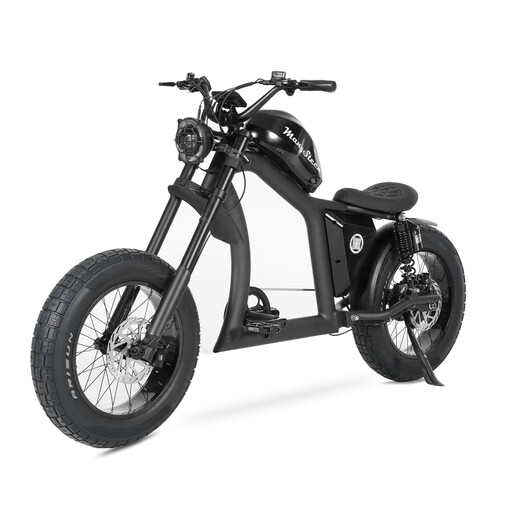
Mangosteen FT02 E-Bike, 750W, 48V 22.5Ah, 25km/h, 20" Fat Tire Electric Bicycle
Why it stands out: The Mangosteen FT02 is engineered for performance and comfort. The combination of a high-peak-power motor, dual suspension, and hydraulic disc brakes makes it a robust companion for demanding terrain. The very high-capacity battery targets riders who prioritise long range.
Advantages:
Who is it for? For riders seeking a powerful and comfortable fat-tire e-bike for daily commutes and long weekend excursions, who value long range and comprehensive suspension.
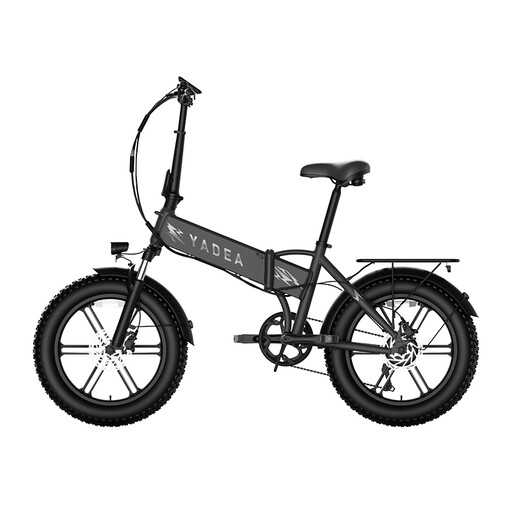
Yadea Rover Foldable Fat-Tire E-Bike, Black, 20 × 4.0-Inch All-Terrain Tires
Why it stands out: The Yadea Rover combines the off-road capability of a fatbike with the practicality of a folding bike. Its thoughtful design with integrated components and modern features like NFC unlocking and a USB charging port is aimed at tech-savvy users who need flexibility in an urban environment.
Advantages:
Who is it for? Ideal for commuters and city dwellers looking for a versatile foldable e-fatbike that is equally suited for the ride to work and spontaneous trips into nature, while being easy to transport.
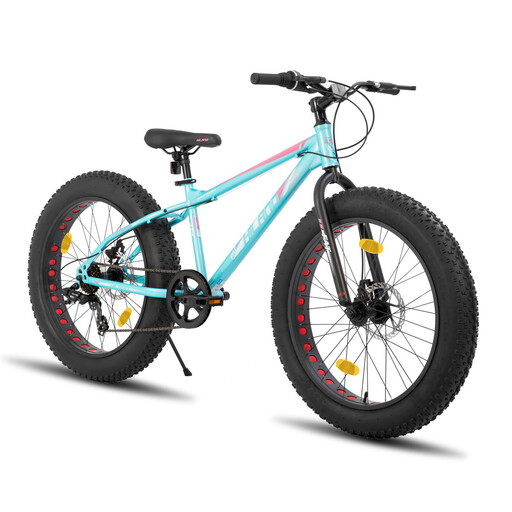
HILAND Roon, Mountain Bike Fat Tire Men Women MTB with Shimano 7 Speed
Why it stands out: For purists who want the fatbike experience without electric assistance, the HILAND Roon is a compelling option. It focuses on the core features of a fatbike: a robust steel frame, wide tires for maximum traction, and a reliable mechanical drivetrain.
Advantages:
Who is it for? For cyclists looking for a pure, muscle-powered fatbike for sporty rides on challenging terrain who prefer to go without an electric motor.
The models presented here cover specific use cases. If you want to compare more options or get a broader overview of available designs and features, you can find a larger selection in our main category.
? Discover More Fatbikes on Joybuy.de
1. What are the main advantages of an e-bike with fat tires? The wide tires offer unmatched traction and stability on difficult surfaces like sand, snow, mud, or loose gravel. Combined with electric assistance, a pedelec fatbike enables year-round mobility and significantly expands your range of action, as even challenging routes and inclines can be conquered with less effort.
2. What kind of range can I expect from an e-fatbike? The range varies greatly and depends on factors such as battery capacity, the selected assistance level, rider weight, tire pressure, temperature, and the route profile. Models with large batteries (e.g., 48V 22.5Ah like the Mangosteen FT02) can achieve ranges of 75 to 100 km in pedal-assist mode, according to manufacturer specifications. Smaller batteries offer correspondingly less range.
3. Do I need a licence or registration for an e-fatbike in Germany? In Germany, e-fatbikes are generally considered Pedelecs (Pedal Electric Cycles) and are legally equivalent to bicycles, as long as they meet the following criteria: the motor has a maximum nominal continuous power output of 250 watts, and the pedal assistance cuts off at a speed of 25 km/h. For these models, there is no insurance, licence plate, or helmet requirement (although a helmet is strongly recommended). Models that go faster or have more powerful motors without this limitation are classified as S-Pedelecs or e-bikes and require registration.