For archaeological reports with small labels, a large-format e-reader is a sensible option, provided your own PDF pages remain easy to read on it. A smaller device may suit you better if you mainly read continuous text and portability matters more. For handwritten notes, you’ll also need to check whether your file can be annotated and whether the import and export process works with the device: Rakuten Kobo, for example, does not allow stylus notes on DRM-protected PDFs. Only make colour a deciding factor if it conveys important information in your plans or illustrations; also check that you can access the specific library files you need.
Which e-reader is right for you?
Readers of lengthy report PDFs
If you read finds plates, plans and other fixed-layout specialist documents, check a page from one of your own PDFs to see whether labels are easy to make out both at a glance and when zoomed in. PocketBook and Rakuten Kobo offer devices with 10.3-inch displays, but screen size alone doesn’t tell you whether your specific pages will be legible.
Researchers who annotate in the margins
If you make handwritten notes as you read and want to use them later, you’ll need to consider PDF permissions and export options as well as the stylus. Rakuten Kobo describes how to export annotated, unprotected PDFs; DRM-protected files and those that don’t allow annotations are excluded.
Users of library files
If you want to read borrowed reports or files accessed through a library, check whether the specific file can be transferred to a device, and find out which format and copy protection it uses. For the epos 3, tolino lists PDF files with and without Adobe copy protection; this doesn’t mean it is compatible with every library service.
What should you look for when buying?
First, check that PDF pages are legible on the display and that you can annotate them. Then confirm you can access your library files before weighing up colour or a more portable size.
| Consideration |
What to look for when buying |
Who is this most important to? |
| PDF pages and detail |
Check a typical page at a glance and zoomed in; try the zoom and navigation controls. |
If I need to read finds plates and detailed plans on the same page, I want to be able to check the whole page and the finer details without having to switch views awkwardly. Around 31% of consumers put the legibility of PDF pages like these first. |
| Handwritten notes |
Check PDF permissions and test importing, writing and exporting with one of your own files. |
If I want to use my marginal notes later, I check that I can write on my file and export it with the annotations included. Around 25% of consumers prioritise handwritten notes on reports. |
| Access to files |
Check the format, copy protection and transfer method allowed by the library. |
If I want to read a borrowed report or one I can access another way, I first need to know whether I can transfer that specific file to my device and open it there. Around 19% of consumers prioritise access to files. |
| Colour information |
View one of your own colour-coded pages, including its key, on the display. |
If colours distinguish findings in my plans, I want to see whether those distinctions are preserved on the device. Around 13% of consumers put colour information in illustrations first. |
| Portability |
Consider the size and weight in your usual reading position and, if applicable, with a case. |
If I mostly read without a table and often need to hold or carry the device, a portable size matters more to me than having the largest possible display. Around 12% of consumers prioritise a device that is comfortable to hold and carry. |
Common buying misconceptions
-
‘PDF compatible’ doesn’t automatically mean finds plates will be easy to read
Rakuten Kobo describes zoom and navigation for PDFs, but not the option to freely change text size as you can with a standard e-book. A wide page or small labels may therefore require a different way of working.
Before choosing, open a typical report page with the smallest labels you need to read, then try zooming, panning and landscape mode.
Having to zoom and pan frequently can make it more cumbersome to read a whole plate.
-
A stylus included in the box doesn’t guarantee you can annotate every PDF
On the Kobo Elipsa 2E, DRM protection or restrictions on annotations prevent handwritten notes, so having a stylus doesn’t in itself mean you can write on your file.
Using a PDF you own or have lawful access to, test the full process: import it, write on it, open it again and export it with your annotations.
-
Colour or a large screen alone doesn’t determine whether a device is suitable
A colour display or larger screen doesn’t guarantee that the smallest details in your specific illustrations will be easy to make out. PocketBook lists the InkPad One at 400 g; reMarkable gives the Paper Pro’s weight as around 525 g.
Check one of your own colour pages and your reading position separately before making a decision.
A heavier device may be awkward to hold when reading without a table.
Key brands to consider
PocketBook
The InkPad One is a 10.3-inch E Ink e-reader with a stylus and lighting, which PocketBook positions for PDF-focused work.
- PocketBook lists 32 GB, an included stylus and a device weight of 400 g.
- These specifications don’t tell you whether every protected library file or the smallest labels on your plans will work.
Rakuten Kobo
The Kobo Elipsa 2E combines a 10.3-inch display with the Stylus 2 and note-taking on compatible PDFs.
- Rakuten Kobo describes PDF zoom and the export of handwritten notes with unprotected PDFs.
- DRM protection or restrictions on annotations prevent stylus notes; you can’t change the PDF text size as you would in a standard e-book.
tolino
The epos 3 is an 8-inch option for EPUB and PDF files if you’re considering a smaller format than large-screen devices.
- tolino lists page-turn buttons and PDF support with and without Adobe copy protection.
- The smaller screen is a trade-off for wide report pages; there is no evidence of a general stylus function for this model.
reMarkable
The Paper Pro is a document-focused paper tablet with an 11.8-inch colour display and PDF import and export.
- reMarkable lists a weight of around 525 g and a stylus-based workflow.
- DRM-protected e-books can’t be read directly; some transfer methods have file-size limits.
Joybuy products for text-focused reading
The following Joybuy models are compact e-readers designed mainly for text-focused reading. Both offer less space for fixed-layout reports and plans than the large-format devices featured in the model examples above.
 No image available
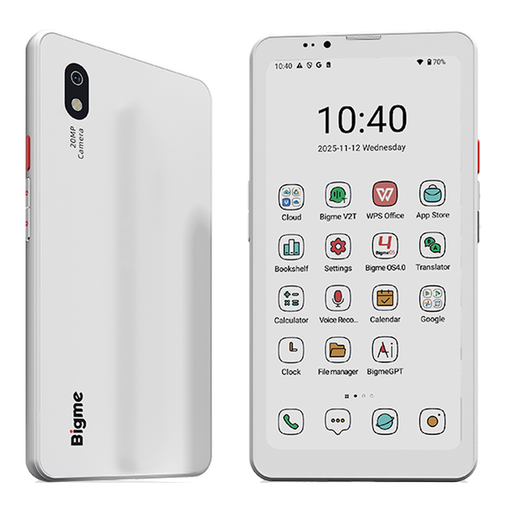
Bigme HiBreak Pro, 6.13 inches, 8 GB + 256 GB
For mainly text-focused reading in a compact format; the display offers less space for fixed-layout reports and plans than a large-format e-reader.
Kaleido 3 colour display; according to the product details, 300 PPI for black-and-white content and 150 PPI for colour content.
View at Joybuy
 No image available
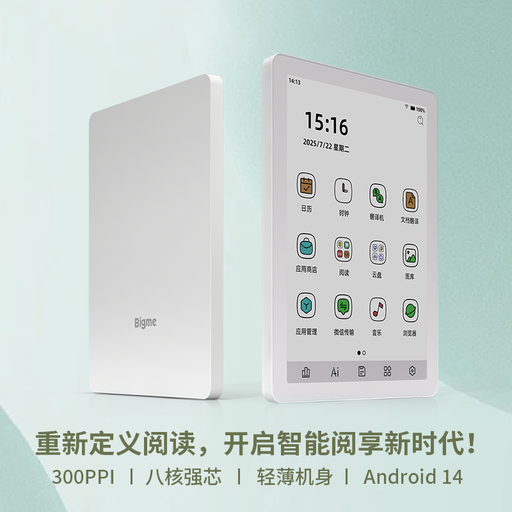
Bigme B6, 6 inches, 4 GB + 64 GB
For mainly continuous text and a compact reading device; the 6-inch display offers less space for fixed-layout report pages and plans.
The product details list 36 levels of front lighting and four screen refresh modes.
View at Joybuy
Frequently asked questions
Can I enlarge the text in an archaeological PDF as I would in an EPUB?
Not necessarily. Rakuten Kobo describes zoom and landscape mode for PDFs, but not a freely adjustable font size or typeface. Try a typical report page with the smallest labels you need to read.
Are handwritten PDF annotations preserved when I export them?
According to Rakuten Kobo, you can export unprotected PDFs with handwritten notes. DRM-protected PDFs and those that don’t allow annotations are excluded; test the process with a file you’re permitted to annotate.
How can I transfer my own reports to an e-reader without library Wi-Fi?
This depends on the device and file format. tolino describes transferring your own content locally using a USB cable; reMarkable also lists USB transfer for PDFs. Check as well whether you’re allowed to transfer the specific library file.
Can I copy an entire report to my e-reader if it’s only accessible on a library terminal?
Access to a report on a library terminal doesn’t automatically mean you’re allowed to copy the whole report to your own device. Section 60e of the German Copyright Act (UrhG) sets out certain reproductions that the libraries described there may make at a terminal, subject to the applicable conditions. These generally include up to 10% of a work per session, as well as certain specifically listed types of work. For the report in question, you’ll need to follow the access conditions and applicable rights. The provision is published by the Federal Ministry of Justice and the Federal Office of Justice.


