
Lieferung heute & morgen

Qualitätsgarantie

Willkommens-Angebote freischalten: KOSTENLOSE Lieferung | Bis zu 80 % RABATT | Kostenlose 30-Tage-JoyPlus-Testphase
App herunterladen
Purchasing a street-legal e-scooter promises flexible and affordable mobility in urban areas. However, the market is crowded, and many buyers soon face problems that weren't apparent at the time of purchase. Certain marketing promises and hidden flaws often lead to disappointment. This guide highlights the most common pitfalls and explains which technical features you need to look for to make an informed decision.
Many purchasing decisions are based on advertised claims that don't hold up to everyday use. Three points, in particular, frequently prove to be problematic:
To avoid the problems mentioned above, a close look at the technical specifications is essential. Focus on the following three core parameters to objectively evaluate a model's performance and suitability for daily use.
The decisive metric for range is not the manufacturer's kilometre specification, but the battery capacity, measured in watt-hours (Wh). A higher Wh number means more stored energy and thus a potentially longer range. As a rule of thumb for city traffic, you can expect a consumption of 15 to 20 Wh per kilometre. A battery with 500 Wh therefore allows for a realistic range of about 25 to 33 kilometres. Anyone looking for an e-scooter for commuters and covering more than 15 kilometres daily should consider models with at least 400 Wh.
Ride comfort largely depends on the combination of suspension and tyres.
The motor power and top speed determine the vehicle class of the electric scooter and the corresponding licence requirements.
Instead of making a blanket recommendation, we have selected models for specific user groups that meet the criteria mentioned above.
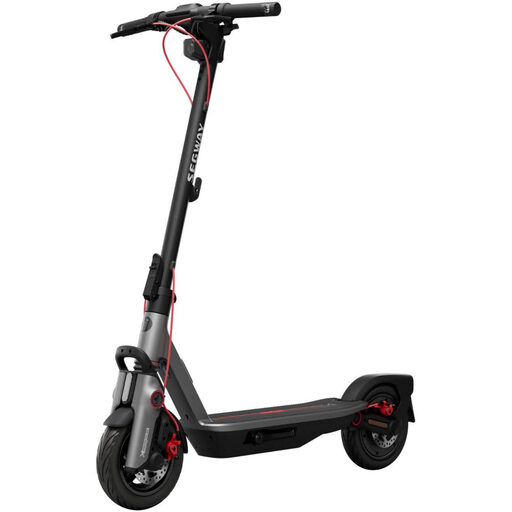
Why it's a great fit: Perfect for the daily commute. The combination of long range, advanced suspension, and smart features like Apple Find My offers reliability and comfort for demanding commuters.
The 477 Wh battery delivers a realistic high range (up to 70 km according to the manufacturer in Eco mode). The front hydraulic and rear elastomer suspension effectively neutralises the pitfall of poor ride comfort.
The combination of front hydraulic suspension, Traction Control System (TCS), and self-sealing tyres ensures high riding stability and safety.
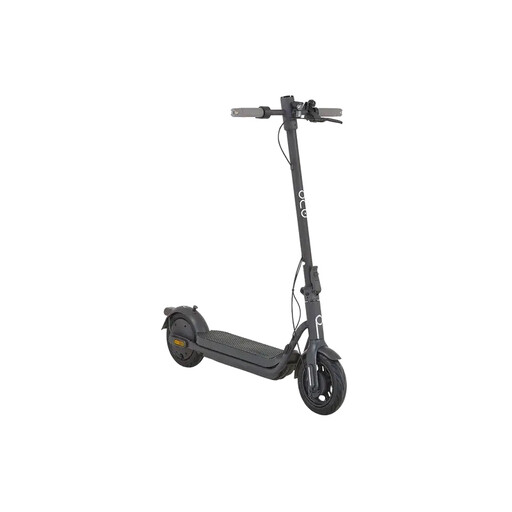
Why it's a great fit: A solid and compliant choice for shorter trips in the city. Prophete is a well-known German brand, which builds confidence in its adherence to approval regulations. A great entry point without compromising on fundamental quality.
The range of up to 30 km (according to the manufacturer) is realistic for the price. Although it lacks suspension, the 10-inch pneumatic tyres provide basic damping, avoiding the harsh ride of solid rubber tyres.
Offers excellent value for money with practical details like an electronic immobiliser and clear ABE compliance.
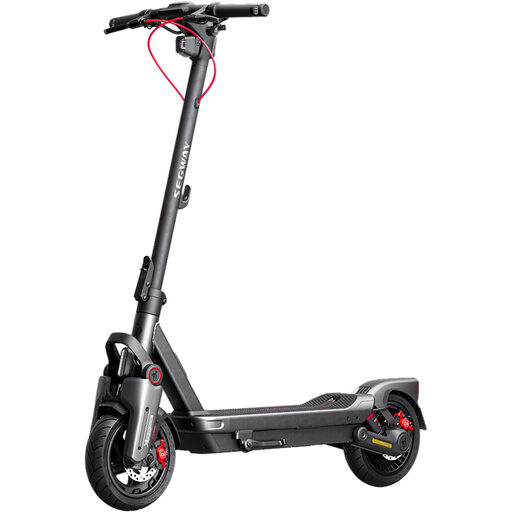
Why it's a great fit: For users who demand maximum range and the highest level of ride comfort. This model is designed for long distances and challenging terrain, making no compromises on features.
With a 597 Wh battery and a manufacturer-stated range of up to 80 km, it directly addresses range anxiety. The dual hydraulic suspension (front and rear) provides maximum comfort, completely avoiding the pitfall of inadequate damping.
The fully hydraulic, adjustable suspension combined with 11-inch tyres and a fast-charging function (3.5 hours) sets the standard in its class.

Why it's a great fit: For anyone for whom a 20 km/h scooter isn't enough. As an equivalent to a 125cc motorcycle, this model offers a top speed of 80 km/h, space for two people, and a long range—a true alternative to a car for city and suburban travel.
As an L3e class vehicle, it is subject to different rules and expectations. The range of up to 115 km (manufacturer's claim) and its motorcycle-like construction with disc brakes and robust suspension are designed for higher speeds and loads.
Offers the performance of a light motorcycle with the low operating and maintenance costs of an electric vehicle. Requires an A1 licence.
We have compiled a complete, up-to-date list of products that fully meet these strict selection criteria and German safety regulations.
Yes, valid liability insurance is legally required for use on public roads. Proof is provided by an insurance sticker, which must be visibly attached to the rear of the e-scooter. Riding on public roads and paths is not permitted without this sticker.
ABE stands for Allgemeine Betriebserlaubnis (General Operating Permit). It is a document from the German Federal Motor Transport Authority (KBA) that confirms a vehicle model complies with the technical requirements of the Small Electric Vehicle Ordinance (eKFV). Only e-scooters with a valid ABE may be legally used on German roads. When purchasing, make sure the seller provides the ABE.
The stated range represents an optimal value. In everyday use, you should expect about 60% to 70% of this value. Factors such as rider weight, outside temperature (batteries are less efficient in the cold), tyre pressure, hills, and frequent acceleration and braking in city traffic significantly reduce the actual range.