
Lieferung heute & morgen

Qualitätsgarantie

Willkommens-Angebote freischalten: KOSTENLOSE Lieferung | Bis zu 80 % RABATT | Kostenlose 30-Tage-JoyPlus-Testphase
App herunterladen
An e-scooter for children can be an appealing way to gain early experience with electric mobility. For families in Germany, however, choosing the right model is not simply a matter of speed or design. Age, height, weight, braking behaviour, portability and legal use all need to align.
Specifications such as 15 or 16 km/h may look attractive at first glance. For younger children, however, a lower speed setting may be more practical. What matters is whether the speed can be limited and whether the child can brake, steer and stop safely. A model with several riding modes can make the learning process easier, but it does not replace supervision.
The advertised range is generally a maximum figure. Body weight, surface, inclines, temperature, riding mode and tyre pressure all affect the actual distance. If you are looking for an electric scooter for children for regular trips, do not focus solely on the stated mileage. Charging time and the ability to charge and store the battery according to the instructions are equally important.
Puncture-proof solid tyres can reduce the risk of a flat tyre. They still need to be checked for tread, damage and secure fitting. A folding e-scooter for children also requires regular inspections of the handlebar, folding mechanism, brakes and deck. Electrical components should never be opened or modified by the user.
The recommended age is only a starting point. Also check the suggested rider height and maximum load. For example, the Segway-Ninebot C2 Lite is specified for 6 to 10 years, a height of 115 to 145 cm and a maximum load of 50 kg. According to the product information, the C2 Pro E is intended for children aged 6 to 14 years and features an adjustable-height handlebar.
An electric scooter for children aged 5 and over should only be considered if the manufacturer’s specifications explicitly confirm its suitability and the child can operate it safely. Likewise, an e-scooter for children aged 6 and over is not automatically suitable for every six-year-old.
Look for a clearly explained braking system, a sufficiently wide deck and grips that sit securely in the child’s hands. According to the product data, both the Segway-Ninebot C2 Lite and the C2 Pro E feature a drum brake. The Ladped LP65 is listed with a dual-braking system. Such specifications are objectively comparable, but they do not alone indicate how safely a child will respond in a specific situation.
Puncture-proof tyres may appeal to families who frequently ride on paved paths. Solid tyres can feel different from pneumatic tyres and may offer less adaptability depending on the surface. Before buying, parents should therefore consider whether the scooter will mainly be used on smooth private ground or on uneven paths.
Multiple riding modes allow the scooter to be adapted to the rider. According to the manufacturer, both the C2 Lite and the C2 Pro E offer three modes. The RICTOR C8 provides three selectable speed levels of 5, 10 and 15 km/h; parental control via an app is also described.
An e-scooter with app control can be useful when adults want to manage speed limits or regulate use. Before buying, check which functions are actually available, whether a smartphone is required and what data or permissions the app requests. LED or RGB lighting does not automatically improve visibility in every situation. It should never be treated as a substitute for suitable protective equipment or attentive adult supervision.
Many of the electric scooters for children in this selection are not approved for use on public roads, according to their product descriptions. In Germany, electric micro-vehicles used on public paths are subject, among other things, to requirements concerning operating approval, insurance stickers, lighting, brakes and maximum speed. Regular use in public road traffic is generally permitted only from the age of 14, provided that the vehicle fulfils the statutory requirements.
Before buying, parents should therefore check:
If these requirements are not met, use is restricted to suitable private property. Before every ride, a properly fitted helmet, knee and elbow pads where appropriate, and adult supervision should be considered essential equipment. Wet conditions, stairs, traffic, uneven surfaces and steep slopes should be avoided.
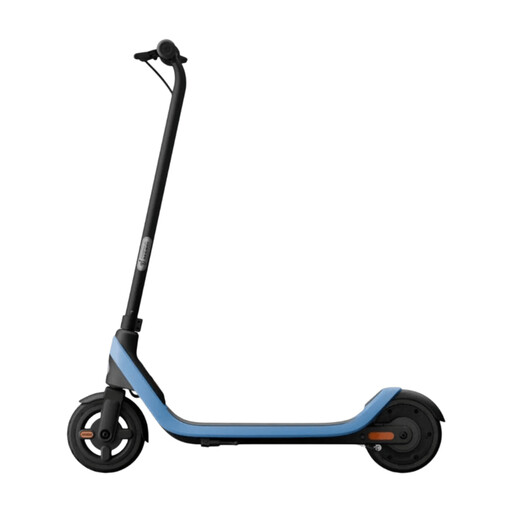
Why it fits the profile: For children aged 6 to 10 and between 115 and 145 cm tall who are taking their first rides on private property.
Three riding modes allow the speed to be adjusted progressively. According to the product information, the 7-inch solid tyres are puncture-proof; the maximum load of 50 kg should be observed.
Top speed of 16 km/h according to the product data, up to 14 km of range, a folding frame and IPX4 splash protection.
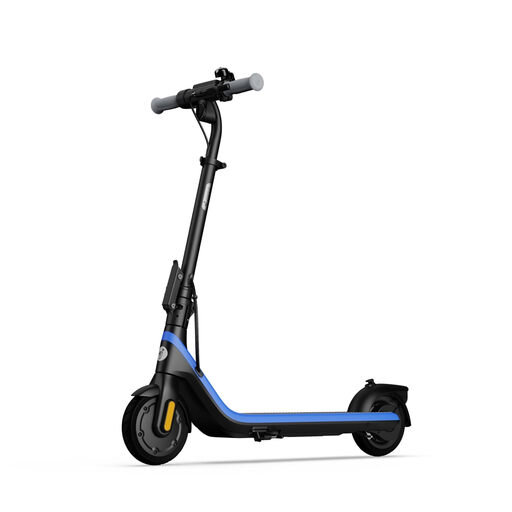
Why it fits the profile: For growing children and teenagers who value an adjustable handlebar and a longer useful lifespan.
The adjustable handlebar can extend the useful lifespan and reduce the risk of the scooter becoming unsuitable too quickly as the child grows. The stated maximum load is 50 kg.
Up to 17 km of range, three riding modes, a folding aluminium frame, 7-inch solid tyres and a Bluetooth speaker according to the product description.
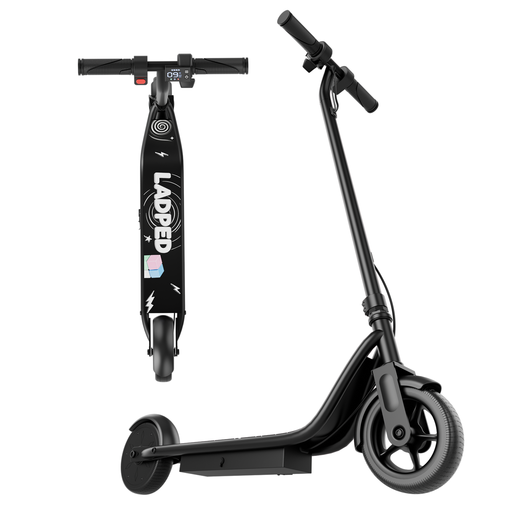
Why it fits the profile: For families looking for a model for children aged approximately 6 to 12 with a specified dual-braking system.
The dual-braking specification provides a clear technical reference point. Nevertheless, the stated range should be treated as a maximum figure.
250 W maximum motor output, a top speed of 15 km/h, up to 16 km of range and 6.5-inch solid tyres according to the product name.
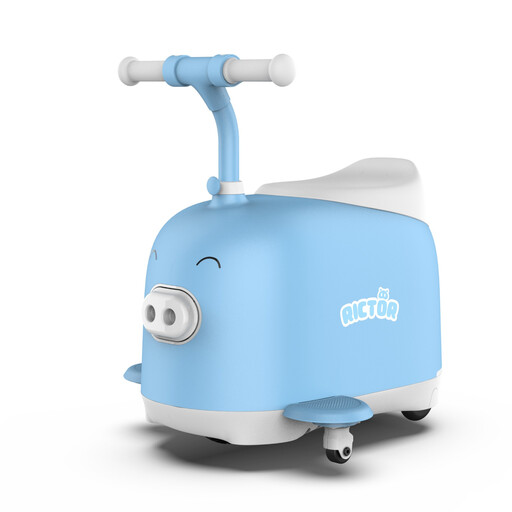
Why it fits the profile: For younger children, with a low, stability-focused ride-on design and parental speed limitation at its core.
The five-wheel design, wide deck and parental app control address stability and speed limitation. Suitability must still be assessed based on the individual child.
Three speed levels, a folding design, solid tyres and a stated maximum load of 60 kg. The model is not proof of approval for road use.
We have put together an up-to-date selection of products that can be compared based on age, technical specifications and intended use. The applicable German safety and traffic regulations should be checked before purchase.
The ongoing costs of an e-scooter for children mainly consist of electricity, potential replacement wear parts and suitable insurance if the vehicle is approved for use in public traffic. Electricity consumption is generally manageable; the exact cost depends on battery capacity, charge level and the electricity tariff.
To maximise the scooter’s service life, charge the battery only with the supplied charger, avoid extreme heat and store the scooter in a dry place. IPX4 indicates only limited protection against splashing water. After riding on damp surfaces, the device should be dried thoroughly.
An unapproved model cannot simply be used in public road areas. For approved electric micro-vehicles, German traffic regulations apply; pavements are generally not the designated riding area. Always check the vehicle documents and the latest applicable requirements.
There is no universally applicable service-life estimate. Charging cycles, storage conditions, temperature and usage all affect battery capacity. Charging the battery according to the instructions, avoiding unauthorised modifications and storing the scooter in a dry place provide the best conditions for reliable long-term use.
A children’s e-scooter with a seat differs from a conventional electric kick scooter in both riding position and overall concept. The RICTOR C8 is described as a low-built ride-on toy rather than a general replacement for a stand-up e-scooter. Age, height, stability, supervision and the intended location of use are the decisive factors.