
Lieferung heute & morgen

Qualitätsgarantie

Willkommens-Angebote freischalten: KOSTENLOSE Lieferung | Bis zu 80 % RABATT | Kostenlose 30-Tage-JoyPlus-Testphase
App herunterladen
A telescopic clothes rail system offers a functional solution for organising clothing, especially in living situations where structural changes like drilling are undesirable or not possible. These systems use a tension mechanism between the floor and ceiling to create a stable structure without any screws. Their modular and adaptable design makes them a practical option for rental apartments, student dorms, or for outfitting alcoves and dressing areas. The following text analyses the technical criteria for selection and presents various configurations.
The decision for a suitable system is based on objective parameters that align with your specific spatial conditions and storage needs.
The stability of a clothes rail system depends heavily on the materials used. Most models consist of metal tubes, often powder-coated steel or iron, which are used for the vertical and horizontal poles. The connectors and end caps are typically made of durable plastic. The quality of these components determines the longevity and stability of the entire structure. Pay attention to the finish of the tubes and the precision fit of the connecting parts.
The load capacity is one of the most important technical specifications. It is stated in kilograms (kg) and defines the maximum total weight the system can safely support. A system with a load capacity of 25 kg is suitable for a moderate amount of shirts, blouses, and light jackets. Models with a capacity of 65 kg or more can also accommodate heavy winter coats, suits, and a larger number of garments. The load capacity assumes an even weight distribution across all rails.
A key advantage of these systems is their flexibility. The height and width are typically telescopically adjustable, either steplessly or in set increments.
The operating principle of a no-drill clothes rail is based on tension. The vertical telescopic poles are wedged between the floor and the ceiling. Rubberised or plastic-coated end caps protect the surfaces and increase slip resistance. For a secure installation, a solid, level floor and a sturdy ceiling are required. The installation typically requires no tools and can be done by one person.
Depending on the model, a no-drill wardrobe system can be equipped with additional functional elements. These include:
Based on the criteria mentioned, we present three systems with different configurations and applications.
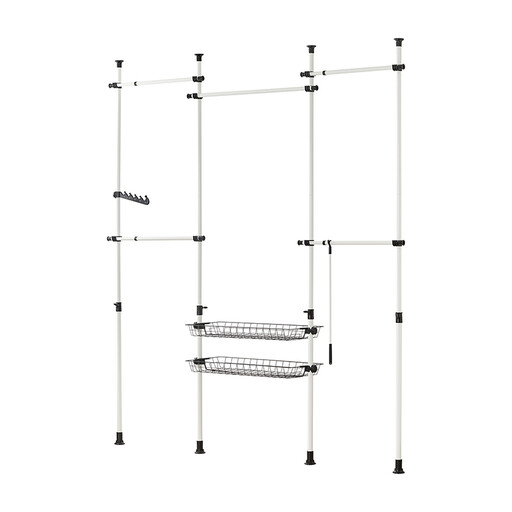
View Product: SoBuy Sturdy Telescopic Clothes Rail, Adjustable Open Wardrobe with Shelves
Why we're analysing this product: With its wide span and integrated storage baskets, this model is designed as a complete replacement for a conventional wardrobe. Its high load capacity supports an extensive collection of clothing.
Advantages (based on manufacturer's specifications):
Who it's for: Individuals looking for a large-scale, open storage solution for a bedroom or dressing room. The system is suitable as a complete walk-in wardrobe system for couples or people with a lot of clothes.
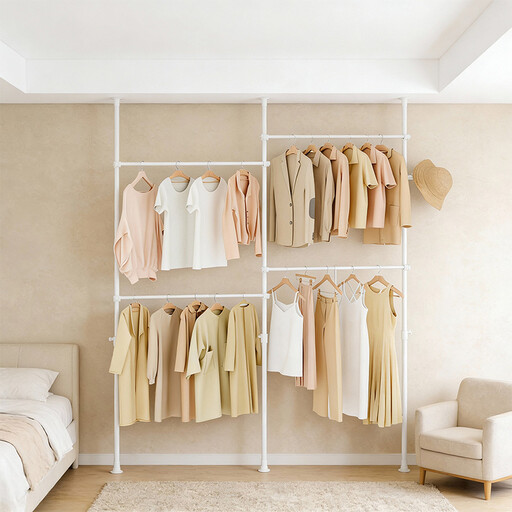
View Product: SoBuy Telescopic Clothes Rack, Sturdy Clothes Bar (3 Telescopic Bars + 4 Clothes Bars)
Why we're analysing this product: This system offers a high load capacity in a medium-width configuration. With four clothes rails, it allows for versatile organisation of clothing within a more compact footprint.
Advantages (based on manufacturer's specifications):
Who it's for: Users who need a robust telescopic clothes rack for medium to heavy clothing and value a flexible arrangement of hanging space. Ideal for medium-sized rooms or as a supplement in a dressing room.
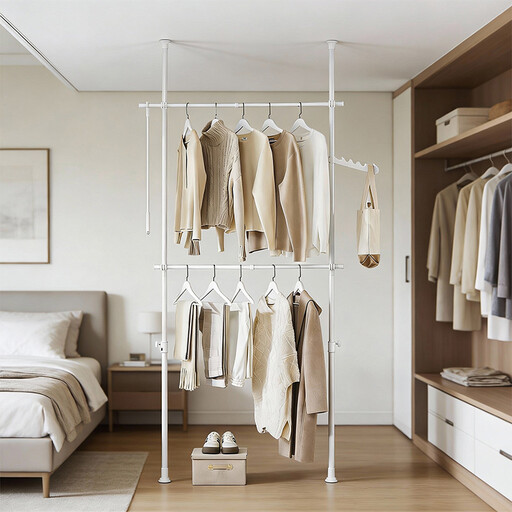
View Product: SoBuy Telescopic Clothes Rack, Sturdy Clothes Bar (2 Telescopic Bars + 2 Clothes Bars)
Why we're analysing this product: This model is a compact and narrow solution, well-suited for limited spaces. It serves as a minimalist open wardrobe system for hallways, alcoves, or as a supplementary wardrobe.
Advantages (based on manufacturer's specifications):
Who it's for: Renters or students with limited space who need a simple telescopic clothes rail for everyday use. Suitable for lighter clothing and for use in narrow areas.
The models presented represent a selection of common configurations. Depending on room size and storage needs, other dimensions or features may be more advantageous. A wider selection of systems with different widths, heights, and accessories can be found in our Open Wardrobes category.
1. How stable is a telescopic clothes rail system? The stability depends on three factors: correct assembly, the condition of the floor and ceiling, and adherence to the maximum load capacity. With proper installation, where the poles are firmly and vertically tensioned, these systems offer high stability for their intended purpose. The load should always be distributed evenly.
2. How does a no-drill clothes rail work? The system operates on a tension or clamping principle. The vertical poles are telescopic and are adjusted to a length slightly greater than the distance between the floor and ceiling. An integrated spring mechanism or a manual screw adjustment builds up pressure, which holds the pole securely in place.
3. How much weight can an extendable clothes rail support? The load-bearing capacity varies greatly depending on the model, material, and construction. Compact systems for alcoves often support up to 25 kg. Larger, more robust systems can be designed for a load of up to 65 kg or more. The exact load capacity specification is an essential piece of product information from the manufacturer and must be strictly observed.