
Lieferung heute & morgen

Qualitätsgarantie

Willkommens-Angebote freischalten: KOSTENLOSE Lieferung | Bis zu 80 % RABATT | Kostenlose 30-Tage-JoyPlus-Testphase
App herunterladen
Switching to LED lighting is a smart move for your wallet and the environment, but the market can be overwhelming. The wrong brightness, an unpleasant lighting ambiance, or technical failure are often the results of a hasty purchase decision. As your Joybuy Product Recommendation Officer, I'll help you identify the crucial features and sidestep common pitfalls. Let's focus on three frequent problems that lead to unnecessary expenses:
To avoid these mistakes, you only need to understand three technical specifications. This information is found on any good product packaging and is the key to making the right choice.
The most important check first: will the bulb fit your lamp? The most common screw bases in UK households are:
Always check the fitting of your existing fixture before buying to rule out a mismatched purchase.
Forget watts as a measure of brightness. Watts only indicate energy consumption—and this is where energy-saving LEDs excel with very low values. The actual light output is measured in lumens (lm).
As a rule of thumb:
The light colour, or colour temperature, is crucial for setting the mood in a room. It is measured in Kelvin (K).
Modern LEDs can do more than just illuminate. A smart bulb can be controlled via an app or voice assistant to adjust brightness and colour or set schedules. An RGB LED lamp with a remote control offers colourful light effects for special occasions. For outdoor areas, self-sufficient solutions like a garden solar light are a practical and eco-friendly option.
Here are some recommendations tailored to specific use cases, designed to expertly avoid the pitfalls mentioned.
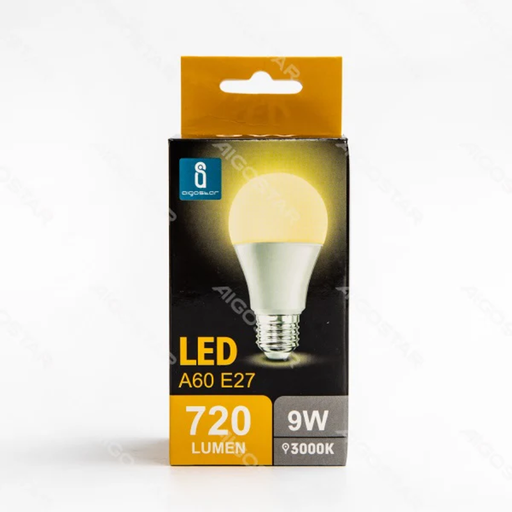
Why it's a great fit: Ideal for general home lighting. It provides a pleasant, warm white light and is highly energy-efficient. A solid choice for replacing old incandescent bulbs in living rooms or bedrooms without a major investment.
The colour temperature of 3000K is clearly declared, preventing the "Kelvin Mistake." With 840 lumens, it offers a familiar brightness comparable to a 60W incandescent bulb, thus avoiding the "Watt Trap."
High energy efficiency (9 kWh/1000h) and a long lifespan of 15,000 hours reduce running costs and replacement frequency.
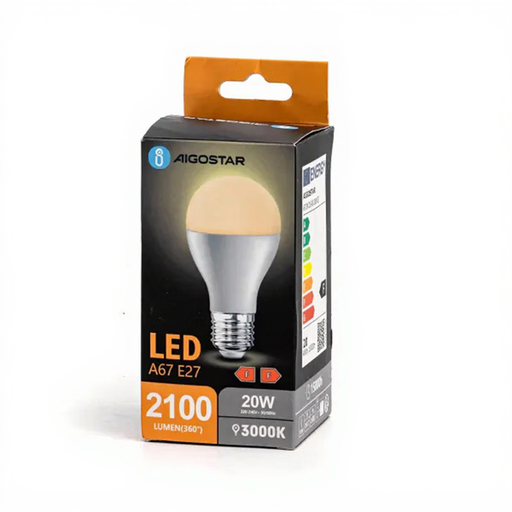
Why it's a great fit: Perfect for users who need powerful illumination in large spaces like workshops, garages, or rooms with high ceilings. It delivers enormous light output where clear visibility is crucial.
The specification of 2100 lumens makes the brightness quantifiable, preventing misjudgment based on the low 20W consumption. The warm white light (3000K) ensures that the high brightness remains comfortable.
Extremely high luminous flux (2100 lm) for excellent visibility. The standard E27 base allows for easy installation in most light fixtures.
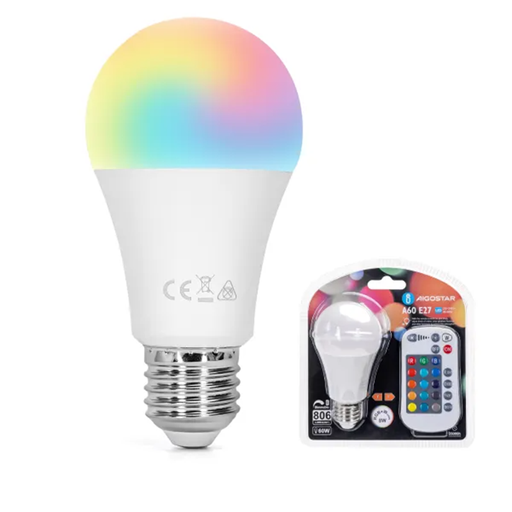
Why it's a great fit: For anyone who wants full control over their lighting. Ideal for creating different moods for movie nights, parties, or as dynamic accent lighting.
This bulb is explicitly designed for colour changing and dimming via remote control, solving the "Dimming Dilemma." It offers both warm white and 16 RGB colours, giving the user complete control.
Combines standard warm white light with 16 selectable colours and dynamic modes. A remote control for convenient adjustment of brightness and colour is included.
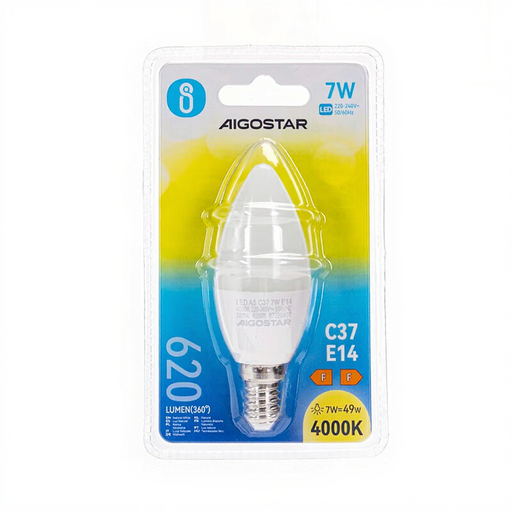
Why it's a great fit: The candle shape and E14 base are ideal for chandeliers, wall sconces, and decorative lamps where a standard E27 bulb won't fit or would look out of place.
The product name and description clearly state the E14 fitting, preventing the common mistake of buying the wrong base. The neutral white light at 4000K is specified for clear, functional light in kitchens or bathrooms.
Candle shape (C37) and E14 base for decorative fixtures. The 4000K neutral white light is well-suited for task-oriented areas.
We have compiled a complete, real-time list of products that fully meet these strict selection criteria and UK safety regulations.
An LED bulb uses up to 90% less energy than a comparable incandescent bulb. For example, replacing a 60-watt incandescent bulb with a 9-watt LED saves 51 watts per hour of operation. Assuming a lifespan of 15,000 hours and an electricity price of 28 pence/kWh, this results in significant cost savings over the bulb's lifetime.
Not necessarily. While LEDs generate significantly less heat than incandescent or halogen lamps, they still need to dissipate it effectively. Heat can build up in fully enclosed fixtures, which can stress the electronics and shorten the bulb's lifespan. Pay attention to the manufacturer's specifications in the product description, which often state whether the bulb is suitable for use in enclosed fixtures.
A smart bulb connects wirelessly to your home network and can be controlled via a smartphone app or a voice assistant. This enables features like stepless dimming, changing the light colour, creating schedules, or controlling your lights remotely. A regular LED is turned on and off classically via a light switch and does not offer any of these advanced control options.