The transition to LED technology is a fundamental step towards optimising energy efficiency in both residential and commercial spaces. The E27 LED bulb is a key component in this transition, as the E27 fitting is the most common screw base in Europe. However, selecting the right bulb requires an analysis of technical parameters that go beyond mere wattage. This guide focuses on crucial specifications such as light colour, brightness, dimmability, and design to provide a solid basis for an informed decision.
Buyer's Guide: Technical Criteria for Selecting an E27 LED Bulb
Choosing the right bulb is based on objective metrics. The following parameters are instrumental in defining a room's function and atmosphere.
Light Colour (Kelvin): From Warm White to Daylight White
Colour temperature, measured in Kelvin (K), defines the perceived light colour. It is crucial for the room's ambience.
- Warm White (< 3,300 K): Creates a cosy, relaxing atmosphere, similar to the light of a traditional incandescent bulb. Ideal for living rooms, bedrooms, and dining areas.
- Neutral White (3,300 K – 5,300 K): Provides functional, stimulating illumination. This light colour is suitable for kitchens, bathrooms, and workspaces where clear visibility is required.
- Daylight White (> 5,300 K): Simulates natural daylight and enhances concentration. Applications include workshops, offices, basements, and areas requiring colour-accurate representation and high visual acuity.
Brightness (Lumens, Not Watts)
With LED bulbs, the luminous flux, measured in lumens (lm), is the relevant unit for brightness, not the power consumption in watts (W). A higher lumen count means a brighter bulb. As a rule of thumb, a 60-watt incandescent bulb is roughly equivalent to an 800-lumen E27 LED bulb, which consumes only about 6-9 watts.
Energy Efficiency and Lifespan
Energy efficiency is indicated by the EU energy label, and consumption is declared in kilowatt-hours per 1,000 hours of operation (kWh/1000h). An LED bulb designed for energy efficiency significantly reduces running costs. The lifespan is specified in operating hours and often ranges from 15,000 to 25,000 hours for high-quality models, which minimises replacement frequency.
Dimmability and Smart Home Integration
Not every LED bulb is dimmable. Look for the explicit marking on the product packaging or in the technical specifications. A compatible LED dimmer is also often required for the dimming function to work. Smart Home-enabled bulbs offer advanced control options via an app or voice assistants (e.g., Amazon Alexa, Google Assistant). They not only allow for dimming but also often for adjusting the light colour and creating schedules without any additional hardware installations.
Design: From Functional to Vintage Filament
The bulb's shape influences both light distribution and aesthetics.
- Classic A60 Shape: The standard bulb shape for general lighting purposes.
- Vintage / Filament: These bulbs mimic the appearance of historic carbon filament lamps. With visible LED filaments and often tinted glass, filament bulbs are a decorative element, especially in open fixtures.
Our Selection of E27 LED Bulbs for 2026
Based on an analysis of technical specifications and use cases, we present three distinct models.
1. Aigostar LED B5 SPIRAL 20 W E27
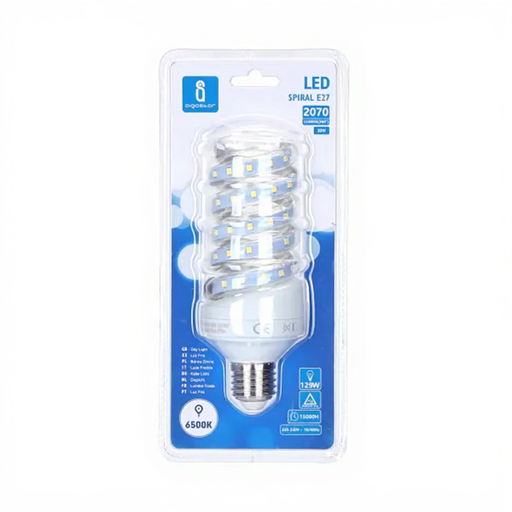
- Why we recommend this product: This bulb is designed for maximum brightness and wide light distribution. With 2070 lumens and a 360° beam angle, it delivers intense and seamless illumination required for large or high-ceilinged rooms.
- Advantages:
- High Luminous Flux: 2070 lm provides very bright illumination.
- Light Colour: 6500 K (Daylight White) for a clear, concentration-enhancing environment.
- Beam Angle: 360° for uniform room illumination without shadows.
- Energy Efficiency: Replaces a 129 W incandescent lamp while consuming only 20 W.
- Who it's for: Users who need powerful lighting for functional areas such as workshops, large hallways, studios, or offices where high visibility is the priority.
2. Atmosphera LED Bulb ST64 E27 Spiral Filament
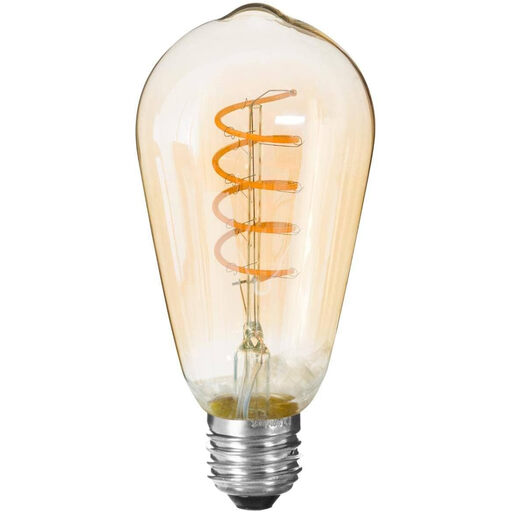
- Why we recommend this product: This model focuses on aesthetics and atmosphere. Its vintage design, with amber-tinted glass and a spiral filament, makes the bulb a design object in itself.
- Advantages:
- Decorative Design: The ST64 bulb shape and visible spiral filament are ideal for open fixtures.
- Very Warm Light Colour: 2200 K creates an exceptionally cosy and intimate ambience.
- Low Consumption: With only 2 W of power consumption, it is primarily designed for accent lighting.
- Who it's for: Design-conscious users looking for a decorative light source for living areas, restaurants, or bars to create a warm and inviting mood. Here, functionality is secondary to aesthetics.
3. Aigostar LED Bulb - E27 A60-WiFi Dimmable
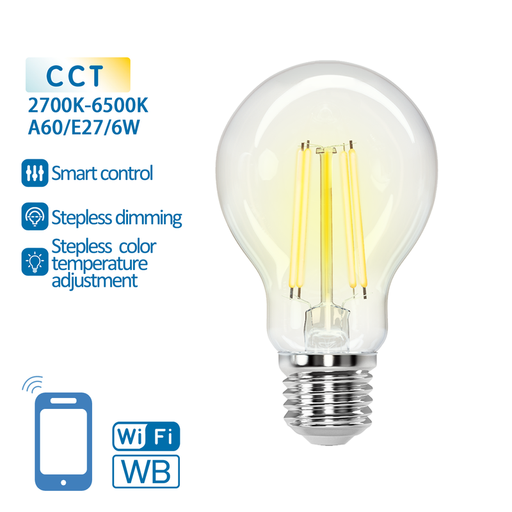
- Why we recommend this product: This bulb combines a classic design with modern Smart Home technology. It offers maximum flexibility through seamless adjustment of brightness and colour temperature via app or voice command.
- Advantages:
- Smart Control: Compatible with Amazon Alexa and Google Assistant; controllable via the AigoSmart app without an additional hub.
- Adjustable Light Colour: The colour temperature is adjustable from 2700 K (Warm White) to 6500 K (Daylight White).
- Seamlessly Dimmable: The brightness can be precisely adapted to any situation.
- Efficient: Delivers 850 lm (equivalent to approx. 62 W) with only 6 W of consumption.
- Who it's for: Tech-savvy users and smart home owners looking for a versatile lighting solution that can be dynamically adapted to different times of day and activities.
Discover More Lighting Solutions
The models presented cover specific use cases. Should your needs require different specifications, a wide range of alternatives is available. For a comprehensive overview of various shapes, power levels, and designs, visit our main category for Lamps & Lighting.
Frequently Asked Questions (FAQ)
1. What does E27 mean on an LED bulb? The E27 designation refers to the type of bulb base. The "E" stands for "Edison screw," and the number "27" indicates the outer diameter of the screw thread in millimetres. It is the most common screw base for household bulbs in Germany and across Europe.
2. Which light colour (Kelvin) is suitable for which room? As a general guideline: Warm White (under 3,300 K) is suitable for living rooms and bedrooms to promote relaxation. Neutral White (3,300–5,300 K) is ideal for kitchens and bathrooms, where clear visibility is important. Daylight White (over 5,300 K) is used in workspaces, garages, and basements to aid concentration and make details easy to see.
3. Can I dim any E27 LED bulb? No. Only LED bulbs explicitly marked as "dimmable" can be operated with a compatible dimmer switch. Attempting to dim a non-dimmable LED can lead to flickering, buzzing, or damage to the bulb and the dimmer. Smart home bulbs are typically dimmable via an app or voice command without the need for an external dimmer switch.

