Who is this choice relevant to?

Active adults focusing on protein

If you’d like to take nuts along as a snack after an activity, compare the protein per 100 g and per planned portion, as well as the ingredients and salt content. The German Nutrition Society considers protein intake in sport in the context of the activity involved; the protein content of a snack alone cannot answer individual dietary questions.

Parents with toddlers at the Easter egg hunt

For them, the form of the snack matters more than its protein content. The Federal Institute of Public Health warns against giving whole nuts to toddlers because they could choke on them. Any alternative must also be suitable for the individual, taking their ingredients and potential allergens into account.

Hosts catering for groups

If you’re preparing snacks for several people, serve different options separately and label them clearly. Peanuts and tree nuts are different allergens, so you should check the ingredients and any precautionary allergen information on each pack individually.

What should you look for when buying?

First, decide whether toddlers will be able to get to the snacks. Then compare the nutrition information for the portions you have in mind and check the pack labelling for everyone taking part.

Criterion What to check Who should pay particular attention?
Protein content Compare the protein per 100 g and per planned portion on the nutrition table. If I’m planning a nut snack after an activity, I want to know how much protein is in the portion I’ll actually eat. Around 36% of consumers prioritise comparing protein when making this choice.
Form of the snack Don’t give whole nuts to toddlers; only consider nut butter or finely ground nuts if prepared appropriately. If toddlers are taking part in the hunt, I need to make sure they can’t find and eat whole nuts. For around 29% of consumers, an age-appropriate form takes priority here.
Ingredients and allergens Check the ingredients, declared allergens and any precautionary allergen information for each option. When guests have different requirements, I want to be able to tell which pack contains peanuts, tree nuts or other ingredients. Around 21% of consumers prioritise checking the labelling when making this decision.
Portioning and storage Choose a pack size that suits how you plan to serve the snacks, and follow the storage instructions. If I’m preparing snacks before the hunt, I want to serve portions neatly and store any opened packs appropriately. Around 14% of consumers put practical planning first when choosing.

What mistakes can you avoid?

  • Assuming a high protein content makes nuts suitable for toddlers

    Whole nuts can be a choking hazard for toddlers, regardless of their nutritional value. The Federal Institute of Public Health warns of this risk.

    Don’t hide or hand out whole nuts if toddlers can reach them. Nut butter or an appropriately prepared dish containing finely ground nuts may be suitable as a snack; dry nut flour is not a suitable option either.

  • Treating peanuts and tree nuts as the same allergen

    Peanuts and tree nuts are labelled as different allergens. So, a type of nut that’s suitable for one person doesn’t mean another type or a mixed selection will be suitable too.

    Check the ingredients, highlighted allergens and any precautionary allergen information on every pack. If someone has a known allergy, their individual requirements should guide your choice.

  • Assuming all nut-based snacks are alike

    Individual varieties, roasted options and mixes can differ considerably in protein content, ingredients and salt. The information for one particular pack doesn’t automatically apply to the whole category.

    Compare the nutrition information per 100 g and the ingredients list for the specific options before choosing a mix or a single variety.

  • Buying large packs without a storage plan

    Heat and unsuitable storage can affect the quality of nuts. For walnuts that have already been shelled, the Rhineland-Palatinate Consumer Advice Centre recommends airtight containers in the fridge or freezer.

    Plan how much you’ll need, follow the storage instructions on the pack and throw away any nuts with visible mould.

Brands to consider

REWE: ja! und REWE Beste Wahl

These two product ranges include specific products whose nutrition information can be compared.

  • According to REWE, roasted, unsalted ja! almonds contain 27 g of protein per 100 g and 8.1 g per 30-g portion. REWE lists 25 g of protein and 0 g of salt per 100 g for its roasted REWE Beste Wahl peanuts.
  • The peanuts also contain sunflower oil, according to the ingredients list. Check the ingredients and allergen information on the pack you choose.

EDEKA Herzstücke

Whole blanched almonds and ground almonds serve different purposes, so their form is an important consideration when choosing snacks for an Easter egg hunt.

  • EDEKA lists 24.7 g of protein per 100 g for its whole blanched almonds.
  • According to EDEKA, the ground almonds are a baking ingredient that must be thoroughly cooked through at a minimum of 80 °C before eating. They aren’t a ready-to-eat snack for the hunt.

Alesto (Lidl)

The range described includes plain nuts and seasoned snacks. If you’re looking for an unseasoned option, compare the ingredients list for the specific product.

  • Lidl describes Alesto products including plain cashews and almonds.
  • For a protein comparison, the information on the pack you choose is what matters; range descriptions aren’t a substitute for product-specific nutrition information.

ALDI SÜD: BACK FAMILY

The plain BACK FAMILY almonds are a specific example of a single-variety product.

  • ALDI SÜD lists 24 g of protein and 0.01 g of salt per 100 g for the 200-g product.
  • Check the information on the pack you actually choose, particularly the ingredients and allergen information.

Seeberger

The Power Nut Mix is a ready-made alternative to choosing individual varieties of nuts.

  • Seeberger lists 22 g of protein per 100 g for this mix of walnuts, cashews and almonds.
  • Seeberger warns that the product may contain traces of other tree nuts and peanuts, and advises against giving it to children under four because they could choke on the nuts.

Nut products at Joybuy

This selection includes whole almonds and roasted cashews as snacks for adults. If toddlers can get to the snacks during the Easter egg hunt, these whole nuts aren’t suitable to hand out.
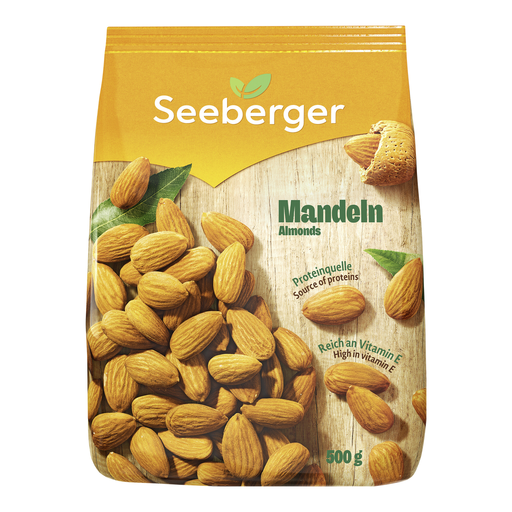
Seeberger plain whole almonds, 500 g

Seeberger plain whole almonds, 500 g

An option for adults planning to enjoy whole almonds as a snack. If protein is a priority, compare the nutrition information per 100 g and per intended portion on the pack.

500-g pack. Don’t give whole nuts to toddlers; if anyone has an allergy, check the information on the specific pack.

View at Joybuy
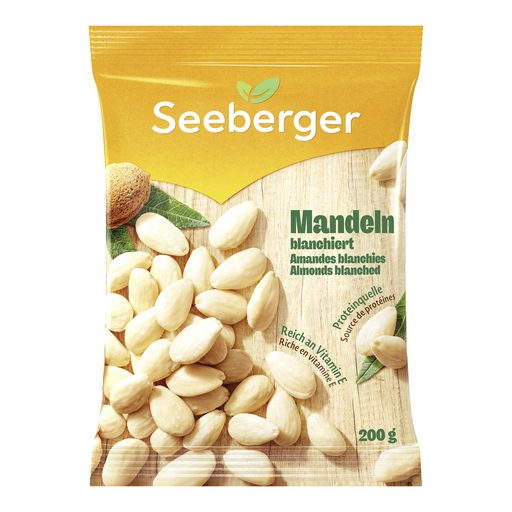
Seeberger whole blanched almonds, 200 g

Seeberger whole blanched almonds, 200 g

For adults who prefer whole blanched almonds to plain almonds. Check the protein per 100 g and per planned portion on the pack you choose.

200-g pack. Blanching doesn’t make whole almonds suitable for toddlers; check the allergen information too.

View at Joybuy

Seeberger roasted, unsalted cashew kernels, 150 g

Seeberger roasted, unsalted cashew kernels, 150 g

For adults who’d prefer roasted cashews to almonds as a snack. Compare protein using the information per 100 g for each product you’re considering.

150-g pack. Don’t give whole cashews to toddlers; check the information on the specific pack if anyone has an allergy.

View at Joybuy

Frequently asked questions

Do almonds or peanuts contain more protein?

You can only answer this by comparing specific products: REWE lists 27 g of protein per 100 g for roasted, unsalted ja! almonds and 25 g per 100 g for roasted REWE Beste Wahl peanuts; ALDI SÜD lists 24 g per 100 g for its plain BACK FAMILY almonds. So compare the nutrition information for the options you’ve chosen rather than making a general comparison between categories.

Can I hide whole nuts for toddlers to find at an Easter egg hunt?

No, not if toddlers could find and eat them: the Federal Institute of Public Health warns that whole nuts are a choking hazard. For a snack served afterwards, it suggests nut butter or finely ground nuts in an appropriately prepared dish as alternatives; dry nut flour shouldn’t be served either.

What allergen information should I check on nut packaging?

For each option, check the ingredients list for declared peanuts and tree nuts, as well as any precautionary allergen information. Germany’s Food Federation explains that peanuts and tree nuts are separate allergens that must be declared; precautionary information relates to possible unintended presence and doesn’t replace checking the ingredients.

How should I store nuts after the Easter egg hunt?

Start by following the storage instructions on the pack. The REWE peanut product mentioned here should be stored in a dry place away from heat; for walnuts that have already been shelled, the Rhineland-Palatinate Consumer Advice Centre recommends airtight containers in the fridge or freezer. Throw away any nuts with visible mould.