
Lieferung heute & morgen

Qualitätsgarantie

Willkommens-Angebote freischalten: KOSTENLOSE Lieferung | Bis zu 80 % RABATT | Kostenlose 30-Tage-JoyPlus-Testphase
App herunterladen
As a renter or homeowner, you often face the same dilemma: you need effective privacy and sun protection but don't want to damage your window frames with drill holes. A no-drill roller blind seems like the ideal solution. However, the market is flooded with products of widely varying quality. False promises and hidden defects can quickly lead to frustration and unnecessary expenses.
This guide will help you navigate the common pitfalls. We'll show you which technical details truly matter, so you can make an informed decision and choose a durable, functional window blind for your rental apartment or home.
Many products look practical at first glance but turn out to be a poor investment after a short time. Pay special attention to these three weak points:
To find a suitable and long-lasting solution, you should check three core parameters: the mounting type, the material properties, and the exact dimensions.
The mounting system is the heart of any drill-free blind. The most common systems have specific advantages and disadvantages:
The fabric determines the function your blind will serve. Choose based on your needs:
Precise measurement is essential. Keep the following rule in mind: the fabric width is always narrower than the order width.
Here are some recommendations tailored to specific needs and living situations that meet the quality criteria mentioned above.
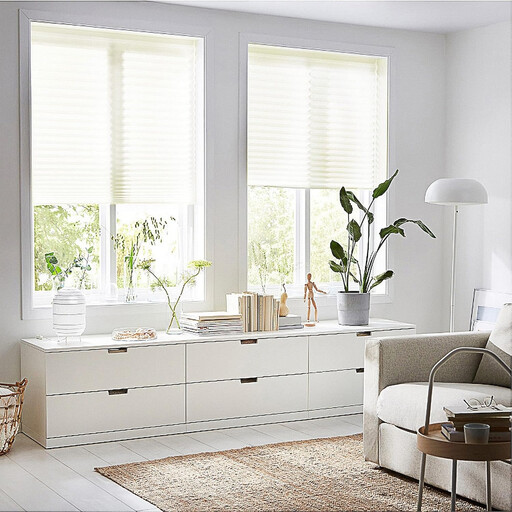
Why This Fits Their Persona: Ideal for a first apartment or a shared flat. This pleated blind offers a straightforward and affordable solution for basic privacy without violating the lease agreement. Installation is tool-free and quick.
The product offers two flexible mounting options—clamp and adhesive brackets—which bypass the problem of unstable single-fastening systems. The clear dimensions are designed for a standard window size.
Provides an opaque but light-filtering function for privacy while keeping the room bright. The stepless adjustment from both the top and bottom is a practical feature in this price range.

Why This Fits Their Persona: For families, the combination of blackout functionality and safety is crucial. This blind ensures darkness in a child's room or bedroom and eliminates the strangulation hazard from chains or cords with its cordless design.
The silver coating on the back ensures high-performance blackout capability, avoiding the trap of a merely "opaque" fabric. The clamp brackets are designed for common frame thicknesses (16-22 mm).
Cordless design for maximum child safety. It is operated via a handle on the bottom rail. Additionally, the coating provides a thermal insulation function.

Why This Fits Their Persona: Anyone looking to reduce heating and cooling costs needs effective window insulation. This honeycomb pleated blind creates an air chamber with its structure, which acts as a thermal barrier against cold and heat.
Unlike simple thermal blinds with a thin coating, the honeycomb structure offers demonstrable insulation performance. It avoids the trap of empty "thermal" promises with a clear technical design.
The honeycomb structure provides blackout, thermal insulation, and also has a sound-dampening effect. The clamp-fit mounting is suitable for frame thicknesses from 10-23 mm.
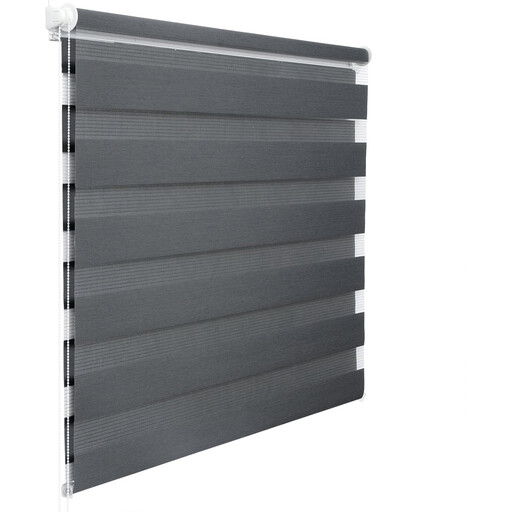
Why This Fits Their Persona: For anyone who wants to combine functionality with modern design. The dual roller blind allows for a flexible play of light and shadow and adds a stylish accent to the room that goes beyond mere privacy.
The clear instructions for measuring (glass width + 4 cm) help to avoid the light gap trap. The clamp brackets are designed for a wide range of frame thicknesses (13-23 mm), increasing compatibility.
The infinitely variable light control via the alternating fabric panels offers maximum flexibility—from nearly transparent to opaque. The chain mechanism can be mounted on either the left or right side.
We've compiled a complete, up-to-date list of products that fully meet these strict selection criteria and UK safety regulations.
When correctly installed on a suitable window frame, high-quality clamp-fit systems are very reliable. It is crucial that the specified thickness of the window sash is not exceeded or fallen short of, and that the brackets are tightened firmly. On clean uPVC frames, they provide a stable hold for years.
No, there are limitations. Most clamp-fit systems are designed for inward-opening uPVC windows. They are often unsuitable for fixed-glazing windows, sliding doors, sloped roof windows, or very old wooden windows. Always check the product description for compatibility notes, especially regarding the frame type and thickness.
A no-drill pleated shade consists of a single piece of fabric folded into pleats. It is often operated with handles and can be flexibly adjusted from the top and bottom. A no-drill dual roller blind consists of two parallel fabric panels with alternating transparent and opaque stripes. By shifting the panels relative to each other, the light ingress is regulated steplessly.