
Lieferung heute & morgen

Qualitätsgarantie

Willkommens-Angebote freischalten: KOSTENLOSE Lieferung | Bis zu 80 % RABATT | Kostenlose 30-Tage-JoyPlus-Testphase
App herunterladen
Choosing a new motorcycle helmet is a decision that directly impacts your safety and riding comfort. When searching for an ECE 22.06 full-face helmet with a sun visor, many riders face an overwhelming number of options. Marketing promises can often create more confusion than clarity. This guide will help you identify the crucial features and steer clear of typical purchasing traps.
As a Joybuy Product Recommendation Officer, my role is to filter market information and provide you with objective, practical advice to help you make an informed decision.
Before you decide on a model, you should be aware of three common issues that often only become apparent after the purchase:
To avoid buyer's remorse, focus on the following three core parameters. These define the quality and suitability of a modern motorcycle helmet.
The ECE 22.06 standard is the latest and most stringent European testing regulation for motorcycle helmets. Compared to its predecessor, 22.05, the testing procedures have been significantly intensified:
A helmet that meets this standard offers a demonstrably higher level of protection. Therefore, explicitly look for the ECE 22.06 certification mark.
A helmet's outer shell is the first line of defence. Many full-face helmets for daily and touring riders are made from thermoplastics like Acrylonitrile Butadiene Styrene (ABS). This material offers good impact resistance at a reasonable weight and manufacturing cost.
Inside, the shock-absorbing layer is typically made of expanded polystyrene (EPS). A high-density EPS shell is crucial for absorbing impact energy. The overall weight of the helmet is also important for neck comfort, especially on longer rides.
A good touring helmet or daily-use helmet is distinguished by its thoughtful details:
Here are some recommendations based on the objective criteria mentioned above, suitable for different types of riders.
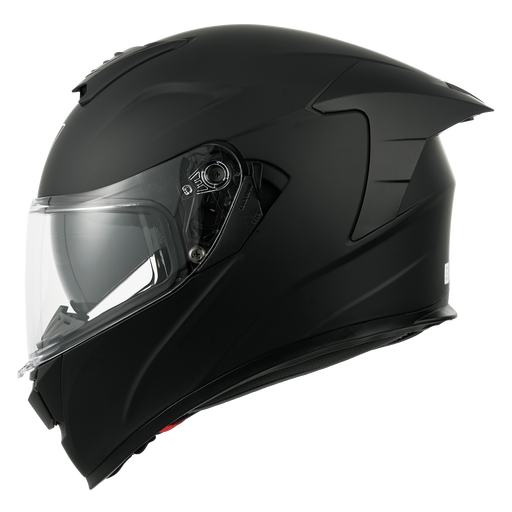
Why this model is a great fit: This model combines the essential features for daily use: the current ECE 22.06 safety standard, a practical sun visor, and an easy-to-clean inner lining. It's a sensible choice for commuters and casual riders who prioritise safety and functionality without a large budget.
Verifiably meets the ECE 22.06 standard and features an inner lining explicitly described as removable and washable, preventing hygiene issues.
Offers a complete feature set (ECE 22.06 safety, sun visor, washable lining) at an accessible price point.
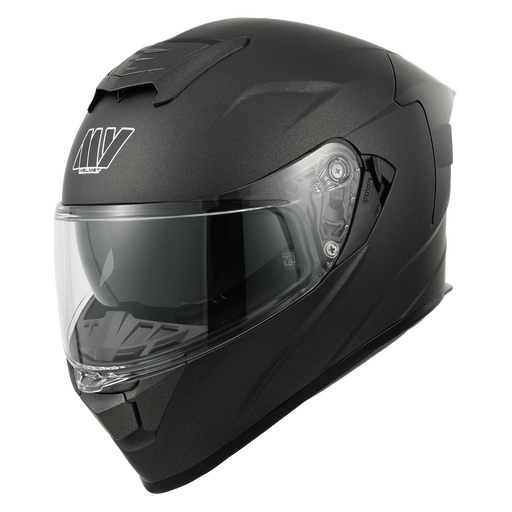
Why this model is a great fit: For riders planning longer journeys, the integrated sun visor is a crucial comfort factor. This touring helmet offers protection from wind and weather, and the ECE 22.06 certification provides the necessary confidence on extended rides. The Matte Titanium colour is a stylish alternative to classic black.
The sun visor is designed as an integral part of the helmet and was co-tested during the ECE 22.06 certification process, ensuring reliable functionality.
Ideal for changing light conditions on long tours, thanks to the easy-to-operate, integrated sun visor.
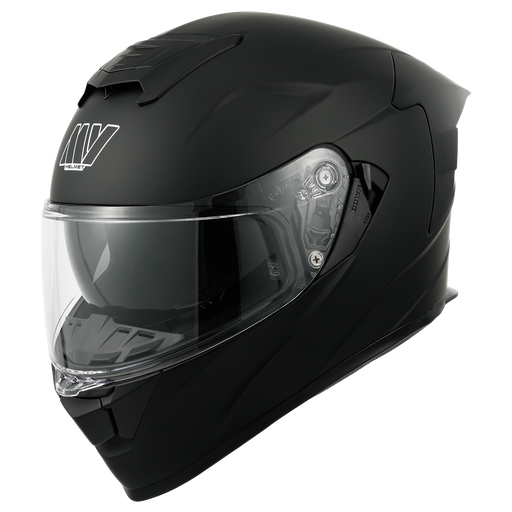
Why this model is a great fit: A matte black motorcycle helmet is a popular choice for riders who prefer a modern and understated aesthetic. This unisex model is equally suitable as a men's motorcycle helmet and a women's motorcycle helmet and is available in a wide range of sizes from XS to XXL to ensure a precise fit for almost any head circumference.
The wide range of sizes with clear centimetre measurements (e.g., XXL for 61-62 cm) minimises the risk of a poor purchase due to an improper fit.
Combines a sought-after, modern look with uncompromising safety and a fit suitable for a wide variety of riders.
We have compiled a complete, up-to-date list of products that fully meet these strict selection criteria and safety regulations.
Measure the circumference of your head at its widest point, about one centimetre above your eyebrows and ears, using a flexible measuring tape. Compare this measurement with the manufacturer's size chart provided on the product page (e.g., M: 57–58 cm). A new helmet should fit snugly and not shift when you move your head, but it should not cause painful pressure points.
Most manufacturers recommend replacing a motorcycle helmet after about 5 to 7 years. The materials, especially the shock-absorbing EPS inner shell, can lose their effectiveness over time due to UV radiation and environmental factors. Regardless of age, a helmet must be replaced immediately after any crash or strong impact, even if no external damage is visible. The internal protective structure can be invisibly compromised.
Not necessarily. Although the testing requirements are stricter, manufacturers use advanced materials and construction methods to optimise weight. An ECE 22.06 certified helmet can have a similar weight to an older model. The crucial difference lies in its improved ability to absorb impact energy and reduce rotational forces, which significantly increases safety.