
Lieferung heute & morgen

Qualitätsgarantie

Willkommens-Angebote freischalten: KOSTENLOSE Lieferung | Bis zu 80 % RABATT | Kostenlose 30-Tage-JoyPlus-Testphase
App herunterladen
Choosing a new motorcycle helmet is a decision that directly impacts your safety and riding comfort. Since the introduction of the new ECE 22.06 testing standard, the market has changed. But with new standards come new marketing promises and potential pitfalls. Many riders invest in helmets that look good on paper but prove to be impractical or less safe than expected in daily use. This guide will help you identify the crucial features and find a helmet that truly fits your needs.
Before we dive into the key parameters, let's look at the typical mistakes that often lead to disappointment and unnecessary expense.
To avoid a bad purchase, you should base your decision on objective criteria. The following three points are non-negotiable for a modern and safe motorcycle helmet.
Today, a safe motorcycle helmet is one certified according to the ECE R 22.06 standard. Compared to its predecessor, 22.05, the testing procedures are significantly more stringent:
For commuters and tourers, two designs have become established, each offering specific advantages and disadvantages.
A motorcycle helmet with a dual visor—a combination of a clear main visor and an integrated sun shield—is almost essential for rides in changing light conditions. Ensure the sun shield does not distort your field of vision and is easy to operate, even with gloves on. An effective ventilation system and a removable, washable liner are other important features for daily use.
Based on the criteria mentioned, we have identified a few models that are well-suited for specific rider profiles.
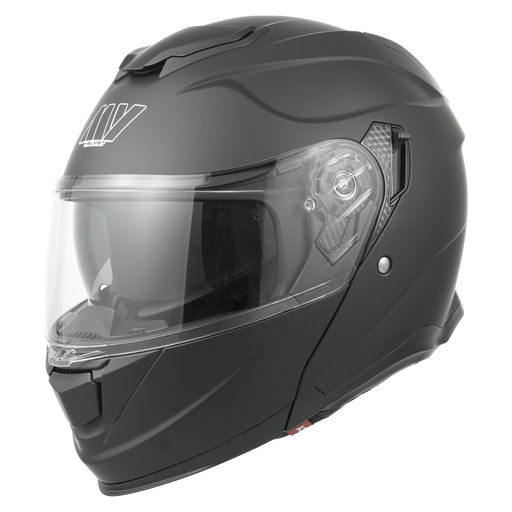
Why this model is a great fit: As a modular helmet, it offers the flexibility needed for city traffic and short stops. The integrated sun shield and preparation for a communication system make it a practical companion for the daily commute.
It is explicitly certified to the current ECE 22.06 standard. The dedicated channels for a Bluetooth headset are designed for common systems, thus avoiding compatibility issues.
A combination of flexibility (modular mechanism) and modern safety (ECE 22.06). The dual visor system enhances comfort in changing light conditions.
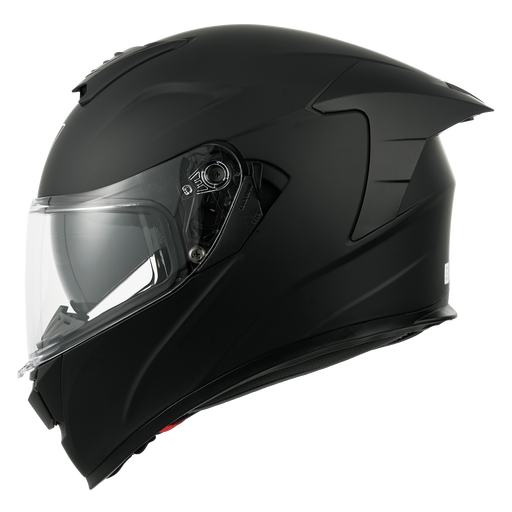
Why this model is a great fit: As a classic full-face helmet, it provides a single-piece outer shell for maximum protection. The removable and washable liner, along with the integrated sun shield, are designed for comfort on long rides.
This helmet meets the strict ECE 22.06 standard and focuses on structural integrity rather than compromising on safety. The fit is optimised for long periods of wear.
High protective performance due to the one-piece shell construction. The skin-friendly inner lining and effective shock absorption from high-density EPS are designed for both safety and comfort.
We have compiled a complete, up-to-date list of products that fully meet these strict selection criteria and safety regulations.
1. What is the lifespan of an ECE 22.06 motorcycle helmet? The lifespan of a helmet depends on the outer shell material. Helmets made of polycarbonate or ABS plastic should be replaced after about 3 to 5 years due to material fatigue from UV radiation and environmental factors. Models made from composite fibre materials (e.g., fibreglass, carbon) can have a lifespan of 5 to 7 years. Regardless of age, a helmet must be replaced immediately after any fall or significant impact, even if no external damage is visible.
2. Do I have to replace my old ECE 22.05 helmet now? No, there is no legal obligation to replace an existing helmet with an ECE 22.05 certification. The new ECE 22.06 standard applies to the manufacturing and sale of new helmets. However, for safety reasons, upgrading is recommended, as the testing requirements of the new standard are significantly more comprehensive, especially concerning rotational forces and impact protection.
3. Will any Bluetooth headset fit in a "Bluetooth-ready motorcycle helmet"? Not necessarily. "Ready" or "prepared" usually means that there are cutouts inside the helmet for speakers and possibly a mounting point for the control unit. However, the size and shape of these cutouts can vary. It is advisable to check compatibility with your desired communication system. Universal systems from many well-known manufacturers often fit, but there may be limitations with manufacturer-specific, integrated solutions.