
Lieferung heute & morgen

Qualitätsgarantie

Willkommens-Angebote freischalten: KOSTENLOSE Lieferung | Bis zu 80 % RABATT | Kostenlose 30-Tage-JoyPlus-Testphase
App herunterladen
Choosing a motorcycle helmet is a decision that should be grounded in technical specifications and safety standards. The introduction of the ECE 22.06 standard has tightened testing criteria for helmets, guaranteeing a superior level of protection. A motorcycle helmet with a sun visor that complies with this new regulation combines certified safety with the practical convenience needed for rides in changing light conditions. This guide breaks down the key criteria for selecting such a helmet and showcases two models that meet today's demanding requirements.
The purchase decision should be based on a balance of protection, design, material, and comfort features.
The ECE 22.06 standard succeeds ECE 22.05 and places significantly higher demands on manufacturers. Key updates include:
A helmet with this certification offers a verifiably tested standard of protection according to the latest European testing procedures.
The two most common types of helmets with an integrated sun visor are full-face and modular helmets.
The helmet shell material influences its weight, durability, and price.
Beyond safety, practical features are crucial for everyday use.
Based on the criteria above, we are featuring two models that meet the ECE 22.06 standard and stand out for their functional features.
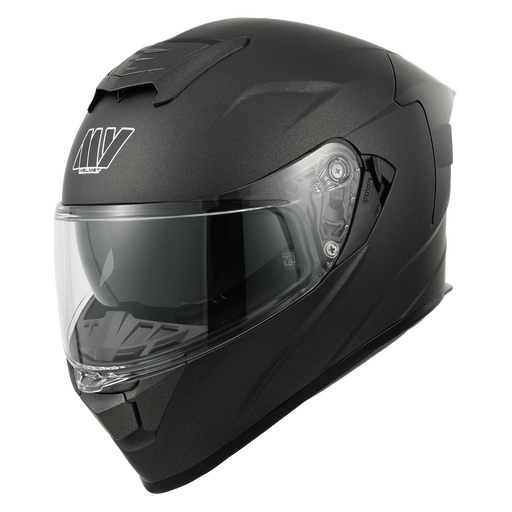
The MY-936 is a classic full-face helmet that meets core safety requirements without unnecessary frills. Its ECE R 22.06 certification confirms it meets the latest protection standard. The ABS outer shell, combined with a high-density EPS inner shell, is designed for maximum shock absorption. The integrated sun visor makes it a practical companion for daily rides.
This helmet is a smart choice for commuters and casual riders, both men and women, looking for a safe, straightforward, and great-value secure motorcycle helmet for daily use.
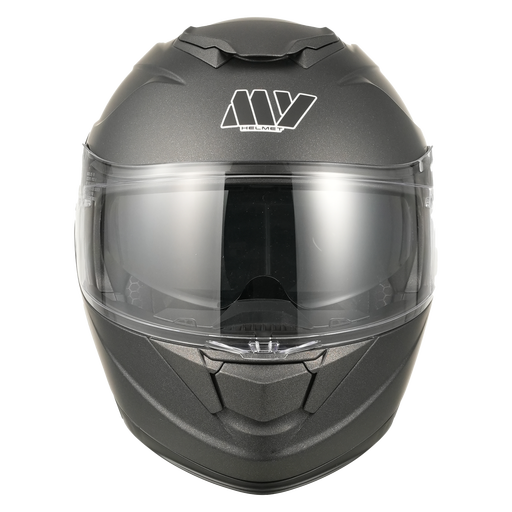
The MY-935 is a modular helmet with a sun visor that combines flexibility with modern features. It also meets the ECE 22.06 standard and offers a high degree of shock absorption thanks to its high-strength ABS shell and EPS inner liner. Its key strength lies in its versatility, provided by the flip-up mechanism and its readiness for communication systems.
This helmet is aimed at touring riders and commuters who value comfort, flexibility, and the option to retrofit a communication system.
The models presented offer a solid foundation for safety-conscious and value-oriented riders. If you are specifically interested in other modular helmets, you can find a wider selection of models in our category that cover different requirements and features.
Discover more models in the category here: Modular Motorcycle Helmet
1. What is the main difference between ECE 22.05 and ECE 22.06? The main difference lies in the more stringent testing procedures. The ECE 22.06 standard includes, for the first time, a test for rotational impacts, which measures the rotational forces generated during an oblique impact. Additionally, helmets are tested at higher and lower speeds and at more points than under the old 22.05 standard.
2. How do I find the right helmet size? Measure the circumference of your head at its widest point, about one centimetre above your eyebrows and ears. Compare the result in centimetres with the manufacturer's size chart. A new helmet should fit snugly without causing pressure points. The padding will break in slightly over time. The MY helmets featured here provide size charts on their respective product pages.
3. Can I ride at night with an integrated sun visor? No. The sun visor is tinted and significantly reduces light transmission. It is designed exclusively for use in daylight and sunny conditions. At dusk, at night, or in tunnels, the sun visor must be retracted to ensure unrestricted vision.