
Lieferung heute & morgen

Qualitätsgarantie

Willkommens-Angebote freischalten: KOSTENLOSE Lieferung | Bis zu 80 % RABATT | Kostenlose 30-Tage-JoyPlus-Testphase
App herunterladen
An ECE 22.06 full-face motorcycle helmet should fit reliably for everyday riding, touring and sporty riding. However, glossy advertising claims, unclear sizing information and misunderstood features often lead to disappointing purchases. It is not just the colour or price that matters, but the combination of approval standard, correct helmet size, fastening system, visor features and care properties.
This buying guide explains which details you should check before purchasing and which type of helmet suits your riding style.
The term “ECE” on its own says very little. For a current ECE R 22.06 helmet, the marking should be clearly identifiable on the helmet or inspection label. The ECE 22.06 standard sets out testing requirements for motorcycle helmets and takes into account various impact scenarios, as well as the stress placed on the visor and helmet structure.
You should therefore check:
A general statement such as “safe motorcycle helmet” is no substitute for a specific standard designation.
S, M, L or XL are not standardised measurements. A full-face helmet in sizes S to XXL can cover different head circumferences depending on the model. For example, the MY 936 is specified as follows: XS for 54–55 cm, S for 55–56 cm, M for 57–58 cm, L for 59–60 cm, XL for 60–61 cm and XXL for 61–62 cm.
Measure your head circumference horizontally across your forehead and the back of your head using a tape measure. The helmet should sit evenly all around, but must not create strong pressure points. It should not move when you shake your head. A helmet that is too large can loosen while riding, while one that is too tight often causes pressure points and may therefore be worn less consistently.
A motorcycle helmet with a sun visor can make it easier to switch between bright roads and shaded areas. However, the integrated visor does not automatically replace every external visor and should be easy to operate without affecting the helmet’s fit.
A motorcycle helmet with a removable inner lining is not automatically easy to care for either. Check whether the lining can actually be removed and washed, and how it is refitted. This is particularly important for daily use, longer tours or changing weather conditions.
A full-face helmet protects the head, cheek area and chin with its enclosed design. This distinguishes it from jet or open-face helmets. The MY 936 is described as a full-face motorcycle helmet with ECE 22.06, an oval helmet shape and an ABS outer shell.
The term ABS motorcycle helmet refers to the material used for the outer shell. However, the purchasing decision should not be based on the material alone, but on the complete tested helmet system, including the EPS inner shell, fastening system and visor.
The product information for the MY 936 specifies high-density black EPS padding. EPS is the shock-absorbing inner layer between the outer shell and your head. It must fit evenly and must not be damaged or thinned through subsequent alterations.
You should also look for:
You cannot assess the fit solely from product photos. When choosing a helmet, the measurements in centimetres should therefore take priority over your usual clothing size.
With an integrated sun visor, check that the mechanism operates smoothly and that the visor retracts fully into the helmet shell. Dirt on the visor, seal or mechanism can affect operation.
A removable, washable inner lining makes cleaning easier. For care, use only suitable, mild products and follow the manufacturer’s instructions. Avoid solvents, harsh cleaners and unauthorised alterations to the EPS, straps or shell.
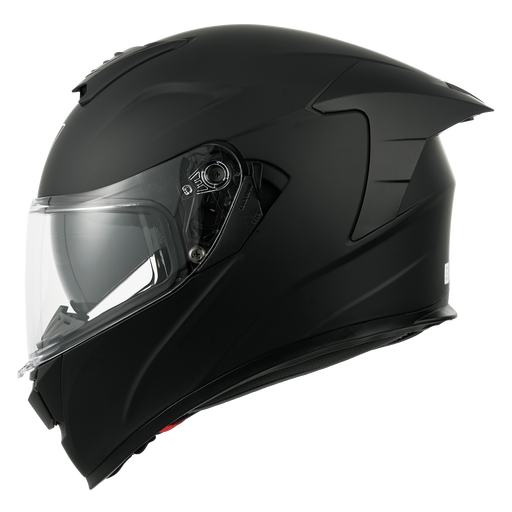
Why this product suits the profile: According to the product information, the M version fits a head circumference of 57–58 cm and combines an enclosed design with an integrated sun visor. The matte black finish is understated for everyday riding.
The specific ECE 22.06 designation and centimetre-based sizing help prevent a generic ECE marking or unsuitable letter size from being mistaken for a sufficient basis for choosing a helmet.
ABS outer shell, EPS inner shell, integrated sun visor and matte finish.
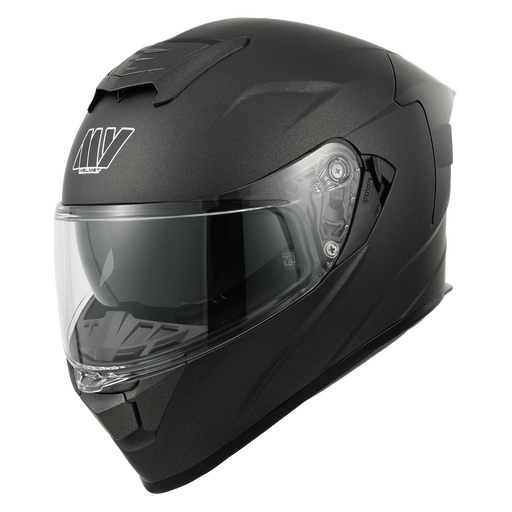
Why this product suits the profile: The Matte Titanium version is aimed at adults who value clearly defined technical specifications, an enclosed design and easy-care interior features. Size L is specified for 59–60 cm.
The product information explicitly states that the inner lining is removable and washable. This allows you to check the care features specifically before buying, rather than relying on general comfort claims.
ECE R 22.06 designation, ABS material, integrated sun visor and washable inner lining.
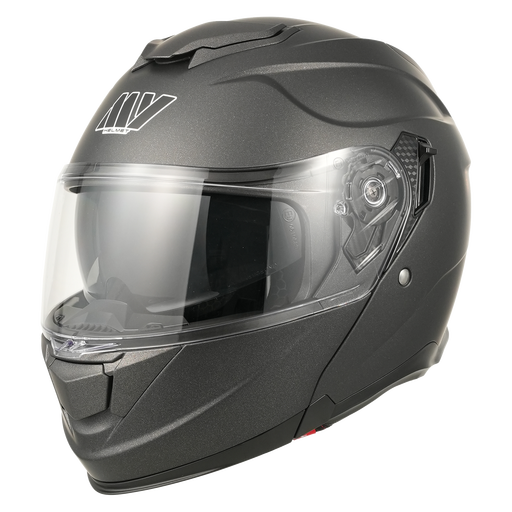
Why this product suits the profile: The flip-up design can be practical for touring and frequent stops. However, it should not be treated as equivalent to a classic, permanently enclosed full-face helmet.
The product description specifies the ECE 22.06 designation, size ranges and dual visor. At the same time, it transparently takes the different flip-up construction into account.
ABS outer shell, dual visor, size range up to XXL and designated space for an intercom headset.
We have put together a complete, regularly updated list of products that fully meet these strict selection criteria and the safety regulations applicable in the EU.
Measure your head circumference at the widest point across your forehead and the back of your head. Compare the result with the size chart for the relevant model. The MY 936 is available in the specified sizes from XS to XXL. Do not simply use the letter size from a previous helmet, as internal shapes can vary.
There is no fixed service life that applies to every model. The deciding factors include its condition, frequency of use, material ageing and the manufacturer’s instructions. Regularly check the outer shell, EPS, visor, inner lining and chin strap. After an accident, the helmet should be replaced regardless of its visible condition.
In addition to the purchase price, you may incur costs for replacement visors, care products or a new inner lining. A removable, washable lining can make regular cleaning easier. Before buying, check whether spare parts are available for the specific model and whether the sun visor can be replaced separately.