
Lieferung heute & morgen

Qualitätsgarantie

Willkommens-Angebote freischalten: KOSTENLOSE Lieferung | Bis zu 80 % RABATT | Kostenlose 30-Tage-JoyPlus-Testphase
App herunterladen
As a cat owner, you want to create a hygienic and comfortable environment for your pet. Switching to an eco-friendly cat litter is a logical step for environmentally and health-conscious consumers. However, the market is flooded with products making lofty promises that often fail to deliver in practice. Before you make a decision, it's crucial to understand the common pitfalls that can lead to frustration and unnecessary expense.
This guide focuses on the objective criteria that define a quality eco-friendly cat litter, helping you make an informed choice that meets both your standards and your cat's needs.
Many products advertise ecological benefits but fall short on the basic requirements of hygiene and handling. Watch out for these three widespread problems:
To avoid these pitfalls, you should base your selection on three objective performance parameters.
The foundation of any plant-based cat litter is its material. Common options include wood-based cat litter, corn, grain, or tofu litter. Each material has different properties regarding weight, absorbency, and clumping action.
A critical feature is how a biodegradable clumping litter also forms stable clumps. The clump should remain intact when lifted with the scoop and not crumble.
High absorbency is the key to efficiency and hygiene. High-quality plant fibres can absorb many times their own weight in liquid. This effectively traps odours inside the clump. Instead of relying on perfumes to mask odours, which often irritate cats, the natural capillary action of the fibres ensures long-lasting freshness.
A significant advantage of eco-friendly cat litter is its environmentally friendly disposal. Check the manufacturer's instructions carefully:
Based on the criteria above, we have identified several products that represent a considered choice for different needs and households.
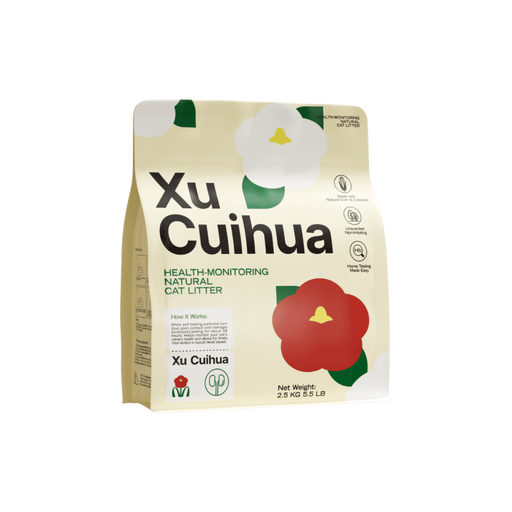
Why This Fits Their Persona: Ideal for owners who want to proactively monitor their cat's health in addition to being sustainable. The low-dust, starch-based formula is gentle on the respiratory system.
Goes beyond a simple "low-dust" promise by offering a tangible extra feature. The integrated particles for detecting blood in the urine can serve as an early warning system for urinary tract issues.
Health Indicator: Integrated particles turn blue on contact with blood. Firm Clumps: The litter, based on tapioca and corn starch, forms solid clumps that make cleaning easier.
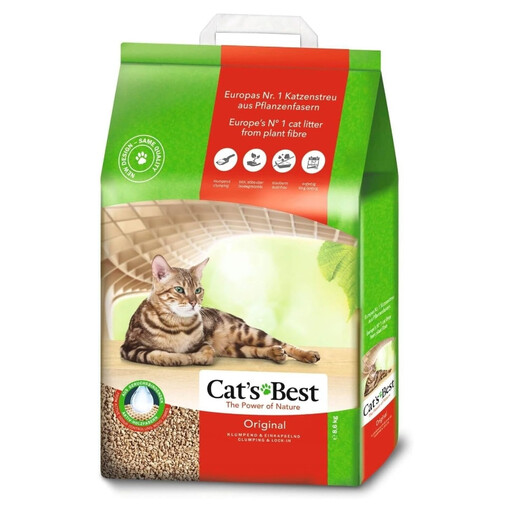
Why This Fits Their Persona: For users seeking a proven, high-performance, and flexible solution. This product combines high efficiency with versatile, eco-friendly disposal options.
Avoids the efficiency miscalculation through its very high yield. According to the manufacturer, the litter is up to three times more efficient than conventional mineral litters, reducing consumption and long-term costs.
High Absorbency: Technologically refined active wood fibres bind liquid and odours very effectively. Flexible Disposal: Individual clumps can be flushed down the toilet (check local regulations), and the litter is also fully compostable.
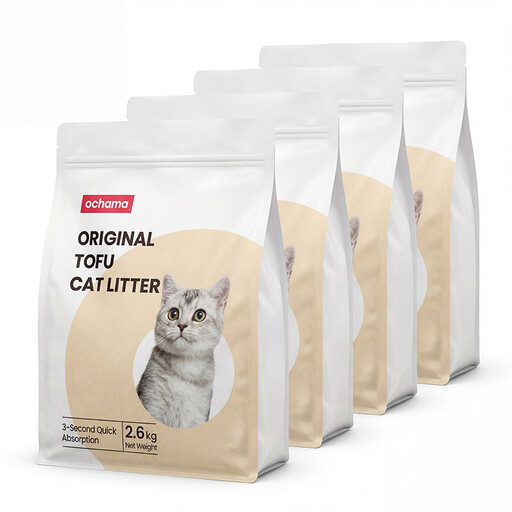
Why This Fits Their Persona: A great entry point into the world of eco-litter. The multipack offers excellent value for money, while the tofu base provides proven benefits like low dust and flushability.
Sidesteps the "unusable clumps" trap. The fine 2mm particles of tofu and corn starch allow for rapid liquid absorption and the formation of firm, stable clumps that don't stick to the bottom of the litter box.
Low Tracking: The fine granules are less likely to be tracked out of the litter box. Food-Grade Ingredients: Made from tofu and corn starch, which increases safety if a cat accidentally ingests some.
We've compiled a complete, up-to-date list of products that fully meet these strict selection criteria and rigorous safety standards.
Cats are creatures of habit and can be sceptical of change. For a smooth transition, gradually mix the new eco-litter with the familiar litter. Start with a ratio of 25% new to 75% old litter. Slowly increase the proportion of the new litter over one to two weeks until the old litter is completely replaced.
This depends on the product and your plumbing system. Manufacturers who permit this disposal method use materials (often tofu or corn) that dissolve in water. However, it is crucial to flush only single clumps and never large amounts at once. Caution is advised with old or narrow pipes. When in doubt, disposal via household waste or the organic bin (depending on local regulations) is the safer alternative.
It's difficult to give a one-size-fits-all answer, as it depends on the product's absorbency. A high-quality eco-friendly cat litter can be significantly more economical than conventional bentonite litter. Thanks to the high absorbency of the plant fibres, you only need to remove the clumps and solid waste, and you'll need to replace the entire box filling less often. Pay attention to the manufacturer's information on yield to get a realistic estimate.