
Lieferung heute & morgen

Qualitätsgarantie

Willkommens-Angebote freischalten: KOSTENLOSE Lieferung | Bis zu 80 % RABATT | Kostenlose 30-Tage-JoyPlus-Testphase
App herunterladen
As a Joybuy Product Recommendation Officer, I see my role as providing you with a clear and objective guide to the fishing tackle market. Choosing the right fishing rod is crucial for success and depends heavily on the fishing method, target species, and body of water. A one-size-fits-all rod is a rarity. This article presents a selection of ECOODA fishing rods designed for the specific requirements of advanced anglers.
The decision for a new rod should be based on objective criteria. Here are three key points that can help you with your selection.
The action of a rod describes how much the blank bends under load. A fast-action rod bends mainly in the tip section, allowing for precise lure control and a quick hookset, which is ideal for a predator rod used for jigging. A slower action, where the blank bends down to the handle, better absorbs the lunges of large fish and is often found in a carp rod. The casting weight must match the weight of your lures to ensure optimal casting distance and sensitive bite detection.
Modern fishing rods, such as a spinning rod or boat rod, are mostly made of carbon fibre. The density and wrapping of the carbon determine the rod's weight, sensitivity, and backbone. For use in the sea, a saltwater fishing rod is essential. Look for corrosion-resistant components like guides and reel seats made of stainless steel or titanium. Components from manufacturers like Fuji are considered an industry benchmark for durable equipment.
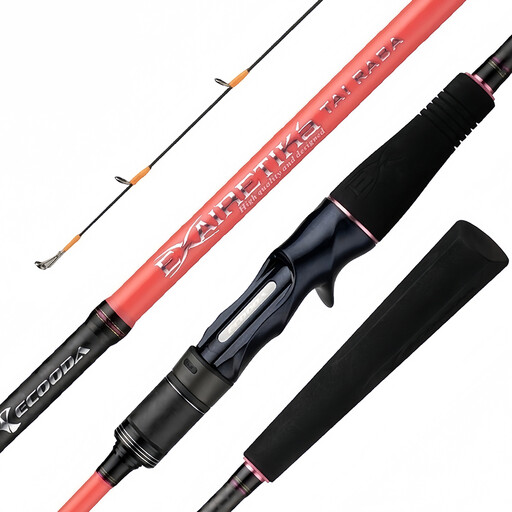
Specialised fishing techniques require adapted gear. A Tenya rod, for example, is designed for the Japanese fishing method of the same name, which uses special jigs. It has a highly sensitive tip for bite detection and a strong backbone to set the hook securely. A light boat rod, on the other hand, must be compact yet powerful enough to guide fish from the depths to the surface without overly fatiguing the angler during long fights.
The following ECOODA models have been developed for clearly defined applications and fishing methods.
Didn't find the right model for your specific needs? Fishing is diverse, and the choice of rod is highly individual. Our range includes a wider selection for different techniques and target fish.
Discover our entire range of fishing rods here
A saltwater fishing rod must, above all, be corrosion-resistant. Saltwater aggressively corrodes metals. Therefore, rod guides, the reel seat, and other metal parts are ideally made from materials like stainless steel, titanium, or are coated with a special finish. Additionally, the blanks are often built to be more robust to withstand the harsher conditions and harder-fighting marine fish.
A spinning rod is generally designed for casting lures from the shore or a boat and is often longer (typically 2.10 m to 3.00 m) to achieve good casting distances. A classic boat rod is usually shorter (typically 1.80 m to 2.40 m), less convenient for casting, but more practical for fighting fish from a boat. It often has a stronger backbone to lift fish vertically from the depths.
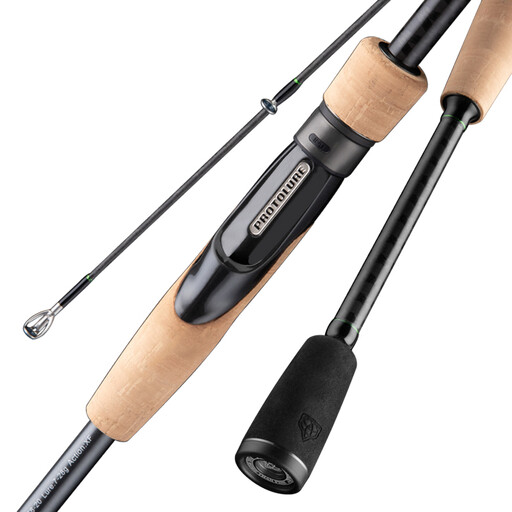
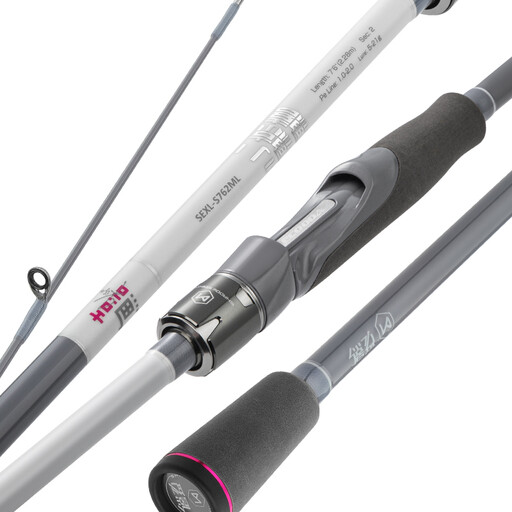
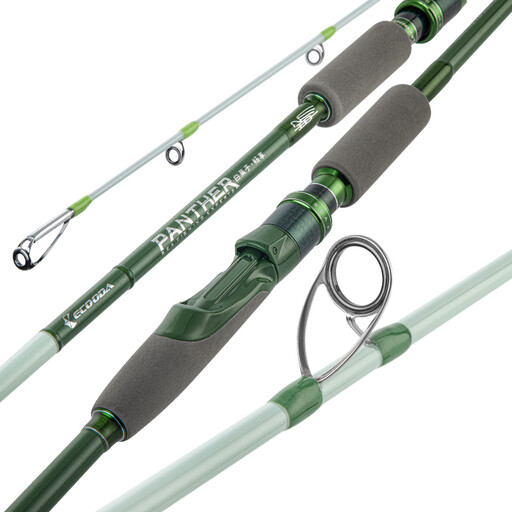
ECOODA offers a range that targets specialised fishing methods. As shown in the examples, there are models specifically developed for spin fishing for sea bass, fishing with a Tenya rod, or light offshore fishing from a boat. The selection is aimed at anglers who want to precisely match their gear to a specific technique or target fish.