
Lieferung heute & morgen

Qualitätsgarantie

Willkommens-Angebote freischalten: KOSTENLOSE Lieferung | Bis zu 80 % RABATT | Kostenlose 30-Tage-JoyPlus-Testphase
App herunterladen
An ECOVACS robot vacuum cleaner with mopping function and OMNI station can automate vacuuming, mopping, emptying and, in some cases, mop cleaning too. However, models differ significantly in suction power, height, navigation, threshold clearance and maintenance requirements. If you focus solely on a high Pa rating or a long list of feature names, you could end up buying a device that is not suitable for your home.
Figures such as 8,000 Pa, 20,000 Pa or up to 30,000 Pa describe the maximum suction power under certain conditions. Actual cleaning performance also depends on the brush design, carpet detection, airflow and driving strategy. A robot vacuum cleaner for pet hair should therefore offer more than a high Pa rating. It should also have effective hair collection and a brush area that requires as little maintenance as possible.
Technologies such as ZeroTangle can reduce hair wrapping around the brushes. However, they do not replace regular checks of the main brush, side brush and filter.
An all-in-one station can empty the dust container, refill the water tank, and wash and dry the mops. Nevertheless, depending on the model, users may still need to empty the dirty-water tank, refill the clean-water tank, clean the filters and replace consumables.
The dimensions of the station are also frequently underestimated. Before buying, check whether there is enough space next to a wall and in the direction of travel. In narrow hallways or small kitchens, a large station can make installation more difficult.
Traditional mopping plates, rotating mops and a continuously rinsed OZMO ROLLER differ in how they distribute water and collect dirt. Models with mop lifting are more practical for homes with carpets, as the mop can be raised when a carpeted area is detected. For sensitive flooring, you should also consider whether the water volume can be adjusted.
For hard floors, the highest power setting is not automatically the best choice. It is more important to know whether the robot can pick up dust along edges and detect carpets. TruEdge supports cleaning along walls and in corners, although the specific implementation varies by model.
Households with long hair or pets should look for a ZeroTangle version, easily removable brushes and readily accessible filters. The DEEBOT T90 PRO OMNI, for example, is specified with up to 30,000 Pa and ZeroTangle 4.0. According to the manufacturer, the DEEBOT N20 Plus operates with 8,000 Pa, ZeroTangle and a bagless PureCyclone station.
A robot mop with hot-water mop cleaning can clean the mops in the station using heated water. According to the product specifications, the DEEBOT T30C OMNI Gen2 features 75 °C mop washing, automatic detergent dosing and warm-air drying. According to the manufacturer, the DEEBOT T80S OMNI uses temperature-controlled mop washing between 40 and 75 °C, together with 45 °C warm-air drying.
These features reduce the amount of manual work, but they also make the system more complex. Detergent should only be used at the dilution specified by the manufacturer. A suitable ECOVACS DEEBOT Cleaning Solution is available for certain DEEBOT X and T models.
Laser- or camera-based systems create maps and can detect rooms and obstacles. AIVI 3D and TrueDetect 3D are names for different detection and navigation functions. Even so, in homes with cables, toys or pet bowls, it is still sensible to clear the floor roughly before starting the robot.
In period properties and rooms with transition strips, the maximum threshold height is crucial. The DEEBOT T90 PRO OMNI is described as featuring a TruePass-4WD system and a specified threshold clearance of up to 24 mm. Other models may have different specifications. Actual suitability also depends on the threshold’s shape, width and material.
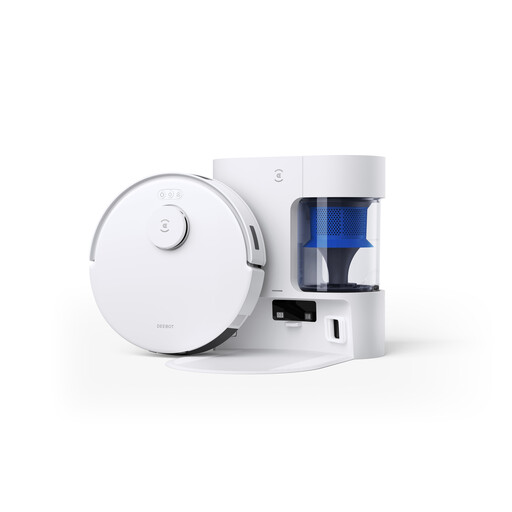
Why this product suits this profile: The DEEBOT N20 Plus combines a mopping function with LIDAR navigation, up to 300 minutes of runtime and a bagless station. This makes it an interesting option for homes with hard floors and a manageable maintenance budget.
The bagless PureCyclone station avoids ongoing dust-bag costs. However, the 8,000 Pa rating should still be considered in relation to the type of flooring and the area being cleaned.
LIDAR mapping, ZeroTangle technology and up to 300 minutes of runtime according to the manufacturer.
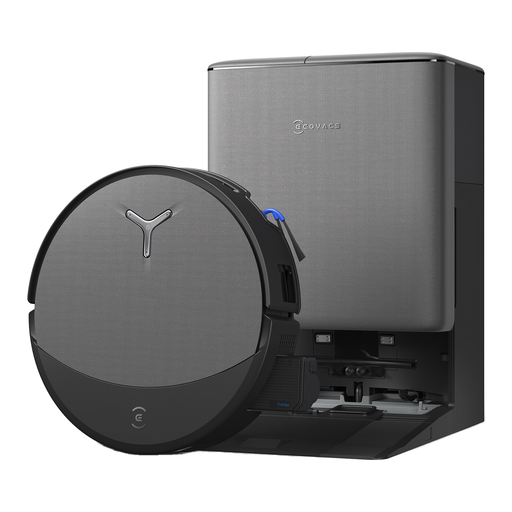
Why this product suits this profile: For large areas, mixed flooring and homes with pet hair, this model offers an extensive feature set including OZMO ROLLER 3.0, an OMNI station and AIVI 3D 4.0.
The choice is based on more than suction power: ZeroTangle 4.0, TruePass Adaptive 4WD and automatic station maintenance address hair, thresholds and upkeep.
Up to 30,000 Pa, up to 350 minutes of runtime and continuous self-cleaning of the OZMO ROLLER 3.0, according to the product specifications.

Why this product suits this profile: This model combines 25,000 Pa, ZeroTangle 3.0, automatic mop lifting and a station with hot-water washing. This makes it suitable for homes with different types of flooring.
Mop lifting reduces the risk of wet carpets. ZeroTangle 3.0 and automatic emptying limit the amount of manual work, but they do not replace visual checks.
25,000 Pa, 75 °C mop washing according to the product description and four adjustable cleaning modes.
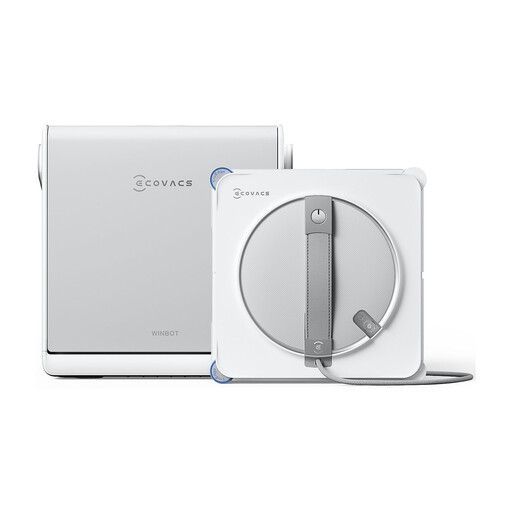
Why this product suits this profile: This window-cleaning robot is aimed at users with large or hard-to-reach glass surfaces. The multifunction station and WIN-SLAM 4.0 support reliable, scheduled use.
The safety cable must be attached every time the robot is used. The device is intended for suitable glass panes, not damaged or unsuitable surfaces.
8,000 Pa suction power, up to 110 minutes of runtime and several cleaning modes, according to the manufacturer.
We have put together a complete, regularly updated list of products that fully meet these strict selection criteria and the safety regulations applicable in the EU.
The station should be placed on a level, dry surface with enough clearance around it. Then fill the clean-water tank and, if required, add the appropriate cleaning solution. After connecting to the ECOVACS HOME app, the robot should first create a complete map. Cables, small objects and delicate decorations should be removed from the robot’s path beforehand.
Even an automatic robot vacuum cleaner needs care. Depending on how often it is used, the dust and dirty-water tanks need to be checked, filters and brushes cleaned, and mops and dust bags replaced. Self-cleaning of the station reduces the effort required, but does not eliminate it completely.
In addition to electricity consumption, there may be costs for dust bags, mops, filters, brushes and approved cleaning solution. Bagless stations avoid dust-bag costs, while models with hot-water washing and warm-air drying may use additional energy. Before buying, it is therefore worth checking the spare parts available and the consumables recommended by the manufacturer.