
Lieferung heute & morgen

Qualitätsgarantie

Willkommens-Angebote freischalten: KOSTENLOSE Lieferung | Bis zu 80 % RABATT | Kostenlose 30-Tage-JoyPlus-Testphase
App herunterladen
By the Joybuy Product Recommendation Officer, August 28, 2026
The search for a suitable Eczema Cream can often feel like navigating a labyrinth of marketing promises and complex ingredient lists. Especially when your skin feels tight, itchy, and is in desperate need of relief, the temptation to grab the first product you see is strong. However, not every cream that promises quick help is a long-term solution. Many products lead to disappointment and unnecessary expenses.
This guide is designed to help you recognise the common pitfalls and make an informed decision based on the actual needs of your skin.
When choosing eczema care, consumers repeatedly encounter the same problems, which often lead to frustration.
To make the right choice, you should focus on proven and functional properties. The following three criteria are crucial for an effective and soothing cream for irritated skin.
An intact skin barrier is the key to healthy skin. In eczema, this barrier is weakened, leading to moisture loss and the penetration of irritants. Look for formulations designed to strengthen the skin barrier. Proven ingredients include:
For sensitive and eczema-prone skin, less is more. A short and clear ingredient list is often a good sign. It is essential to avoid:
The choice between a light lotion, a cream, or a rich ointment depends on the skin's condition and the area of application.
Based on the criteria above, we have identified several products that are suitable for specific requirement profiles.
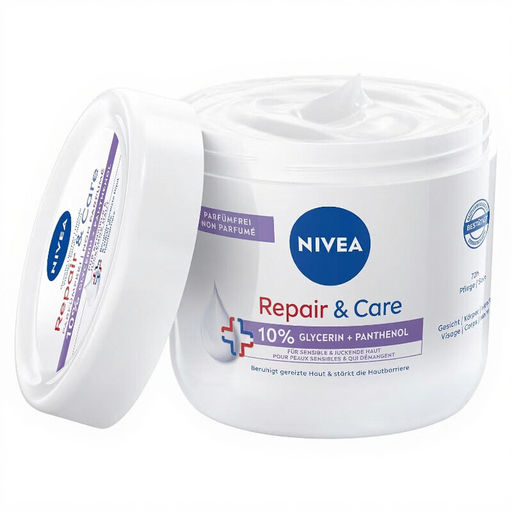
Why this product is a good fit: Ideal for families looking for reliable, straightforward basic care for the whole body. The large 400ml tin offers excellent value for money for daily use on dry and sensitive skin.
The formula focuses on proven, high-concentration ingredients like 10% Glycerin and Panthenol instead of exotic ingredient claims. It provides long-lasting moisture that sustainably supports the skin barrier.
The fragrance-free formula is dermatologically tested for tolerance on sensitive skin and, according to the manufacturer, provides up to 72 hours of moisture.
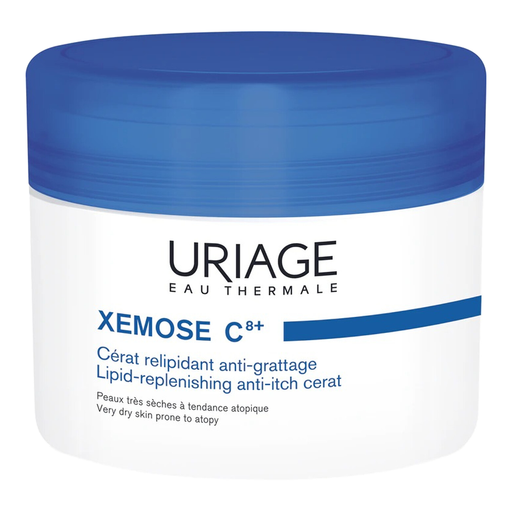
Why this product is a good fit: Specifically for flare-ups of extremely dry, atopy-prone skin with severe itching. The very rich texture forms an intensive protective film and is suitable for the whole family, including babies.
Instead of vague promises, its efficacy is based on a specific formulation that, according to the manufacturer, contains 8 biomimetic ceramides to specifically strengthen the skin barrier and relieve itching from the first application.
The particularly rich cérat texture absorbs quickly without leaving a greasy or sticky film and is free from fragrances and parabens.
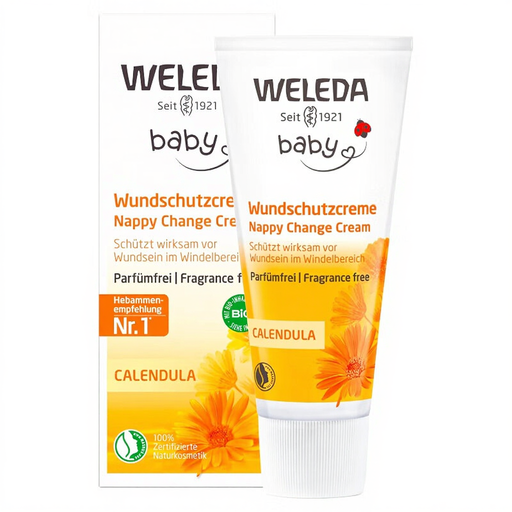
Why this product is a good fit: Developed for the highly sensitive skin of babies in the diaper area, but also excellent for irritated and red skin patches on adults. The formula is based on natural ingredients.
The product relies on a minimalist, nature-based formula with Calendula and Almond Oil instead of complex chemical formulations. This reduces the risk of reactions on extremely sensitive skin.
The combination of skin-compatible Lanolin (wool wax) and Zinc Oxide reliably protects against moisture while nourishing the skin, which promotes skin regeneration.
We have compiled a comprehensive, up-to-date list of products that fully meet these strict selection criteria and current safety regulations.
The frequency of application depends on your individual skin condition. As a general rule, moisturise the skin at least twice a day (morning and evening) after cleansing. During acute phases of dryness or severe itching, more frequent application may be beneficial to continuously support the skin barrier.
The main difference lies in the water-to-lipid ratio. A cream has a higher water content, absorbs more quickly, and often has a cooling effect. It is ideal for daily basic care. An ointment has a significantly higher lipid content and is often water-free. It forms a long-lasting protective film (occlusive effect) that greatly reduces moisture loss and intensively nourishes the skin. Ointments are particularly suitable for very dry, cracked skin areas and for nighttime care.
Many high-quality eczema creams are formulated for both the face and body. However, the skin on the face is often more sensitive and thinner. If you are prone to blemishes, a very rich body cream might be too heavy for the face (comedogenic). In this case, it may be wise to choose a lighter, non-comedogenic formulation for the face. Check the manufacturer's instructions to see if the product is explicitly recommended for facial use.