
Lieferung heute & morgen

Qualitätsgarantie

Willkommens-Angebote freischalten: KOSTENLOSE Lieferung | Bis zu 80 % RABATT | Kostenlose 30-Tage-JoyPlus-Testphase
App herunterladen
A compact and reliable light source is an indispensable everyday tool for tradespeople, technicians, and outdoor enthusiasts. An EDC (Everyday Carry) flashlight with a clip promises to be just that: always within reach, powerful, and versatile. However, the market is flooded with models whose advertised features often fail to deliver in practice. Before you make a decision, it's crucial to understand the common weaknesses that can quickly turn a useful helper into a disappointment.
The 3 Most Common Pitfalls When Buying a Clip-On Flashlight:
To make an informed purchasing decision, you should focus on objective, practical criteria. These three features are crucial for the functionality and longevity of your light.
The quality of the mounting system determines how flexibly you can use the light. A robust metal clip, ideally one that can be attached in both directions, allows for carrying it in your pocket or clipping it to the brim of a cap for a makeshift headlamp. An additional flashlight with a magnet in the tail cap vastly expands its applications. It enables hands-free work by attaching the light to metallic surfaces like fuse boxes, car hoods, or steel beams.
The power source is a central aspect of daily use. Integrated batteries are now standard, but the charging method makes all the difference. A USB-C port has established itself as the industry standard. It allows you to charge the light with the same cable used for smartphones, tablets, or laptops. This reduces the number of cables you need and ensures you can find a charging option almost anywhere.
A good small LED flashlight offers more than just an on/off switch. Different brightness levels are essential to adapt the light output to the situation and optimize battery life. Different beam patterns are also useful: a wide floodlight for illuminating the immediate work area and a focused spot for long-distance visibility. A flashlight with red light is particularly advantageous, as red light preserves your eyes' night vision—ideal for outdoor use in the dark or in situations where you need to remain inconspicuous.
Based on the criteria mentioned, we have identified a few models that are particularly well-suited for specific user groups and their requirements.

Why This Fits Their Persona: Ideal for tradespeople and technicians who need versatile, hands-free lighting. The combination of a robust clip, magnetic base, and three different light modes (floodlight, spotlight, red light) makes it a flexible tool for any work situation.
The manufacturer rates the clip for 10,000 cycles, ensuring a secure hold. The lumen ratings are practical and realistic, and the universal USB-C port prevents dependency on special cables.
Three light sources in one compact body (57 mm length, 53 g weight). Offers a floodlight, a spotlight with up to 120 m of throw, and a red light to preserve night vision.

Why This Fits Their Persona: Perfect for EDC users who value advanced technology and a flat, discreet design. The slim profile is comfortable to carry in a pocket, and the additional light sources (UV, green beam) offer added value for special applications.
Offers dual charging options with USB-C and a magnetic charging port, providing redundancy. The robust aluminum body and bidirectional clip are designed for durability.
Four light sources (floodlight, spotlight, UV light, green beam) in a flat body. Intuitive operation via a rotary switch and separate buttons.
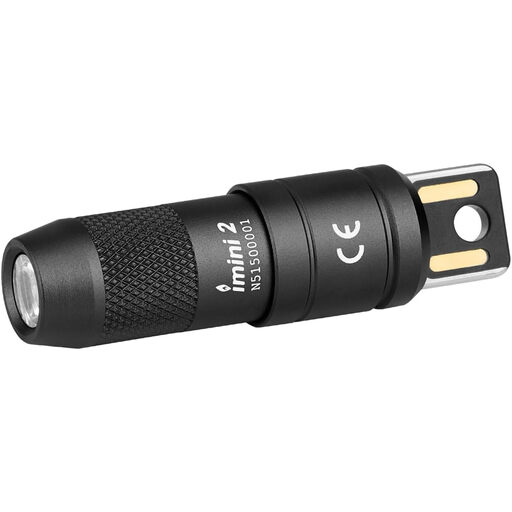
Why This Fits Their Persona: For anyone looking for an extremely compact and lightweight light source for a keychain or as an emergency backup. The simple, switchless operation makes it instantly ready for use without having to fumble for a button.
Completely eliminates the problem of lost charging cables with an integrated USB-A plug. The magnetic activation is simple and less prone to mechanical failure than a conventional switch.
Maximum portability (55 mm length, 19.5 g weight) and cable-free charging directly from any standard USB port. The magnetic base also allows for hands-free use.
We have compiled a complete, up-to-date list of products that fully meet these strict selection criteria and all relevant safety standards.
1. How important is the IP rating for an EDC flashlight?
The IP (Ingress Protection) rating indicates how well a device is protected against the ingress of foreign objects (first digit) and water (second digit). For an EDC light that needs to function reliably in the rain or dusty environments, a rating of IPX6 (protection against powerful water jets) or higher is recommended. IPX8 means the light can even withstand continuous submersion, which offers additional peace of mind.
2. What is the difference between lumens and candela in small flashlights?
Lumen measures the total amount of light a flashlight emits—in other words, its overall brightness. Candela, on the other hand, measures the light intensity at the center of the beam and is a measure of its throw distance. A high candela number means a tightly focused, long-reaching beam (spotlight), while a high lumen number with a low candela number indicates a wide, even flood of light (floodlight). For a versatile EDC light, a good balance between both values is ideal.
3. How do I maintain the battery of a rechargeable flashlight for a long lifespan?
To maximize the life of a lithium-ion battery, you should avoid deep discharges. It's advisable to charge the light before the battery level drops below 20%. When not in use, it's best to store the light with a charge level of around 50-70%. Also, avoid storing it in extremely high or low temperatures, as this can permanently damage the battery's capacity.