
Lieferung heute & morgen

Qualitätsgarantie

Willkommens-Angebote freischalten: KOSTENLOSE Lieferung | Bis zu 80 % RABATT | Kostenlose 30-Tage-JoyPlus-Testphase
App herunterladen
A stainless steel kitchen sink needs to do more than simply drain water. You’ll use it to wash vegetables, rinse large pans and, in some cases, as extra worktop space. Yet three common buying mistakes can lead to unnecessary costs:
Your choice should therefore be based on more than colour or design. The key considerations are the installation space, how often you’ll use the sink and the technical details of the product.
When choosing a stainless steel sink, you’ll often come across 201 and 304 stainless steel. Both can be used to make sinks, but their properties also depend on the manufacturing process, material thickness, surface finish and care.
304 stainless steel is often used for hard-working kitchens. Even so, check the stated material thickness and care instructions in the product details. 201 stainless steel may be suitable for domestic kitchens, utility rooms or lighter use. For restaurants, cafés and bars, you should also check durability, cleaning schedules and local hygiene requirements.
A black coated kitchen sink can complement a modern kitchen. Unless the manufacturer says otherwise, avoid abrasive cleaners, harsh scouring pads and sudden temperature changes on coated surfaces.
Before buying, compare at least these four measurements:
A 45 × 40 cm sink doesn’t necessarily need a cut-out of exactly the same size. With an inset sink, the rim rests on the worktop, while an undermount sink is secured from below. Flush-fit installation calls for a different level of precision and sealing.
If you regularly wash large pans, prioritise the bowl’s width and depth over decorative extras. In a smaller kitchen, a compact single bowl may be a better choice than a large double-bowl stainless steel sink, if it leaves you with more worktop space.
How quickly water drains depends partly on the waste outlet diameter, pipework and protection from food debris. A sink strainer helps prevent larger scraps from entering the pipework. Even with a set that includes a V-shaped or X-shaped waste, regular cleaning is still important.
Also check:
A complete kitchen sink set can make it easier to get everything together. Even with a complete set, however, make sure the connections and dimensions match your existing installation.
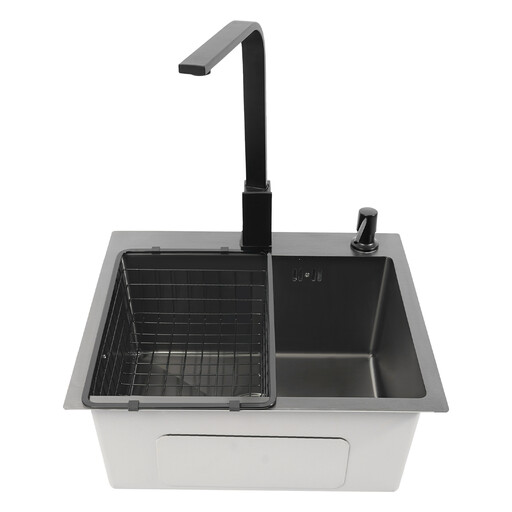
Why this product suits this buyer: This 45×40 cm model combines a sink, tap, soap dispenser, strainer basket and other fittings in one set. It’s ideal for smaller kitchens, renovations and anyone who’d rather not source the parts separately.
The included components make it less likely that you’ll overlook important waste or connection parts. You’ll still need to check the cut-out and connections before buying.
Compact dimensions; complete set with tap and waste components; supports top-mount, flush-fit and undermount installation according to the product details.
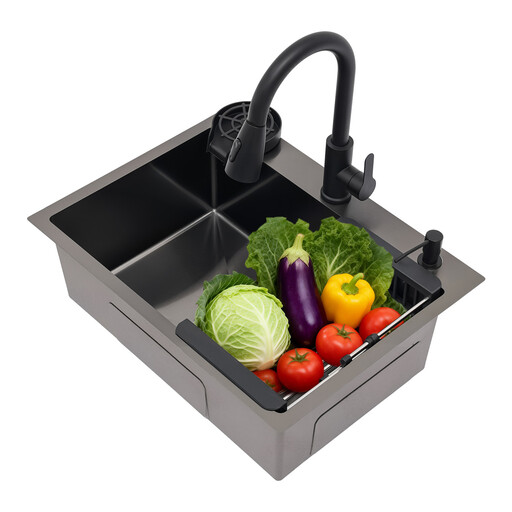
Why this product suits this buyer: Made from 304 stainless steel, this model measures 60×45 cm, comes with a pull-out tap and offers several installation options. It’s designed for households or commercial kitchens that need more space and functionality.
The product details clearly state the material and external dimensions, and highlight the need to check the worktop cut-out. This makes it easier to check the fit before ordering.
304 stainless steel according to the product description; pull-out tap with two water modes; accessories include a cup washer, soap dispenser, waste basket and V-shaped pipe.
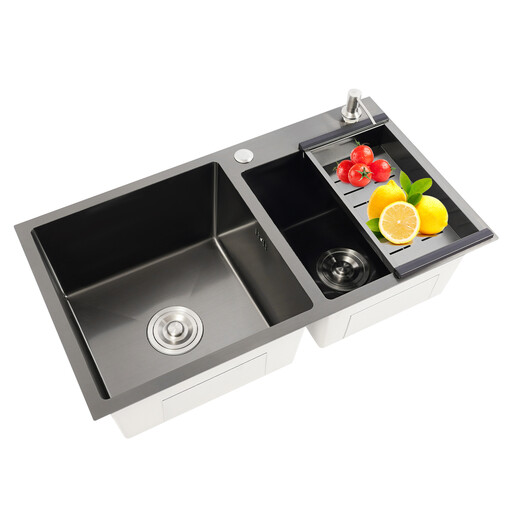
Why this product suits this buyer: Two bowls make it easier to handle different tasks at once, such as washing and rinsing. This 78×43 cm model is therefore a good fit for larger households, busy kitchens or food preparation in catering settings.
Two waste outlets and the included strainers mean you’re less likely to need to hunt for extra accessories later. The larger design makes it important to check the base unit carefully.
Two large bowls; 304 stainless steel according to the product details; top-mount, undermount and flush-fit installation; waste accessories included.
We’ve put together a complete, regularly updated list of products that meet these strict selection criteria and fully comply with the safety regulations in force in the EU.
With an inset sink, seal the cut edge of the worktop against moisture. An undermount sink needs secure support and a precisely sized cut-out. Water connections and waste pipes should not be under strain. If you’re unsure, or arranging a commercial installation, it’s best to have the sink professionally fitted.
For everyday care, a soft cloth, water and a mild cleaning product are often all you need. Remove limescale promptly. Abrasive cleaners and metal scourers can damage coated surfaces, especially black kitchen sinks. A removable sink strainer and a matching waste basket make cleaning easier and catch larger food scraps.
It depends on the existing base unit, the worktop cut-out and the bowl size you need. Before ordering, compare the external dimensions, internal dimensions, bowl depth and installation method. If you’re renovating, also check that the new waste will fit your existing trap.
A complete set can make choosing easier, as the tap, waste fitting and accessories are offered together. Even so, the threads, isolation valves, hose lengths and cut-out must all be compatible with your existing installation. Not every included part will automatically replace an existing trap.
There’s no reliable one-size-fits-all answer. Its lifespan depends on factors such as the material, thickness, installation, level of use and cleaning. Avoiding abrasive products, drying away standing water and cleaning the waste regularly can help reduce common wear and maintenance problems.